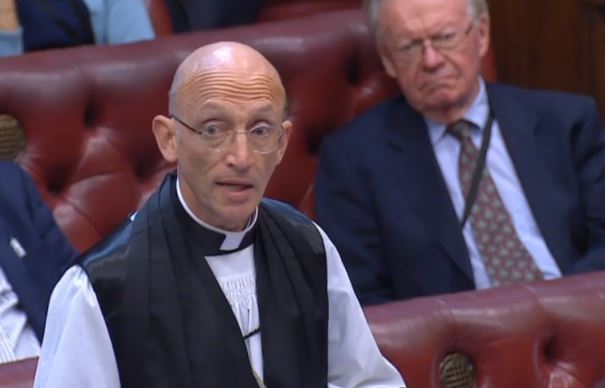
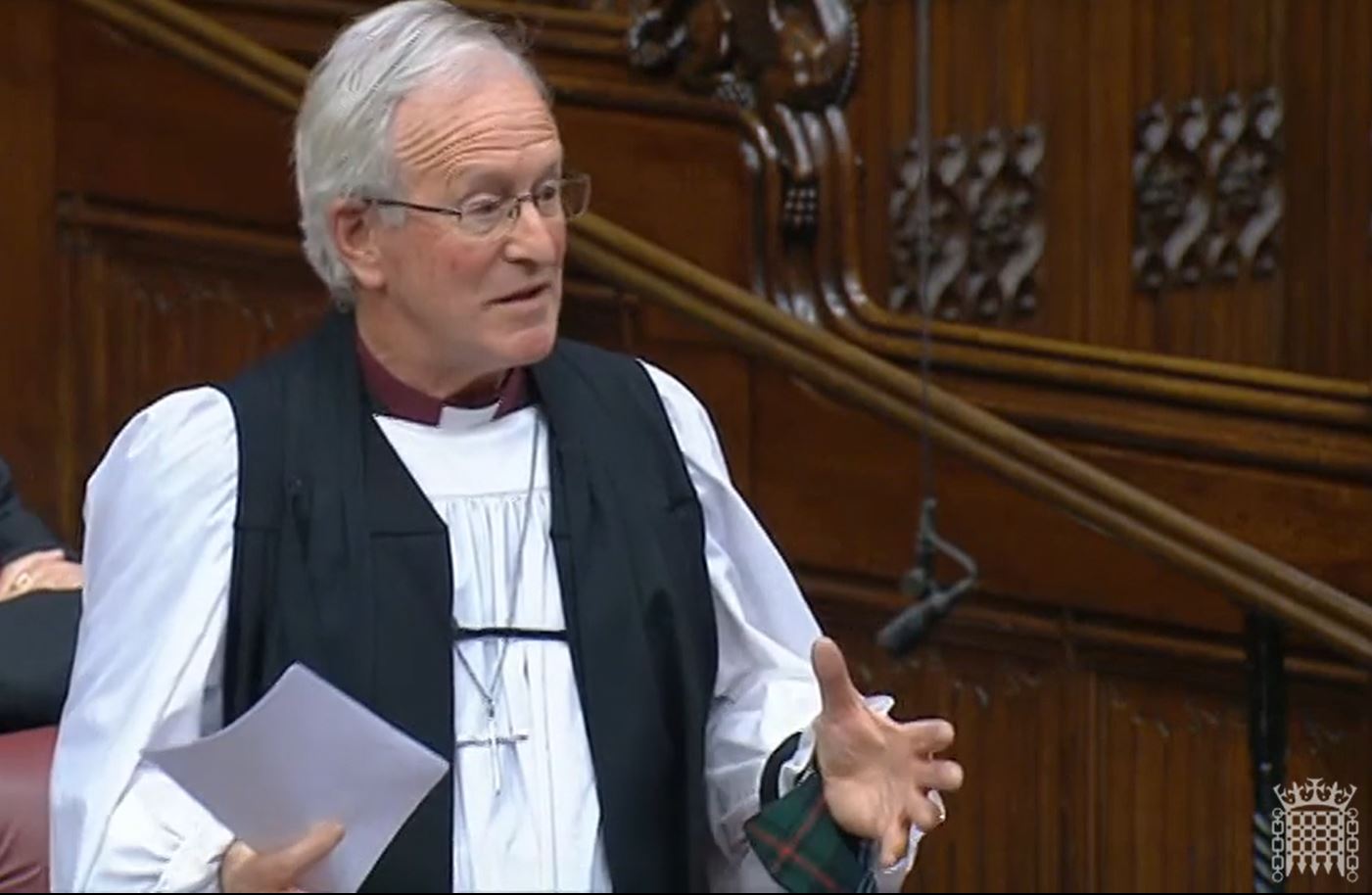
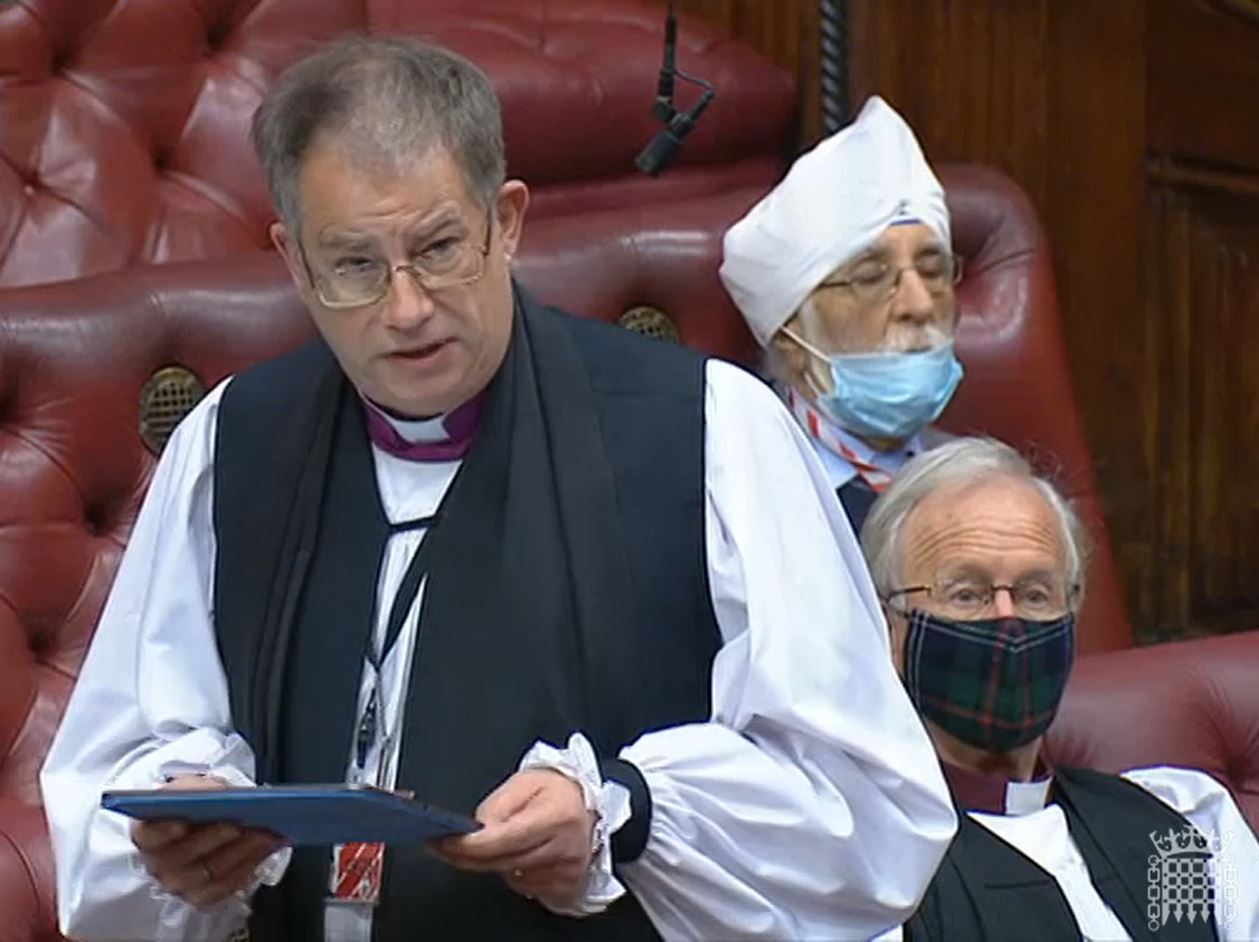
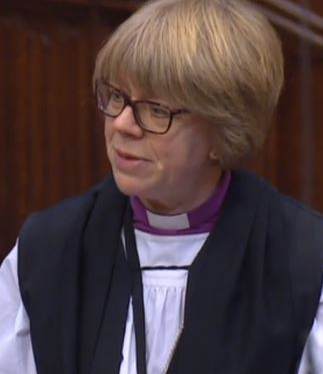
Elections Bill: Bishop of Coventry speaks about Voter ID

On 21st March 2022, the House of Lords debated the Elections Bill in committee. The Bishop of Coventry spoke in the debate:

The Lord Bishop of Coventry: My Lords, I offer your Lordships an apology for not being able to contribute to Committee for all sorts of reasons, but I said at Second Reading that I would support amendments that introduced mitigating factors to reduce the risk of unintended exclusion, particularly for that group of people the noble Baroness, Lady Lister, referred to: those on lower incomes. There is real risk that that could happen through this immediate introduction of photo ID.

Continue reading “Elections Bill: Bishop of Coventry speaks about Voter ID”

Refugees (Family Reunion) Bill: Bishop of Durham speaks in debate

On 18th March 2022, the House of Lords debated the Refugees – Family Reunion Bill in its third reading. The Bishop of Durham spoke briefly on the issue of family separation before the bill was passed:

The Lord Bishop of Durham: My Lords, I regret not having been able to speak earlier. As noble Lords know, I spoke passionately on this issue on the Nationality and Borders Bill. I do not think that it is too late for the Government to think about reintroducing this into that Bill on Tuesday in the other place. I hope that they might do so.

Hansard

Bishop of Durham speaks in a debate on women’s equality

On 17th March 2022, the House of Lords debated a motion to take note regarding Protecting the Equality of Women in the UK and Internationally. The Bishop of Durham spoke in the debate:

The Lord Bishop of Durham: My Lords, it is my pleasure to speak in today’s debate and to follow the noble Lord, Lord Purvis of Tweed. Like him, I will begin by focusing on international issues. I did put the word around to see if any of my female colleagues were available, because they are more qualified to speak than me, but none of them were today so you have to put up with me. I am glad to have this opportunity.

First, there is much I want to celebrate. As part of my brief, I take special interest in two of the poorest nations on earth, Burundi and Lesotho—one of the others is South Sudan. These nations are making great progress on women’s equality. It has been my privilege to visit Lesotho a couple of times and Burundi very many times. I would like to share some examples.

This month, the Women’s Investment and Development Bank has been introduced in Burundi. This has been praised by the UN as a step towards women’s economic empowerment in that nation. The bank will grant low-interest loans to women’s collectives and their development projects, and will provide training on profitable business.

Continue reading “Bishop of Durham speaks in a debate on women’s equality”

Health and Care Bill: Bishop of Durham speaks about provision of at-home abortion

On 16th March 2022, the House of Lords debated the Health and Care Bill 2022. The Bishop of Durham spoke in opposition to an amendment tabled by Baroness Sugg that would maintain the option of at-home early medical abortion that had initially been permitted due to the COVID-19 Pandemic:

The Lord Bishop of Durham: My Lords, I begin by paying tribute to the noble Baroness, Lady Sugg, for her tireless work on gender equality and areas of international development. We have often been collaborators on such matters. I also apologise to the noble Baroness if she has personally received any hurtful comments on this; some of the things I have seen were shameful. She should not have been abused in this way. Nevertheless, I will oppose her amendment; I hope she understands that this in no way lessens the way in which I honour her for her work.

I declare at the outset that the Church of England’s position on abortion is principled opposition, with a recognition that there are strictly limited conditions under which it may be preferable to any available alternative. My opposition to the amendment is based on that in part but also because I believe that the amendment is functionally inadequate in providing the necessary protections. This was a temporary measure introduced during the pandemic to allow continued access to abortion services, simply to meet a need in extraordinary circumstances. I support the Government’s decision to return to the pre-pandemic system for early medical abortions from August, which was supported by many in the public consultation response.

Continue reading “Health and Care Bill: Bishop of Durham speaks about provision of at-home abortion”

Health and Care Bill: Bishop of Durham opposes amendment on assisted dying

On 16th March 2022, the House of Lords debated amendments to the Health and Care Bill at the report stage. The Bishop of Durham spoke in the debate, stating his opposition to an amendment that would require parliament to consider a bill permitting assisted dying:

The Lord Bishop of Durham: My Lords, I agree with those who have already spoken opposing the amendment. First, the amendment is not appropriate as a use of the legislative process accompanying this Bill through your Lordships’ House. There is a question of purpose. If opportunity for debate is the goal, we must underestimate neither the significance of the Bill of the noble Baroness, Lady Meacher, in October and the thorough, careful and considered debate, nor the possibilities of calling for Committee. I would also support that time being given in this House. There are important constitutional questions which arise if the amendment enacted by this House does in fact instruct the Secretary of State in the other place to propose and introduce a draft Bill—as the noble Lord, Lord Hunt, has just outlined. If that is not the case—and if the noble Lord, Lord Forsyth, is not advocating for this draft to be introduced—what is the purpose of the amendment?

Continue reading “Health and Care Bill: Bishop of Durham opposes amendment on assisted dying”

Nationality and Borders Bill: Bishop of Durham speaks in debate

On 14th March 2022, the House of Lords debated the Nationality and Borders Bill in its third reading. The Bishop of Durham spoke briefly in the debate, expressing support for amendments whilst raising concerns about the reception and timing of the bill:

The Lord Bishop of Durham: My Lords, I support all the amendments because they all seem to make complete sense in terms of tidying up, including those in the Government’s name. I too was disturbed by the announcement about the devolved legislatures—it expresses the deep unease about the Bill out in the country as a whole. I ask the Minister to take away from this House a real concern that this is not the right time to press ahead and that Ukraine has raised questions about the Bill and whether some kind of pause ought to be considered.

Hansard

Economic Crime (Transparency and Enforcement) Bill: Bishop of Leeds raises ethical concerns

On 9th March 2022, the House of Lords debated the Economic Crime (Transparency and Enforcement) Bill in its second reading. The Bishop of Leeds spoke in the debate, raising concerns about the background to the bill, which was introduced in response to Russia’s invasion of Ukraine:

The Lord Bishop of Leeds: My Lords, I welcome this Bill and the speed with which it is being brought to us, but I share some of the concerns that have been represented already. I do not intend to go into any of the detail of matters that have already been spoken about; I am sure other noble Lords would be better at that than I might be.

I hesitate to bring an ethical argument because, in my experience in this House, ethical arguments simply get ignored. Indeed, one Minister replied to an ethical argument made on a different Bill by saying, “We will not listen to strictures on morality from anyone.” That led me, at the next stage—on Report—simply to say that that implies there is no place in politics for ethics. But it is my ethical concerns, which one might represent as cultural, that cause me to stand now.

Continue reading “Economic Crime (Transparency and Enforcement) Bill: Bishop of Leeds raises ethical concerns”

Nationality and Borders Bill 2022: Bishop of Chelmsford speaks on amendments relating to visa penalties

On 8th March 2022, the House of Lords debated the Nationality and Borders Bill in the 3rd day of its report stage. The Bishop of Chelmsford spoke in the debate, raising concerns regarding amendments tabled by Baroness Williams of Trafford which would “allow visa penalties to be extended to countries that present a risk to international peace and security, or whose actions lead or are likely to lead to armed conflict or a breach of humanitarian law.”

The Lord Bishop of Chelmsford: My Lords, I am grateful to the noble Lord, Lord Paddick, for his comments and I will add a few further thoughts.

I appreciate that the intent of these proposed new clauses is to bring additional sanction pressure on Russia, and perhaps also other states which threaten peace and security. However, I ask whether there are any concerns that, in practice, this provision may make it more difficult for a critic of, for example, the Putin regime, to reach the UK in safety. Such a person—perhaps one of those involved in the courageous protests against the current war—might seek to reunite with family in the UK for their own safety. They would require a valid visa, not least since the Bill makes it so much harder for those arriving without a visa to apply for refugee status. Is the Minister at all concerned that additional costs and barriers to obtaining a visa may invertedly hurt people seeking to escape authoritarian regimes, and who would be eligible for a visa to come here, more than it would actually hurt the regime itself?

Continue reading “Nationality and Borders Bill 2022: Bishop of Chelmsford speaks on amendments relating to visa penalties”

Nationality and Borders Bill 2022: Bishop of St Albans speaks in support of amendments on modern slavery

On 8th March 2022, the House of Lords debted the Nationality and Borders Bill in the 3rd day of the report stage. The Bishop of St Albans spoke in support of several amendments on modern slavery:

My Lords, I will speak to Amendments 67 and 68 in the name of the noble Lord, Lord Alton. I spoke to these amendments in Committee because I was concerned that Clause 59 was effectively raising the reasonable grounds threshold for identifying a victim of modern slavery. With respect to the Government, I confess that I remain unconvinced by their desire to alter reasonable grounds thresholds, and was not adequately assuaged in my fears that this could erect an unnecessary barrier to victims accessing the national referral mechanism.

The noble Lord, Lord Alton, made the argument in Committee that reasonable grounds decisions on the standard of “suspect but cannot prove” would allow the Modern Slavery Act to be more in line with ECAT. I am not a legal expert so this may well be the case. However, I made the point that since we currently use “maybe” as it exists within the Modern Slavery Act, as opposed to “is” or “are” as proposed by the Government —indeed, rather than “has been” as appears in ECAT—in supposedly bringing ourselves in line with ECAT we would effectively raise the threshold for access to the NRM.

Continue reading “Nationality and Borders Bill 2022: Bishop of St Albans speaks in support of amendments on modern slavery”

Nationality and Borders Bill 2022: Bishop of Bristol speaks in support of amendments on modern slavery and protection of overseas domestic workers

On 8th March 2022, the House of Lords debated the Nationality and Borders Bill in its report stage. The Bishop of Worcester spoke in support of amendments to the bill that would remove certain clauses relating to victims of modern slavery, and moved an amendment intended to protect overseas domestic workers:

The Lord Bishop of Bristol: My Lords, I support the amendments in the name of the noble Lord, Lord Coaker, to remove Clauses 57, 58 and 62 from the Bill, to which I have added my name. I too congratulate the noble Baroness, Lady Williams, on her appointment and give thanks for all the work she does, even when we do not always entirely agree across these Benches.

As we have heard, Clauses 57 and 58 would make it appreciably more difficult for people to be recognised as victims of modern slavery and receive support. In Committee, the Minister responded to my concerns about these clauses by saying that, far from deterring victims, this will

“encourage genuine victims to come forward”.—[Official Report, 10/2/22; col. 1843.]

Continue reading “Nationality and Borders Bill 2022: Bishop of Bristol speaks in support of amendments on modern slavery and protection of overseas domestic workers”