Skills and Post-16 Education Bill: Bishop of Durham tables amendment removing restriction on claiming universal credit for those in education

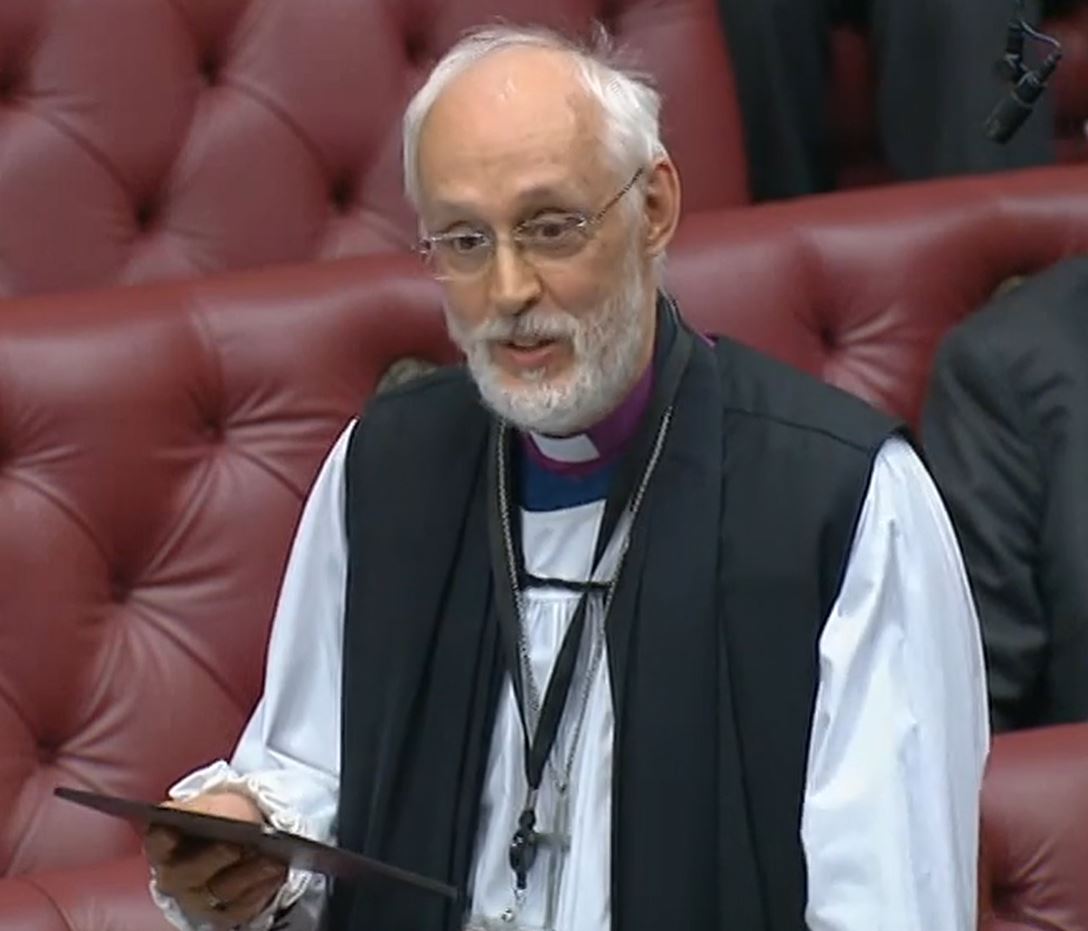
On 21st July 2021, the House of Lords debated the Skills and Post-16 Education Bill in the fourth day of the committee stage. The Bishop of Durham tabled a probing amendment to the bill which would remove restrictions on claiming universal credit from those receiving education:

The Lord Bishop of Durham:

90A: After Clause 25, insert the following new Clause—

“Universal credit conditions: receiving education

(1) In section 4 of the Welfare Reform Act 2012—(a) in subsection (1) omit paragraph (d), and(b) omit subsection (6).(2) The Secretary of State may by regulations made by statutory instrument make consequential provision.(3) A statutory instrument containing regulations under this section is subject to annulment in pursuance of a resolution of either House of Parliament.”Member’s explanatory statement

This amendment would remove the restriction that those “receiving education” cannot claim Universal Credit, which at present may impede some of the most disadvantaged from benefitting from learning opportunities. It is intended to probe how the Government plans to incentivise take-up of training programmes, and to elicit how cross-departmental working can be made more effective in transforming learning and skills.

Continue reading “Skills and Post-16 Education Bill: Bishop of Durham tables amendment removing restriction on claiming universal credit for those in education”

Organ Tourism and Cadavers on Display Bill: Bishop of St Albans welcomes bill, highlights repression of the Uighur minority in China

On 16th July 2021, the House of Lords debated the Organ Tourism and Cadavers on Display Bill [HL] in its second reading. The Bishop of St Albans spoke in support of the bill, bringing up the persecution of the Uighur minority in China:

The Lord Bishop of St Albans: My Lords, I too support this Bill and welcome the very excellent speech by the noble Lord, Lord Hunt of Kings Heath, and this important priority to equalise the law so that, whether a body or an organ comes from someone in this country or some other part of this world, they will be given the same protections and treated with the same dignity.

Noble Lords have already spelled out with great and horrifying clarity some of the allegations of organ harvesting by the Chinese authorities targeting minorities. I have risen to speak today because I have been raising again and again in this House the issue of the Uighurs, and this absolutely touches on what is happening to this incredibly persecuted group of people. It is terrifying to see what is unfolding before our very eyes. In June 2021, a group of independent UN experts said that they had received information that detainees from ethnic and religious groups such as the Uighurs, Tibetans, Falun Gong and Chinese Christians were being subjected to examination without their consent, with the express intention to facilitate organ allocation.

Continue reading “Organ Tourism and Cadavers on Display Bill: Bishop of St Albans welcomes bill, highlights repression of the Uighur minority in China”

Skills and Post-16 Education Bill: Bishop of Durham backs amendments on mental health support for students

On 15th July 2021, the Bishop of Durham spoke in a debate on the Skills & Post-16 Education Bill, expressing his support for amendments focused on supporting students’ mental health:

The Lord Bishop of Durham: My Lords, I particularly want to support Amendment 63, but also the others in the group. Just last month, in June 2021, the DfE itself published a report, Student Mental Health and Wellbeing, based on research done before the pandemic. It points out that 96% of institutions ask their students about their mental health but only 41% ask them about their general well-being. It also notes that only 52% of universities would say that they have a “dedicated strategy” for the mental health and well-being of their students. So the DfE’s own report, from last month, highlights that there is plenty of work to be done on universities having proper, dedicated strategies around mental health and well-being—particularly on the well-being side.

Continue reading “Skills and Post-16 Education Bill: Bishop of Durham backs amendments on mental health support for students”

Skills and Post-16 Education Bill: Bishop of Durham speaks in favour of amendments on SEND provision in further education

On 15th July 2021, the House of Lords debated amendments to the Skills and Post-16 Education Bill in the second day of the committee stage. The Bishop of Durham spoke in favour of amendments 41 & 43, which would clarify language around provision for special educational needs & disabilities and require that further education settings regularly review their SEND offer:

The Lord Bishop of Durham: My Lords, I first need to declare my interest as chair of the National Society. I should also apologise that I was unable to take part in Second Reading because of other engagements; my noble friend the Bishop of Leeds spoke in my stead. I also need to apologise for a complete error on my part in not being available to speak to Amendment 11, to which my name was added, during day one of Committee; that was entirely an administrative error at my end.

However, I now enter into the debate on a very small matter, on Amendment 41, on which I simply want to endorse the comments made by the noble Lord, Lord Addington, about the phrase “from time to time”. The language seems too loose. The word “regularly” implies something more frequent without expressing exactly what that regularity is. Put simply, regular review that connects with potential changing local needs makes good sense. The amendment simply tightens this up.

Continue reading “Skills and Post-16 Education Bill: Bishop of Durham speaks in favour of amendments on SEND provision in further education”

Procedures & Privileges: Bishop of Chichester speaks on proposed changes to the business of the House of Lords

On 13th July 2021, the House of Lords debated the motion:

“that the Report from the Select Committee Procedural adaptations arising from the hybrid House; Interim option of voting using PeerHub; Ongoing virtual participation by disabled members (1st Report, HL Paper 41) be agreed to.”

The Bishop of Chichester spoke in the debate, welcoming steps to retain some hybrid adaptations, but expressing concern over the proposed changes to some oral question procedures:

The Lord Bishop of Chichester: My Lords, my right reverend friend the Bishop of Birmingham, who is our convenor, regrets that he cannot attend today’s debate. As Bishop on duty, I offer some thoughts on behalf of these Benches. On behalf of my right reverend friends, I thank the Leader of the House and the leaders of the parties, and especially all the staff who have seen us through this extremely challenging time. All of us have a particular debt of gratitude to those in the digital and technical spheres, which many of us struggle with. I noted earlier that it has enabled some of my right reverend friends to share with the House the interior of their splendid cathedrals, so that has been great. I am grateful to the noble and learned Lord, Lord Mackay, for his recognition that being present in the House is also a very important contribution on our behalf.

I speak as a relative newcomer to your Lordships’ House, and as one of those Members, found on all sides of the House, who combines their service here with a significant full-time outside commitment. It is one of the strengths of this House that it gives space for this, so that membership is not just for what might be described as the full-time, professional politician. The assessment of any change to our procedure should not only test efficiency in our working practices and the capacity for inclusion in them but demonstrate how it will enable those who are not full-time to participate as fully as possible to bring into the debate and scrutiny this House exercises the wide range of experience that they bring.

Continue reading “Procedures & Privileges: Bishop of Chichester speaks on proposed changes to the business of the House of Lords”

Environment Bill: Bishop of Manchester supports amendments on sustainable forestry

On 12th July 2021, the House of Lords debated the Environment Bill in the seventh day of the committee stage. The Bishop of Manchester spoke in the debate, expressing his support for amendments focused on sustainable forestry:

The Lord Bishop of Manchester: My Lords, it is a particular pleasure to speak in the same debate as the noble and right reverend Lord, Lord Harries of Pentregarth, from whose wisdom, when I was a very young bishop some 20 years ago, I learned a great deal. I also an honour to follow the noble Earl, Lord Caithness, who has reminded us, powerfully, of the crucial role that commercial forestry and good moorland management should be enabled to play. Hence, I draw your Lordships’ attention to my interests as set out in the register, specifically my deputy chairmanship of the Church Commissioners, which the noble and right reverend Lord famously once took to court. We are one of the foremost owners of sustainable commercial forestry in the UK and beyond.

Continue reading “Environment Bill: Bishop of Manchester supports amendments on sustainable forestry”

Bishop of St Albans welcomes commonwealth trade agreements

The Bishop of St Albans took part in a debate on new commonwealth trade agreements on 8th July 2021, welcoming the agreements and urging they be used as a force for positive social consequences:

The Lord Bishop of St Albans: My Lords, I welcome Her Majesty’s Government’s intent to strengthen ties with the Commonwealth as we transition to our new reality outside the European Union. When we entered the European Common Market, we severed many tight economic ties with some of our Commonwealth partners. It is because of that that I am particularly pleased at the announcement of the economic partnership agreement with CARIFORUM, which covers many countries with whom we continue to share a head of state.

My diocese is linked with the Windward Islands, and we are glad to have a large community of Vincentians living in Luton. They have told me of the extraordinary economic disruption that occurred to them when we joined the EEC. Although many of these Commonwealth realm territories contained within the CARIFORUM agreement are small in GDP terms, there is a symbolic importance to this agreement, and I hope it will be a platform to further invest and engage culturally with these territories to strengthen our existing ties.

Continue reading “Bishop of St Albans welcomes commonwealth trade agreements”

Environment Bill: Bishop of Manchester supports amendments to preserve biodiversity

On 7th July 2021, the House of Lords debated the Environment Bill in the sixth day of the Committee stage. The Bishop of Manchester spoke in the debate, in support of a group of amendments aimed at preserving and protecting biodiversity in terms of land use regulations:

The Lord Bishop of Manchester: My Lords, I draw your Lordships’ attention to my interests as set out in the register, specifically with the Church Commissioners—a significant owner of agricultural and development land. On matters of climate change, we are a leading edge and an awarding-winning investor, yet the Bill reminds us that climate is only part of the story.

Continue reading “Environment Bill: Bishop of Manchester supports amendments to preserve biodiversity”

Bishop of St Albans criticises cuts in global aid amid COVID-19 pandemic

The Bishop of St Albans spoke in a debate in response to cuts to overseas aid on 1st July 2021, criticising the decision to reduce aid at a time when many countries are experiencing negative effects of the COVID-19 pandemic and calling for the cuts to be reversed:

The Lord Bishop of St Albans: My Lords, these cuts raise profound ethical questions as the world faces the worst pandemic in over a century. Despite all the talk of global Britain, these cuts shout out that we are withdrawing from the world stage. Here we are, planning booster vaccinations in the UK this autumn, while only 0.9% of people in low-income countries have received even one dose. Covid is a global problem, and it is made worse when essentials such as clean water and basic health programmes, often provided by British aid, are cut.

Yesterday, I met the ambassador of Ethiopia, who spoke with grave concern about the cut in aid to Ethiopia, which is likely to be by more than 50%. Currently, less than 2% of its population is vaccinated, and it faces a third wave while simultaneously managing the fallout from the conflict in Tigray and famine due partly to war and partly to the swarms of locusts.

Continue reading “Bishop of St Albans criticises cuts in global aid amid COVID-19 pandemic”

Bishop of Gloucester speaks about impact of aid cuts on women and girls

The Bishop of Gloucester spoke in a debate on the UK Foreign Aid Programme on 1st July 2021, stressing the impact cuts to aid would have on women and girls:

The Lord Bishop of Gloucester: My Lords, I have spoken before about the challenges faced by girls and women throughout the world, and I am therefore dismayed, along with others, by what we hear of the impact of the aid cuts on them. As the noble Baroness, Lady Sugg, said so eloquently, women and girls will suffer disproportionately as a result of these cuts. I understand that Her Majesty’s Government have undertaken a central equalities impact assessment. However, I believe this is yet to be published and I would be grateful for an update from the Minister.

Continue reading “Bishop of Gloucester speaks about impact of aid cuts on women and girls”