Environment Bill: Bishop of Gloucester speaks in favour of establishing an independent body to scrutinise climate efforts

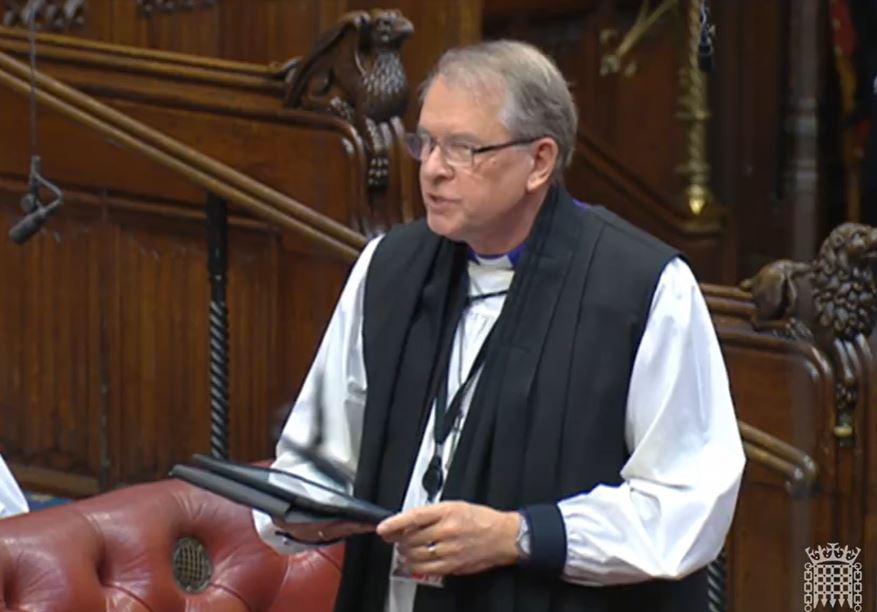
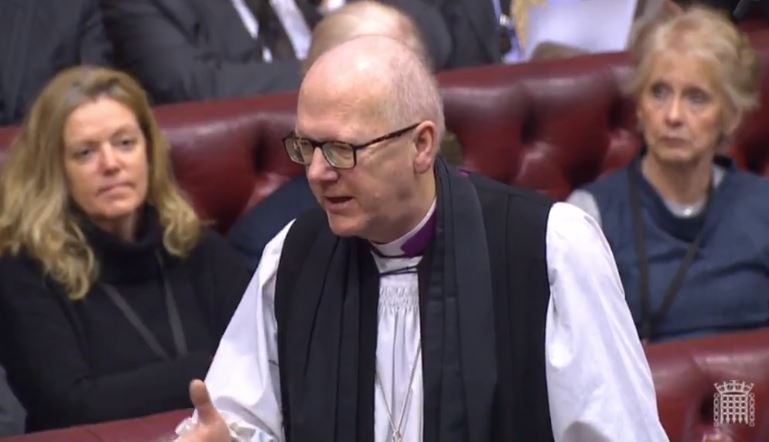
On 30th June 2021, the House of Lords debated the Environment Bill in the fourth day of the Committee Stage. The Bishop of Gloucester spoke, welcoming the bill and, on behalf of the Bishop of Oxford, expressed support for amendments aimed at ensuring independent scrutiny of government climate progress:

The Lord Bishop of Gloucester: My Lords, I add my voice in support of Amendments 105 and 107, and I shall speak to those amendments together. My right reverend friend the Lord Bishop of Oxford would have spoken to them, but is unable to be here, so I am glad to be able to speak and endorse what other noble Lords have said.

From this Bench, we welcome much of the content of the Bill, and we believe deeply in the importance of the good stewardship of creation. We recognise the need for global solutions to an international challenge and that any solutions will take leadership and require harmonising regulation on a global scale. As others have said, it is essential that the new OEP be given the appropriate teeth—not dentures, perhaps jaws—to hold business and government at all levels, national, regional and local, to account.

Continue reading “Environment Bill: Bishop of Gloucester speaks in favour of establishing an independent body to scrutinise climate efforts”

Bishop of Lincoln calls for greater investment in UK infrastructure to promote tourism

The Bishop of Lincoln spoke in a debate on tourism in the UK on 24th June 2021, calling for greater investment in coastal and rural communities in order to encourage “at home” tourism:

The Lord Bishop of Lincoln: My Lords, I speak, once again, about the communities I have engaged with in Lincolnshire over the last 10 years. Two years ago, I was pleased to serve on the Select Committee on Regenerating Seaside Towns and Communities under the leadership of the noble Lord, Lord Bassam of Brighton. That helped me to understand some of the policy issues that need to be addressed by the Government. The committee had a splendid and impressive visit to Skegness, which is addressing some of the issues. Lincolnshire has an extensive coastline and much unspoiled countryside, and is still popular with many holidaymakers. It is heartening to see reports over the weekend of a boom of interest in domestic tourism during the last few months, as a side-effect of the pandemic. However, many of our seaside towns need more than a one-off boost. They need sustained, strategic investment, in which entrepreneurs are encouraged to set up businesses in coastal areas. They need better broadband, better transport connectivity, flexible recruitment practices, and further education provision to be enhanced.

Continue reading “Bishop of Lincoln calls for greater investment in UK infrastructure to promote tourism”

Bishop of Worcester speaks in debate on official development assistance

The Bishop of Worcester took part in a debate on the UK Government’s decision to reduce spending on official development assistance on 24th June 2021, pointing out the high number of doctors and healthcare professionals from overseas working in the UK, in effect taking from countries to which the UK provides aid:

The Lord Bishop of Worcester: My Lords, I echo the thanks expressed to the noble Lord, Lord Campbell, for this debate. There are many reasons for honouring the manifesto commitment to 0.7% aid, of which the Conservative Party can be proud. I will focus on just one.

Our National Health Service has done a fantastic job during the pandemic and been rightly lauded for doing so. One of the reasons for its success is its superb workforce, no fewer than 170,000 of whom are foreign, the vast majority from poorer countries which are struggling in the face of the pandemic. Figures show that Indians make up the largest number of foreign staff members at 27,000, followed by Filipinos at 23,000. Ghana provides over 3,000, Zimbabwe 4,500 and Pakistan 4,400. The fact is that we are taking more out of developing countries, when we poach their doctors, nurses and other skilled professionals, than we are putting in through aid.

Continue reading “Bishop of Worcester speaks in debate on official development assistance”

Bishop of Carlisle raises need for proper support for paid and unpaid carers

The Bishop of Carlisle spoke in a debate on social care in the UK on 24th June 2021, raising the issue of staff retention in the paid care sector, and the need for recognition and support of unpaid carers:

The Lord Bishop of Carlisle: I congratulate the noble Baroness, Lady Jolly, on securing this timely debate. I should declare an interest as co-chair of a newly formed archbishops’ commission on reimagining social care. Understandably, much of the current discussion of social care involves the issue of funding. That is fundamentally important, but I believe the time has also come for a radical—in the sense of going to its roots—reappraisal of the values and principles underlying social care, not only for the elderly but for those with disabilities and severe mental illnesses. It has been clear for many years that we need an inspiring, cross-party, long-term vision for social care which involves rethinking how we want it to be understood as well as delivered, with those in need of care valued for who they are rather than simply regarded as an inconvenient burden. It has also been clear that that should include reference to some of the underlying societal conditions that contribute to the overall need, such as deprivation, lack of family support and loneliness.

Continue reading “Bishop of Carlisle raises need for proper support for paid and unpaid carers”

Bishop of St Albans warns against increased use of Magnitsky sanctions

The Bishop of St Albans spoke in a Grand Commitee debate on the effectiveness of the Magnitsky sanctions on 24th June 2021, arguing for better cooperation with international partners and support for international law, and warning of the danger of overreliance on sanctions in global affairs:

The Lord Bishop of St Albans: My Lords, I too agree that there are occasions when these Magnitsky sanctions may be the best available option to us. However, the increased use of such sanctions is a worrying sign that the organs of international arbitration such as the UN or the ICJ may be losing their effectiveness. These were the very institutions established in response to the tit-for-tat foreign policy that defined the 19th and early 20th centuries, with all their resulting catastrophes.

Our Government are a big advocate of the concept of “Global Britain”, an ambiguous phrase that sometimes means leading as a force for good in the world but at other times is simply a declaration that Britain is open for international business. My concern is that these conflicting visions of global Britain are sometimes mutually exclusive, and that when dealing with human rights abuses there may be a tendency to take the route of least domestic economic disruption.

Continue reading “Bishop of St Albans warns against increased use of Magnitsky sanctions”

Bishop of Leeds speaks in debate on need to provide levelling-up opportunities to children affected by the COVID-19 Pandemic

The Bishop of Leeds took part in a debate on the effects of the COVID-19 Pandemic on children’s opportunities on 17th June 2021, stressing the impact of the pandemic on young carers, the need for welfare reform, and calling for greater investment in literacy:

The Lord Bishop of Leeds: My Lords, I congratulate the noble Baroness, Lady Morris, on a speech every word of which I endorse and cannot really add to. I sympathise enormously with the noble Baroness, Lady Wyld. I did some home schooling for a 10 year- old grandson from Liverpool, who looked at the ceiling when I could not understand his maths and said, “I’ll explain it to you.” And he did. I felt what can only be called the appropriate humiliation. I want to ditch much of what I had to say and just point to a couple of things that I think are worth recording in this debate.

The Church of England, which gets knocked for all sorts of things, has been committed to what is now called levelling-up for some time. We have been investing heavily in initiatives and change programmes such as the strategic development funding, with, up to the end of 2020, 77 projects and £56 million committed to deprived areas. Of the 93 local authorities categorised by the Government as priority 1 for levelling-up, 48 contain projects receiving SDF funding, spread across 20 dioceses, focusing particularly on younger generations and deprived communities in urban and rural contexts.

Continue reading “Bishop of Leeds speaks in debate on need to provide levelling-up opportunities to children affected by the COVID-19 Pandemic”

Skills and Post-16 Education Bill: Bishop of Leeds speaks on need for reform of skills and incentives for workers

On 15th June 2021, the House of Lords debated the Skills and Post 16 Education Bill in its second reading. The Bishop of Leeds spoke in the debate, highlighting several areas of the bill for attention, including incentives for workers influenced by the pandemic:

The Lord Bishop of Leeds: My Lords, I strongly endorse the previous speech, particularly as it notes the crazy distinction between vocational and academic study. On these Benches, we welcome the commitment from the Government to the further education and skills sector as set out in the Bill. It is particularly pleasing to see that the Bill builds on the practical reforms outlined in the Skills for Jobs White Paper. In this context, I also strongly commend to the House the Church of England’s new vision for further education report, published at the end of April, which also recognises the key role that FE plays in driving individual, community and societal transformation.

Continue reading “Skills and Post-16 Education Bill: Bishop of Leeds speaks on need for reform of skills and incentives for workers”

Bishop of St Albans calls for greater recognition of the importance of rural economies and agriculture to food security

The Bishop of St Albans spoke in a debate on a recent Food, Poverty, Health and the Environment Committee report on 10th June 2021, highlighting the intersection between food security, health outcomes, and overall inequality, and the importance of agriculture and rural economies in levelling-up food production :

The Lord Bishop of St Albans: My Lords, I warmly welcome the former Archbishop of York, the noble and right reverend Lord, Lord Sentamu, on behalf of these Benches and the whole House. It is a great privilege to follow him in today’s debate, on his return to the House, and I am sure that his wisdom, compassion, and insight, will be valuable as we move forward in this new parliamentary session.

Hungry for Change outlines the challenges in health and production underlying our food system. Like others, I pay tribute to Marcus Rashford for his campaign last summer in extending the national voucher scheme. I also wish him and the entire English football team good fortune for their opening Euro 2021 match against Croatia this Sunday.

Food poverty remains a serious issue here in the UK, one which has been exacerbated by the economic hardships endured by low-income individuals during the Covid crisis. The Department for Work and Pensions HBAI statistics for 2020 identify 5 million people, including 1.7 million children, as experiencing food insecurity, and half of them had very low food security. 

Continue reading “Bishop of St Albans calls for greater recognition of the importance of rural economies and agriculture to food security”

Environment Bill: Bishop of Salisbury makes plea for greater climate ambition in farewell speech

On 7th June 2021 the Bishop of Salisbury, Rt Revd Nicholas Holtam, made his final speech in the House of Lords before retirement, in the Second Reading debate on the Government’s Environment Bill:

The Lord Bishop of Salisbury (Valedictory Speech): My Lords, I have not been in the House in person since the first week of February. Sitting on the Front Bench earlier with the right reverend Prelate the Bishop of Lincoln, I found myself wondering whether both of us had misjudged the timing of our retirements. I have led on the environment for the Church of England for seven years and have been a Member of the House for six. It has been a privilege as well as a responsibility and I am grateful to noble Lords who have spoken kindly of what has been achieved; of course, it could never be enough.

With an eye towards retirement, I had thought that last year, 2020, would have provided a good conclusion, with the Lambeth Conference of Bishops from the Anglican Communion, COP 26 and this Environment Bill. All were postponed, so I find myself standing for the last time in this House without the prospect of being able to engage in the detailed scrutiny and revision that will make what is, in many ways, a good Bill better. Of course, my colleagues will contribute, as the right reverend Prelate the Bishop of Oxford has already. I thank the Minister for meeting the Bishops in preparation for this debate.

Continue reading “Environment Bill: Bishop of Salisbury makes plea for greater climate ambition in farewell speech”

Environment Bill: Bishop of Oxford welcomes legislation

On 7th June 2021, the Bishop of Oxford spoke at the second reading of the Environment Bill, welcoming the legislation and urging that the power of the Office of Environmental Protection be built up and maintained:

The Lord Bishop of Oxford: My Lords, it is a real honour to speak in this debate and share in the passion and expertise of this House in favour of clear, swift, accountable action to safeguard the environment and combat climate change. It is a particular pleasure to pay tribute to my colleague, the right reverend Prelate the Bishop of Salisbury, who makes his valedictory speech today, to which I look forward. I thank Bishop Nicholas for his leadership within the Church of England, this House and more widely on climate questions. That leadership has played a key role in our national Church’s commitment to net zero by 2030.

Continue reading “Environment Bill: Bishop of Oxford welcomes legislation”