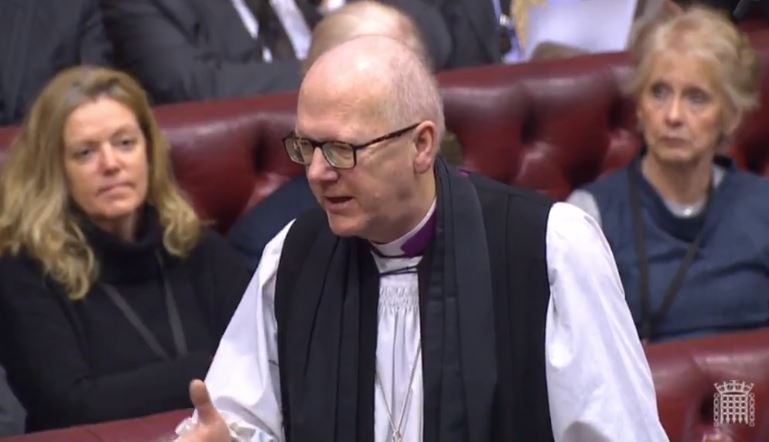
Bishop of Salisbury calls for more focus on energy microgeneration

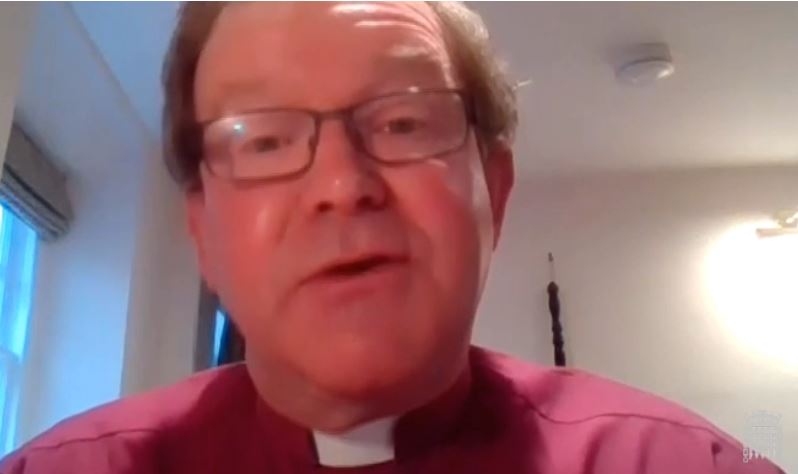
On 27th October the House of Lords considered the Government’s Infrastructure Planning (Electricity Storage Facilities) Order 2020 in Grand Committee. The Bishop of Salisbury took part in the debate, highlighting the need for local authorities to be properly resourced to respond, and the value of microgeneration:

The Lord Bishop of Salisbury [V]: My Lords, this is not really my territory. I hesitate to come into this discussion but I will not delay noble Lords long. I note that the Delegated Legislation Committee in the other place dealt with this proposal in 13 minutes and, even then, the Minister commented on the widening of the discussion beyond the SI itself. That has already begun to happen in this discussion.

There seems to be little controversy surrounding the SI. The 2019 consultation drew 28 responses from industry, which were broadly supportive. However, is not the question that needs to be addressed on what additional funding will be given to local authorities to ensure that there is sufficient expertise and capacity for local planning officers to make fully informed decisions about these planning requests? Continue reading “Bishop of Salisbury calls for more focus on energy microgeneration”

Lords passes General Synod (Remote Meetings) (Temporary Standing Orders) Measure

On 22nd October 2020 the House of Lords considered and passed the General Synod (Remote Meetings) (Temporary Standing Orders) Measure. The Bishop of London introduced the Measure, which will now proceed for Royal Assent:

Motion to Direct

Moved by The Lord Bishop of London: That this House do direct that, in accordance with the Church of England Assembly (Powers) Act 1919, the General Synod (Remote Meetings) (Temporary Standing Orders) Measure be presented to Her Majesty for the Royal Assent.

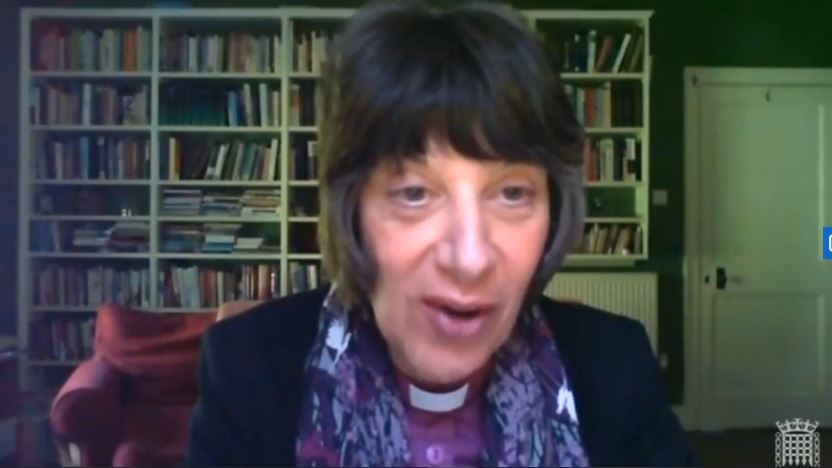
The Lord Bishop of London: My Lords, this Measure will enable the General Synod—the legislative body of the Church of England—to meet and conduct its business remotely. Current coronavirus restrictions mean it is not practically possible for the synod to meet in the usual way, with 500 people from across England gathering in the same place. Continue reading “Lords passes General Synod (Remote Meetings) (Temporary Standing Orders) Measure”

Bishop of Manchester calls for respect towards local Manchester leaders in covid discussions with Government

On 22nd October 2020 the House of Lords heard the repeat of a Ministerial statement to MPs on Covid-19. The BIshop of Manchester raised the need for restoration of trust between Ministers and community leaders in Manchester:

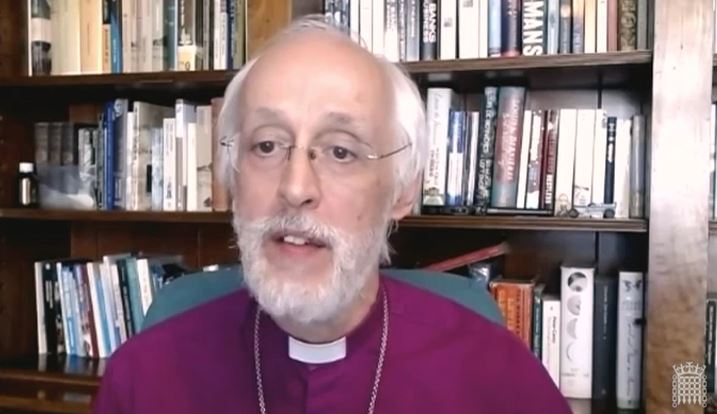
The Lord Bishop of Manchester [V]: My Lords, the Greater Manchester tier 3 proposals were the main UK news item across our broadcasting media for at least a week. However, to the best of my knowledge, at no time did senior members of Her Majesty’s Government come to Manchester to meet its people, hear its voices and seek to reach an agreement face to face with our civic leaders. Moreover, yesterday the Manchester Evening News published a story claiming that senior leaders logged into one crucial meeting only to discover that the Government side had set up controls that did not allow members to unmute themselves. It then allegedly used that facility to prevent voices being heard. Continue reading “Bishop of Manchester calls for respect towards local Manchester leaders in covid discussions with Government”

Bishop of London – need to invest in local public health responses to coronavirus and offer right financial support for most restricted areas

On 20th October 2020 the House of Lords heard the repeat of a Government statement on Covid-19, and also considered the Government’s Health Protection (Coronavirus, Restrictions) (No. 2) (England) (Amendment) (No. 5) Regulations 2020. The Bishop of London spoke in response to both:

In response to the Motion to approve the Regulations, she said:

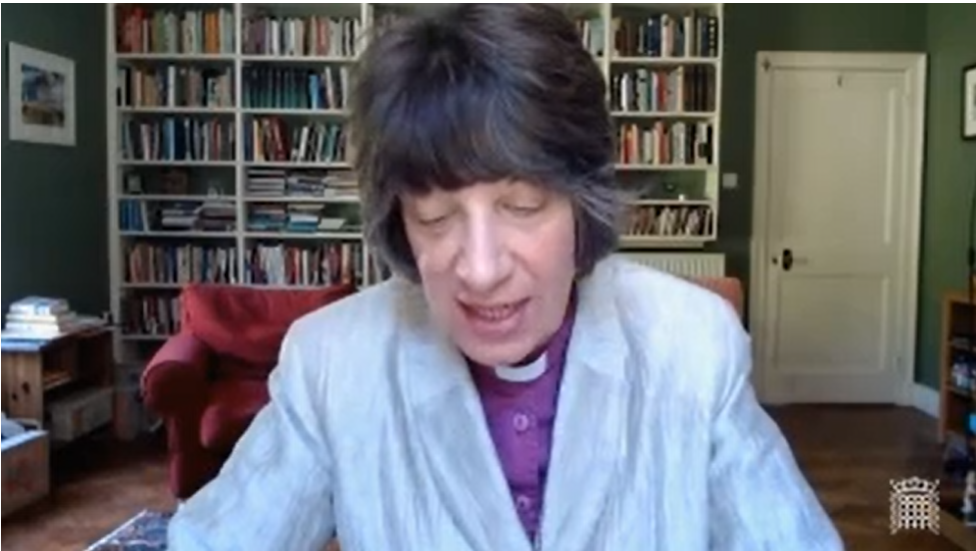
The Lord Bishop of London: My Lords, I am grateful to the Minister for the work that he and others are doing to make decisions at this very challenging time. The regulations we are debating relate to health protection restrictions and fines. However, I wonder whether our approach to public health protection and restrictions during the pandemic needs to pay more attention to a bottom-up approach of wisdom, rather than simply relying on top-down pragmatism and the push and pull of financial incentives. Last week, the right reverend Prelate the Bishop of Manchester highlighted how policies, such as fines, are out of touch with many. It has led to frustration and resentment nationwide. Continue reading “Bishop of London – need to invest in local public health responses to coronavirus and offer right financial support for most restricted areas”

UK Internal Market Bill: Bishop of Leeds says trust, integrity and morality matter in international relations

On 19th and 20th October the House of Lords considered the Government’s UK Internal Market Bill at its Second Reading. The Bishop of Leeds spoke in the debate:

The Lord Bishop of Leeds [V]: My Lords, I add my congratulations to the noble Baroness, Lady Hayman of Ullock, and look forward to her future contributions to this House. I fully endorse the arguments set out by the noble and learned Lord, Lord Judge. I concur with the concerns set out in the report cited by other noble Lords earlier. I even welcome the commitments articulated by the Minister, but I question how they can be trusted, given the underlying ethic of the Bill—and it is absolutely right for archbishops to ask questions of such matters.

Relations with potential partners usually depend on integrity. Trade, security, migration and so on all rest on fundamental trust. Trust cannot be one-sided, or it is not trust at all. Respecting one’s interlocutors is essential. This is inevitably evidenced in language. The Bill before us assumes that our interlocutors cannot be trusted and will behave in bad faith, and that we need to be protected from them. If they do not give us what we demand, we are free to do our own thing, including breaking the law and reneging on agreements made less than a year ago that were said at the time to be “oven ready”—a good arrangement that required “no more negotiations”. What the Bill does not ask is why our word should be trusted by others. Continue reading “UK Internal Market Bill: Bishop of Leeds says trust, integrity and morality matter in international relations”

House of Commons passes General Synod (Remote Meetings) (Temporary Standing Orders) Measure

On 19th October the House of Commons considered and passed the General Synod (Remote Meetings) (Temporary Standing Orders) Measure. The Second Church Estates Commissioner, Andrew Selous MP, introduced the Measure:

First Delegated Legislation Committee [Julie Elliott in the Chair]

General Synod (Remote Meetings) (Temporary Standing Orders) Measure

The Second Church Estates Commissioner (Andrew Selous): I beg to move,

That the Committee has considered the General Synod (Remote Meetings) (Temporary Standing Orders) Measure (HC 879).

It is a pleasure to serve under your chairmanship, Ms Elliott. I reassure Members that we should be able to dispose of this matter reasonably speedily. The Measure will enable the General Synod, which is the legislative body for the Church of England, to meet and conduct its business remotely. The current coronavirus restrictions mean that it is not practically possible for the Synod to meet in the usual way with 500 people from across England gathering in the same place, either over the road in Church House here in London, or in York. In this Parliament, as we are all aware, we have been able to make provision for remote participation in sittings using the orders of the House. However, as the General Synod was created by statute law, it does not have the same freedom, and legislation is required to enable it to meet remotely. Continue reading “House of Commons passes General Synod (Remote Meetings) (Temporary Standing Orders) Measure”

UK Internal Market Bill: Archbishop warns of consequences for Northern Ireland peace and UK reputation if international law is broken

On 19th and 20th October the House of Lords considered the Government’s UK Internal Market Bill at its Second Reading. The Archbishop of Canterbury spoke in the debate, repeating the concerns he and his fellow UK Anglican Primates had raised about the rule of law, devolution and the Northern Ireland peace process, in an open letter published that day by the Financial Times:

The Archbishop of Canterbury: My Lords, I look forward to hearing, here and online, the contributions to come, especially the maiden speeches of the noble Baroness, Lady Hayman of Ullock, and the noble Lord, Lord Sarfraz.

I also concur totally with the powerful and remarkable speech by the noble and learned Lord, Lord Judge. What we are called to do above all in this country, deeply embedded in our Christian culture and history, is to act justly and honestly. We cannot do so if we openly speak of breaking a treaty under international law, reached properly, on which peace in part of the UK relies. My distinguished former colleague Sentamu, who paid with beatings for his defence of law and justice in Uganda would have spoken trenchantly. I regret his absence.

There are some who claim that I and my colleagues who wrote in the FT this morning are misinformed. But the letter—and this intervention—followed the lead of those who have spent their lives seeking peace in Ireland. Peace is surely something of which religious leaders should speak. We also listened to the Select Committee on the Constitution, to all five living former Prime Ministers, two former Conservative leaders, and distinguished judges, including former Presidents of the Supreme Court and the former Lord Chief Justice of England and Wales, to name but a few. Continue reading “UK Internal Market Bill: Archbishop warns of consequences for Northern Ireland peace and UK reputation if international law is broken”

Social Security (Up-rating of Benefits) Bill – Bishop of St Albans calls for temporary increase in universal credit to be made permanent

On 13th October 2020 the House of Lords considered the Government’s Social Security (Up-rating of Benefits) Bill at its Second Reading. The Bishop of St Albans spoke in the debate:

The Lord Bishop of St Albans [V]: My Lords, I add my words of welcome to the noble Lord, Lord Field of Birkenhead, and the noble Baroness, Lady Stuart of Edgbaston, and look forward to their maiden speeches.

I welcome the Social Security (Up-rating of Benefits) Bill. Pension credits are vital for the welfare of low-income retirees and it is right that measures are taken to support them in this challenging time. However, there is certainly scope for going further.

Accusations relating to intergenerational fairness are not entirely unfounded. While I am for uprating the basic state pension, providing a guaranteed rise of 2.5% at a time when millions have lost income due to the pandemic, I realise that it will raise questions over whether this Government represent the entire country or just those who are older. Continue reading “Social Security (Up-rating of Benefits) Bill – Bishop of St Albans calls for temporary increase in universal credit to be made permanent”

Bishop of Blackburn: covid provides chance to reset priorities, not just going ‘back to normal’

On 9th October 2020 the House of Lords debated the Government’s Health Protection (Coronavirus, Restrictions) (Obligations of Hospitality Undertakings) (England) Regulations 2020. Alongside that it also debated a Motion from Lord Stevenson of Balmacara, “that this House regrets that the Regulations include further restrictions for the hospitality sector without introducing the additional measures which are needed to ensure (1) financial support for the businesses, and (2) the retention of the jobs of employees affected by the restrictions”. The Bishop of Blackburn spoke in the debate:

The Lord Bishop of Blackburn: My Lords, I am very exercised, as I imagine we all are, with the challenge of not just restrictions but possible shutdown and closure of different industries. Hospitality is but one: there are also entertainment and cinema, theatre, concerts and opera, aviation and travel, to name but a few. Those closures and threat of closures and the way they have been communicated are bringing grief, anxiety, debt and mental health issues to many lives and families, especially, I would say, in the north.

Continue reading “Bishop of Blackburn: covid provides chance to reset priorities, not just going ‘back to normal’”

Trade Bill: Bishop of Blackburn supports amendments on sustainable development goals, environmental, health and food standards

On 8th October 2020 the House of Lords considered the Government’s Trade Bill in committee. The Bishop of Blackburn spoke in support of amendments that would:

  • require parliamentary approval of both negotiating objectives and of free trade agreements before the UK becomes a signatory to any agreements, to safeguard food, environmental, animal welfare and health standards.
  • ensure trade agreements cannot be implemented, signed or ratified unless they are consistent with the provisions of the Sustainable Development Goals.

The Bishops’ speeches are below and the full text of the amendments beneath.

The Lord Bishop of Blackburn: My Lords, having made my maiden speech a week or so ago at Second Reading of the Bill, I am very grateful to the noble Lord, Lord Purvis, for proposing Amendment 35, to which I wish to speak, without, I have to say, the expertise of other contributors, but I shall speak in favour of the amendment on two counts, only simply, as I do not wish to repeat what has already has been said. Continue reading “Trade Bill: Bishop of Blackburn supports amendments on sustainable development goals, environmental, health and food standards”