
On 13th February 2020 the House of Lords debated a motion from Lord Kinnoull, “that this House takes note of the threats posed by pests and diseases to native trees in the United Kingdom.” The Bishop of St Albans, Rt Revd Alan Smith, spoke in the debate:
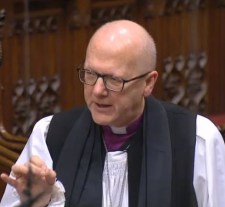 The Lord Bishop of St Albans: My Lords, I too thank the noble Earl, Lord Kinnoull, for obtaining the debate and the noble and learned Lord, Lord Cope of Craighead, for his excellent introduction. For these Benches, and indeed for many Members of your Lordships’ House, trees have a special significance. They feature in the first chapter of the holy scriptures in Genesis and they reappear in the final chapter of the Bible in the Book of Revelation chapter 22, where we find that enigmatic phrase:
“the leaves of the tree are for the healing of the nations.”
Continue reading “Bishop of St Albans on the importance of planting more trees and native species”
 The Lord Bishop of Oxford: My Lords, I declare an interest as a board member of the CDEI and a member of the Ada Lovelace Institute’s new Rethinking Data project. I am also a graduate of the AI Select Committee. I am grateful to the noble Lord, Lord Clement-Jones, for this important debate.
 Andrew Selous (South West Bedfordshire) (Con): It is a pleasure, albeit a sad necessity for many of us, to speak on a debate on this issue yet again in this House. The analysis I have seen from Open Doors and others shows that in the past three years alone more than 10,000 Christians have been killed for their faith—that is a staggering number. We are right to hold this debate today, because, as others have mentioned, the evidence shows that Christians are the target of about 80% of all the acts of religious discrimination or persecution around the world.
 The Lord Bishop of Oxford: My Lords, I warmly welcome this report and this vital debate. Never before in the scale of human history has there been such a wide and deep threat to our ecosystem or to human flourishing that was so clear and predictable on the horizon. Technology alone is not enough.
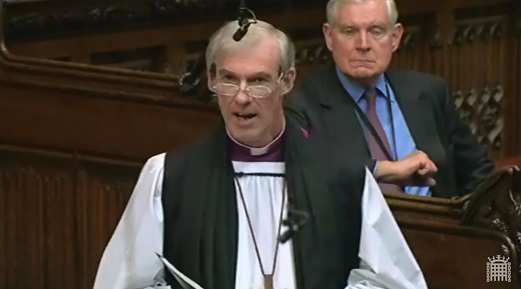 The Lord Bishop of Carlisle: My Lords, this is a very timely debate. I am most grateful to the noble Lord, Lord Hunt of Kings Heath, for securing it. I also look forward very much to the maiden speech of the noble Baroness, Lady Wilcox. We have already heard many statistics with regard to NHS targets and shall no doubt hear many more. But there seems to be general agreement that one of the biggest problems facing the NHS is what many now call a crisis in social
 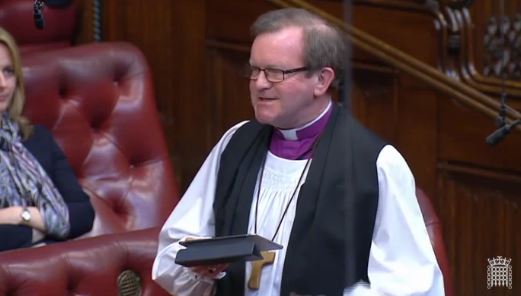 The Lord Bishop of Portsmouth: My Lords, I add my warm welcome to the noble Baroness, Lady Hunt, and congratulations on her fine maiden speech.
 The Lord Bishop of Carlisle: My Lords, I am greatly looking forward to the maiden speech of the noble Baroness, Lady Hunt of Bethnal Green, and I welcome
 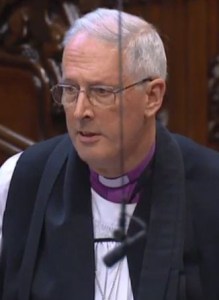 On 3rd February 2020 the House of Lords debated a motion from Lord Harris of Haringey, “to ask Her Majesty’s Government what plans they have to improve the safety and security of public venues, and whether they intend to introduce a Protect duty under the CONTEST strategy for countering terrorism.” The Bishop of Southwark, Rt Revd Christopher Chessun, spoke in the debate:
 The Lord Bishop of Carlisle: My Lords, I add my own congratulations and gratitude to the noble Baroness, Lady Bakewell, on securing this timely and important debate. Unlike my noble friend Lord Patel and other noble Lords yet to speak, I am not a scientist. However, I have vivid memories of following the Human Genome Project with a mixture of excitement and awe as I realised its huge potential for good. I have been equally impressed by the many recent developments in gene editing, including the 100,000 Genomes Project and CRISPR-Cas9, which we have heard about, and their implications for the prevention or treatment of diseases such as cystic fibrosis, muscular dystrophy and cancer.
  The Lord Bishop of Durham: My Lords, I look forward to the maiden speech of the noble Lord, Lord Choudrey.
 The Church of England in Parliament
You must be logged in to post a comment.