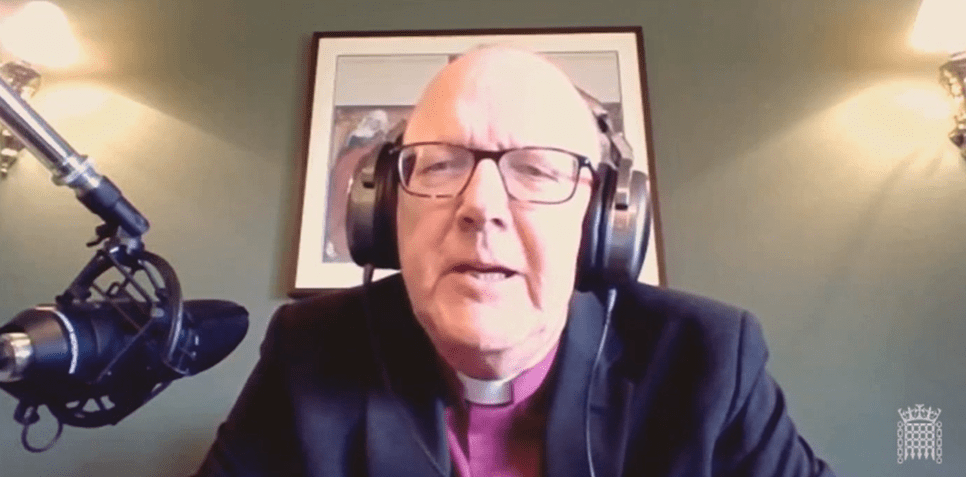
Divorce, Dissolution and Separation Bill ‘discourages possibility of reconciliation’ – Bishop of Portsmouth

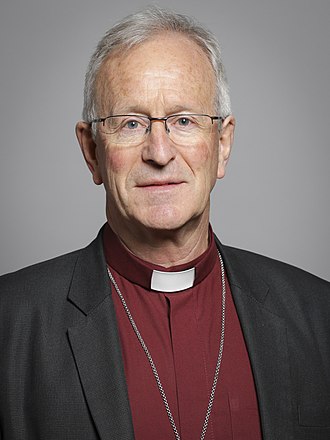
On 5th February 2020 the House of Lords debated the Government’s  Divorce, Dissolution and Separation Bill at its Second Reading. The Bishop of Portsmouth, Rt Revd Christopher Foster, expressed concern about the Bill, saying that divorce needed to be kinder to all involved, rather than easier. In his view “the Bill before the House discourages reflection and hence the possibility of reconciliation”.

Continue reading “Divorce, Dissolution and Separation Bill ‘discourages possibility of reconciliation’ – Bishop of Portsmouth”

Divorce, Dissolution and Separation Bill ‘creates more difficulties than it resolves’ – Bishop of Carlisle

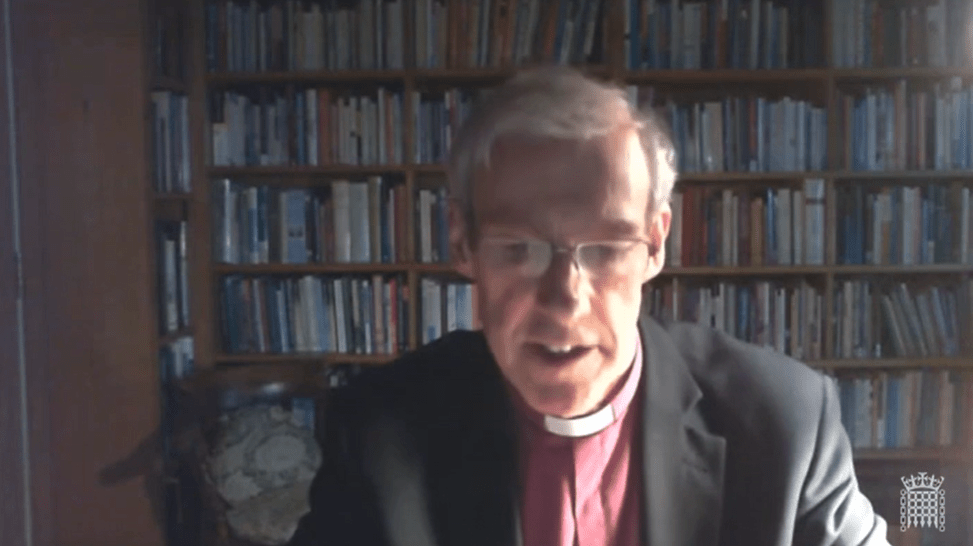
On 5th February 2020 the House of Lords debated the Government’s  Divorce, Dissolution and Separation Bill at its Second Reading. The Bishop of Carlisle, Rt Revd James Newcome, spoke in the debate and his remarks are below. He highlighted several problems with the Bill, which he said would create more difficulties than it was intended to resolve.

The Lord Bishop of Carlisle: My Lords, I am greatly looking forward to the maiden speech of the noble Baroness, Lady Hunt of Bethnal Green, and I welcome her to this House, which I am sure will benefit greatly from her expertise, campaigning zeal and commitment to debates on justice and equality.

Let me begin by saying that I appreciate the motivation behind the Government’s Divorce, Dissolution and Separation Bill. As we have already heard, they want to make divorce less complicated, less acrimonious and less harmful. Who could possibly argue with that? I like the revised terminology that the Bill suggests, and I agree that, at first sight, this looks like a sensible response to shortcomings in a process that is currently unsatisfactory and often seems to lack transparency or fairness.

However, this deceptively simple piece of legislation actually creates more difficulties than it resolves. One has to do with the nature of marriage itself and our commitment to it as a society—I shall confine my comments to marriage rather than civil partnership.

Continue reading “Divorce, Dissolution and Separation Bill ‘creates more difficulties than it resolves’ – Bishop of Carlisle”

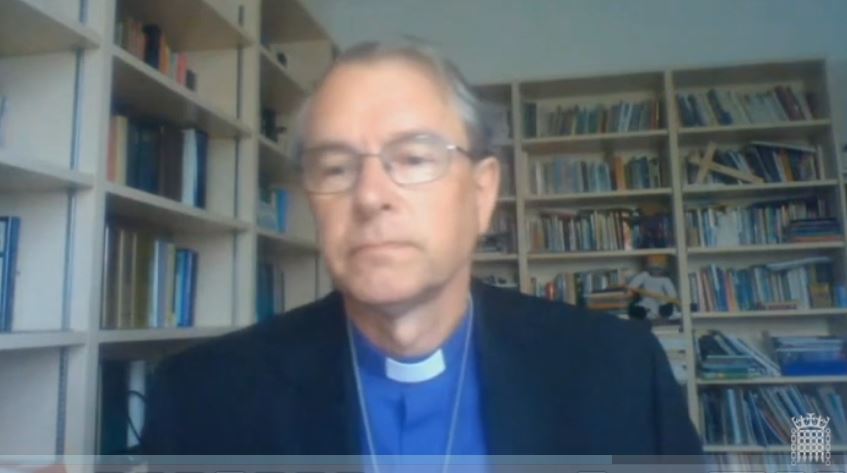
Bishop of Southwark asks questions about aim and intent of new counterterrorism laws

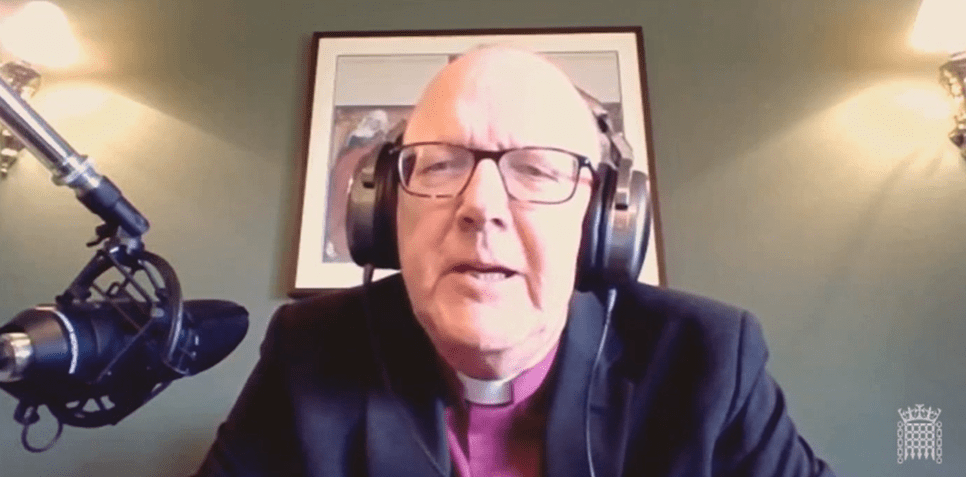
On 3rd February 2020 the House of Lords debated a motion from Lord Harris of Haringey, “to ask Her Majesty’s Government what plans they have to improve the safety and security of public venues, and whether they intend to introduce a Protect duty under the CONTEST strategy for countering terrorism.” The Bishop of Southwark, Rt Revd Christopher Chessun, spoke in the debate:

The Lord Bishop of Southwark: My Lords, I too am grateful to the noble Lord, Lord Harris of Haringey, for securing this debate and for making the points he made.

I live but a few minutes’ walk from the location of yesterday’s incident in Streatham, and my prayers go to those affected by yet another attack born of hate and callous disregard of God’s image reflected in the other. I too pay tribute to the rapid response of our emergency services, not least the police, who were tracking the individual, and to the ambulance service. Continue reading “Bishop of Southwark asks questions about aim and intent of new counterterrorism laws”

Bishop of Carlisle highlights ethical issues involved with gene editing

On 30th January 2020 the House of Lords debated a motion from Baroness Bakewell, “that this House takes note of recent developments in the field of gene editing, and its status in scientific research around the world.” The Bishop of Carlisle, Rt Revd James Newcome, took part in the debate:

The Lord Bishop of Carlisle: My Lords, I add my own congratulations and gratitude to the noble Baroness, Lady Bakewell, on securing this timely and important debate. Unlike my noble friend Lord Patel and other noble Lords yet to speak, I am not a scientist. However, I have vivid memories of following the Human Genome Project with a mixture of excitement and awe as I realised its huge potential for good. I have been equally impressed by the many recent developments in gene editing, including the 100,000 Genomes Project and CRISPR-Cas9, which we have heard about, and their implications for the prevention or treatment of diseases such as cystic fibrosis, muscular dystrophy and cancer. Continue reading “Bishop of Carlisle highlights ethical issues involved with gene editing”

Bishop of Durham asks Government to invest in early years to improve social mobility

On 29th January 2020 the House of Lords debated a motion from Baroness Tyler of Enfield, “to ask Her Majesty’s Government how they plan to respond to the ten steps to improve social mobility contained in the Sutton Trust’s Mobility Manifesto, published in November 2019, and the recommendations of the Social Mobility Commission’s 2019 State of the Nation report.” The Bishop of Durham, Rt Revd Paul Butler, spoke in the debate:

The Lord Bishop of Durham: My Lords, I look forward to the maiden speech of the noble Lord, Lord Choudrey.

Opportunity, aspiration and education are critical to all having the best chance of being socially mobile. Giving children the best start in life is paramount, so we need more health visitors, better-targeted childcare for those least able to afford it and renewed opportunities for parents to interact with others. Will Her Majesty’s Government commit to a proper national early years strategy with an increased share of future spending?

Church of England schools in my diocese have found it difficult to implement our motto that “no child is left behind” because social mobility is a great challenge exacerbated by a poverty of aspiration. According to the Social Mobility Commission’s survey, less than a third of people living in the north-east think that there are good opportunities in our region.

Continue reading “Bishop of Durham asks Government to invest in early years to improve social mobility”

Bishop of Oxford asks Government about links between food security, poor nutrition and climate change

On 28th January 2020 the House of Lords debated a question from Lord Collins of Highbury, asking Government”what consideration they have given to formulating their pledge at the Tokyo Nutrition for Growth 2020 summit, and what they are doing to build commitments from other countries.” The Bishop of Oxford, Rt Revd Steven Croft, spoke in the debate:

The Lord Bishop of Oxford: My Lords, I, too, welcome this timely debate. I thank the noble Lord, Lord Collins, and welcome the opportunity offered by the Tokyo Nutrition for Growth Summit.

It is moving to note, as other noble Lords have mentioned, that the number of people suffering from hunger has been increasing since 2015, albeit slowly. We know that behind the statistics lie terrible and moving stories of human suffering, disease and death, especially across Asia and sub-Saharan Africa. It is sobering to ponder on the one hand the challenge of providing a sustainable diet and preventing the lifelong consequences of malnutrition and, on the other, the striking rise in obesity across the world and consequent health problems. Continue reading “Bishop of Oxford asks Government about links between food security, poor nutrition and climate change”

European Union (Withdrawal Agreement) Bill: Bishop of Leeds says manner of withdrawal “will say something powerful about who we think we are”

Leeds0518bOn 13th January 2020 the Bishop of Leeds, Rt Revd Nick Baines, spoke in the second reading debate in the House of Lords of the European Union (Withdrawal Agreement) Bill:

The Lord Bishop of Leeds: My Lords, I look forward to the maiden speech of the noble Lord, Lord Barwell, for whom I had great respect when we served together in Croydon some years ago.

I think it is important that old arguments are not rerun in this debate: wherever one stands in relation to the 2016 referendum and subsequent debates, we are now where we are. I suspect, however, that it remains important for certain matters of principle to be rearticulated even at this stage, as the record will need to be clear when the history comes to be written, not least regarding the wisdom of writing into law hard deadlines for an implementation period. Do we not have anything to learn from recent history?

Continue reading “European Union (Withdrawal Agreement) Bill: Bishop of Leeds says manner of withdrawal “will say something powerful about who we think we are””

Bishop of Portsmouth responds to Queen’s Speech – how to build ‘one-nation’

On 9th January 2020, the Bishop of Portsmouth, Rt Revd Christopher Foster, spoke in the Queen’s Speech debate, about unifying the nation by building on the expansion of the Living Wage and addressing welfare, child poverty, homelessness and help for the disabled: 

The Lord Bishop of Portsmouth: My Lords, it is stating the obvious to say that these are turbulent, uncertain times, perhaps the most turbulent in living memory, even when that memory belongs to Members of your Lordships’ House—a particular, special demographic. It is striking in the face of so much that is uncertain and unknown that the Government’s rhetoric is of clarity, confidence, and even dash. However, while the terrain might be new, much of the rhetoric is from an older school. What is novel is from whom it comes. Continue reading “Bishop of Portsmouth responds to Queen’s Speech – how to build ‘one-nation’”

Bishop of Gloucester responds to Queen’s Speech – the needs of children and vulnerable women

On 9th January 2020 the Bishop of Gloucester, Rt Revd Rachel Treweek, spoke in the Queen’s Speech debate, about children and vulnerable women:

The Lord Bishop of Gloucester: My Lords, I begin by congratulating the noble Baroness, Lady Blower, on her excellent maiden speech.

I shall focus on children and vulnerable women; I draw noble Lords’ attention to my entry on the register of interests. My headlines are that we need policy that supports and enables early intervention and effective partnerships. Experiences that we have at an early age shape who we are. The Children’s Society has been measuring children’s well-being for more than a decade, and during much of that time children’s well-being has been in decline. This is not simply about children; it is about how we shape the sort of communities we want to see. Continue reading “Bishop of Gloucester responds to Queen’s Speech – the needs of children and vulnerable women”

Bishop of Southwark responds to Queen’s Speech – serious youth violence

On 9th January 2020 the Rt Revd Christopher Chessun, Bishop of Southwark, spoke during the fourth day of debate in the House on the Queen’s Speech, about serious youth violence:

Lord Bishop of Southwark: My Lords, I wish to raise the issue of local services that are likely to have a positive impact on serious youth violence, in particular knife crime. I appreciate that the criminal justice system was key to yesterday’s debate on the gracious Speech, and indeed the right reverend Prelate the Bishop of Rochester touched briefly on knife crime in that context. However, I wish to concentrate not on policing per se, nor on the actions of the courts, prison or probation services, but on those of other local agencies. Continue reading “Bishop of Southwark responds to Queen’s Speech – serious youth violence”