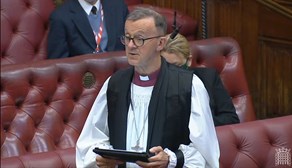
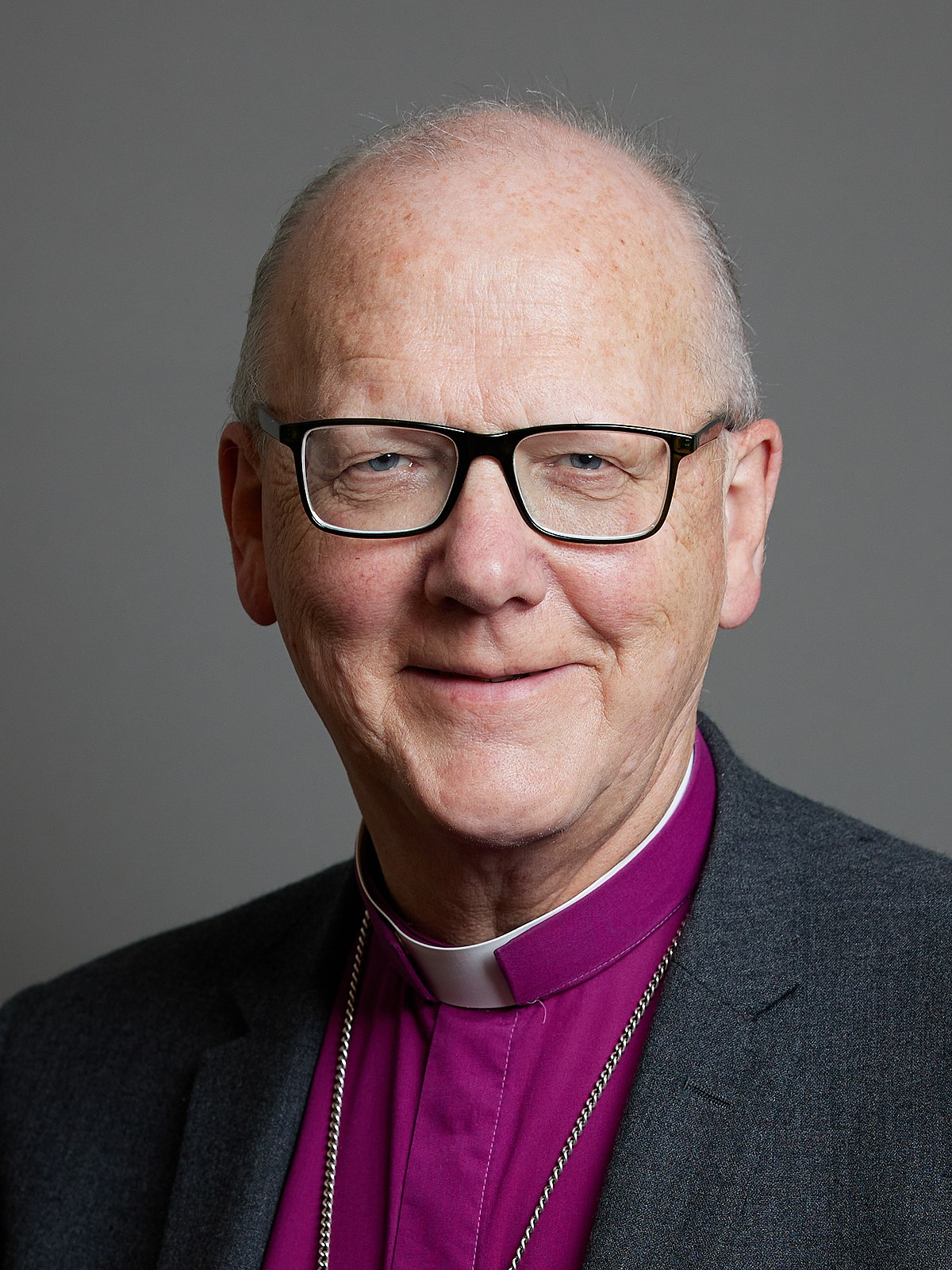
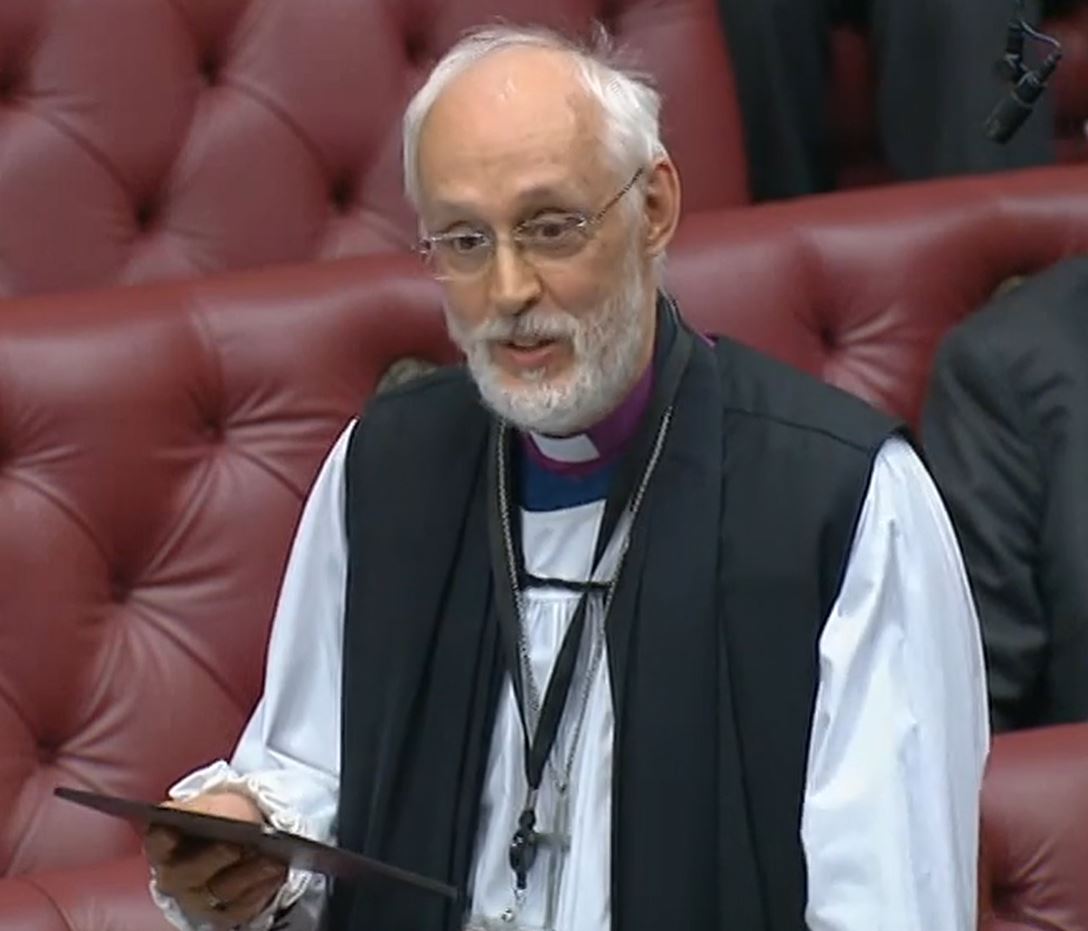
Bishop of Leeds asks about impact of UN Resolution calling for a ceasefire in Israel and Gaza

The Bishop of Leeds asked a question on the UN resolution calling for a ceasefire in Israel and Gaza on 26th March 2024, querying the potential impact of the resolution and whether it would affect countries such as Russia, China & Iran supplying weapons for the conflict:

The Lord Bishop of Leeds: My Lords, given that UN resolutions are not always seen through, as it were, or observed, is the Minister optimistic that this resolution will have the impact we want it to have? What impact will it have on countries like Russia, China and Iran continuing to supply weapons?

Continue reading “Bishop of Leeds asks about impact of UN Resolution calling for a ceasefire in Israel and Gaza”

Bishop of St Edmundsbury and Ipswich asks about environmental land management and sustainable farming initiatives

The Bishop of St Edmundsbury and Ipswich asked a question on ongoing assessment of environmental land management and sustainable farming schemes during a discussion on food security on 26th March 2024:

The Lord Bishop of St Edmundsbury and Ipswich: My Lords, I indicate my interests as listed in the register and pay tribute to farmers. As the Minister has said, the priorities are food production and environmental quality, including rebuilding biodiversity, restoring clean air and water and prioritising the rebuilding of healthy soils. What ongoing assessment is being made of the current ELMS and SFI programmes to meet these aims?

Continue reading “Bishop of St Edmundsbury and Ipswich asks about environmental land management and sustainable farming initiatives”

Bishop of Southwell and Nottingham asks about limiting solar plants on agricultural land

The Bishop of Southwell and Nottingham received the following written answer on 26th March 2024:

The Lord Bishop of Southwell and Nottingham asked His Majesty’s Government what consideration they have given to limiting the size of solar plants in areas of best and most versatile agricultural land.

Lord Callanan (Con, Department for Energy Security & Net Zero): Planning policy and associated guidance set out that the effective use of land should be prioritised by directing large scale solar projects to locate on previously developed and non-greenfield land.

Continue reading “Bishop of Southwell and Nottingham asks about limiting solar plants on agricultural land”

Bishop of Chelmsford asks about impact of introduction of physicians assistants in NHS settings

The Bishop of Chelmsford received the following written answer on 26th March 2024:

The Lord Bishop of Chelmsford asked His Majesty’s Government:

  • what steps they are taking to ensure that NHS staff have sufficient capacity to supervise and support new associate staff.
  • what steps they are taking to ensure that there is clarity for patients about different roles within clinical teams in healthcare settings, including regarding anaesthesia and physician associates.
Continue reading “Bishop of Chelmsford asks about impact of introduction of physicians assistants in NHS settings”

Bishop of Oxford speaks on freedom of religion and belief and need for universal human rights to be respected

The Bishop of Oxford spoke in a debate on what steps the government are taking to support persecuted Christians around the world on 25th March 2024, highlighting the importance of freedom of religion and belief in the context of broader human rights, and calling for the government to inform the House of future strategies to promote freedom of religion and support those facing persecution:

The Lord Bishop of Oxford: My Lords, I too add my congratulations and appreciation to the noble Baroness, Lady Foster, on securing this important debate and her comprehensive and moving survey and speech. It is a pleasure to follow the noble and right reverend Lord, Lord Carey, and I pay tribute to his considerable expertise in this area over many years. I am grateful to my colleague, the right reverend Prelate the Bishop of Winchester, formerly the Bishop of Truro, for a briefing in advance of this debate. He is not able to be present, but I know he will follow deliberations closely.

As the noble Baroness, Lady Foster, set out so eloquently, the beginning of Holy Week is a fitting time to remember the persecution of Christians across the world and the costs of faith. This persecution has been evident since the very beginning of the Church. Even so, it is extremely sobering and moving to reflect that, according to Open Doors, 365 million Christians face some sort of persecution worldwide—about one in seven of the global Christian population. I also note with other noble Lords the disproportionate consequences and costs for women and girls.

Continue reading “Bishop of Oxford speaks on freedom of religion and belief and need for universal human rights to be respected”

Bishop of Hereford welcomes new fair dealing regulations for the dairy farming sector

The Bishop of Hereford spoke in a debate on the draft Fair Dealing Obligations (Milk) Regulations on 25th March 2024, welcoming the new regulations and the benefits they would bring to the dairy farming sector:

The Lord Bishop of Hereford: My Lords, I applaud His Majesty’s Government for these new contract regulations. They are both comprehensive and long overdue in addressing matters of serious injustice in the dairy farming sector. Unfair milk contracts have been an area of concern for the dairy sector for many years, going back to the voluntary code of practice for dairy contracts, introduced in 2012. In their current form, most milk contracts do not create mutually balanced business relationships between buyers and sellers. Rights and obligations are often heavily biased in favour of buyers.

Continue reading “Bishop of Hereford welcomes new fair dealing regulations for the dairy farming sector”

Victims and Prisoners Bill: Bishop of Gloucester moves amendment to facilitate data collection on families and prisons

On 25th March 2024,the Bishop of Gloucester gave a speech and moved the following amendment during a debate on the Victims and Prisoners Bill:

172: After Clause 56, insert the following new Clause—

“Data collection in relation to children of prisoners: The Secretary of State must collect and publish annual data identifying—(a) how many prisoners are the primary carers of a child,(b) how many children have a primary carer who is a prisoner, and(c) the ages of those children.”
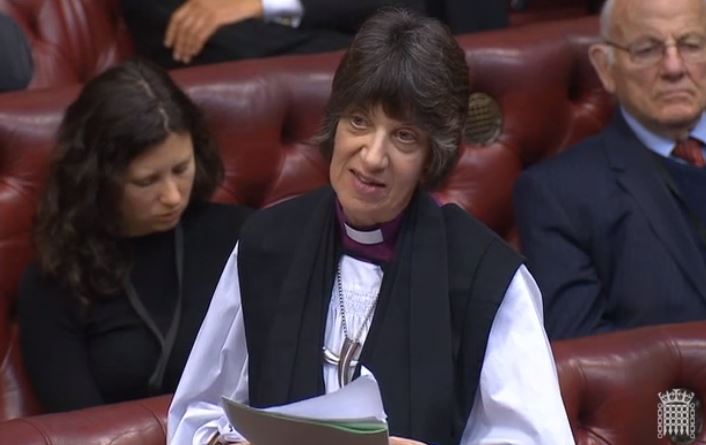
The Lord Bishop of Gloucester: My Lords, the noble Lord, Lord Farmer, tabled this amendment, to which I am very pleased to add my name in support and to move it today in this final stage of Committee on the Bill. In his absence, I take this opportunity to pay tribute to the noble Lord for his commitment to the families of prisoners. This is also an issue which I know my right reverend friend the Archbishop of Canterbury cares deeply about, as well.

This amendment was selected for Report stage in the other place but not discussed. Introduced by Harriet Harman, it is an important progress chaser to the Government’s response to the 2019 report from the Joint Committee on Human Rights, which she then chaired. This proposed new clause would require the Secretary of State to collect and publish annual data, identifying how many prisoners are primary carers of a child or children, how many children have a primary carer in prison, and the ages of those children. Its inclusion would be highly appropriate for this Bill, which focuses on both victims and prisoners.

When a parent is committed to custody, their child should not also receive a sentence; they should not be punished or overlooked as a result of their parent’s crime. 

Continue reading “Victims and Prisoners Bill: Bishop of Gloucester moves amendment to facilitate data collection on families and prisons”
Bishop of Oxford asks about government’s plans to relocate asylum seekers from hotels

On 25th March 2024, the Bishop of Oxford asked a question on the ramifications of the government’s plan to relocate asylum seekers from hotels to larger sites, during a discussion on the number of asylum claims waiting to be determined:

The Lord Bishop of Oxford: My Lords, the National Audit Office published a report on 20 March expressing the view that government plans to relocate asylum seekers from hotels to larger sites are actually proving more expensive than the hotel accommodation. Is this affecting the Government’s long-term strategy for offering safe accommodation?

Continue reading “Bishop of Oxford asks about government’s plans to relocate asylum seekers from hotels”

Bishop of Chelmsford asks about plans to introduce Physician Associates in NHS settings

The Bishop of Chelmsford received the following written answer on 25th March 2024:

The Lord Bishop of Chelmsford asked His Majesty’s Government, in view of the expected growth in the supply of physician associates (PAs) to 10,000 by 2036–37 under the NHS Long Term Workforce Plan, how many PAs are expected to work in each setting.

Continue reading “Bishop of Chelmsford asks about plans to introduce Physician Associates in NHS settings”

Artificial Intelligence (Regulation) Bill: Bishop of Worcester welcomes legislation

On 22nd March 2024, the Bishop of Worcester spoke in a debate on the Artificial Intelligence (Regulation) Bill (a private members bill tabled by Lord Holmes of Richmond), supporting the aims of the bill and calling for robust approach to AI regulation:

The Lord Bishop of Worcester: My Lords, I guarantee that this is not an AI-generated speech. Indeed, Members of the House might decide after five minutes that there is not much intelligence of any kind involved in its creation. Be that as it may, we on these Benches have engaged extensively with the impacts and implications of new technologies for years—from contributions to the Warnock committee in the 1980s through to the passage of the Online Safety Bill through this House last year. I am grateful to the noble Lord, Lord Holmes, for this timely and thoughtful Bill and for his brilliant introduction to it. Innovation must be enthusiastically encouraged, as the noble Baroness, Lady Moyo, has just reminded us. It is a pleasure to follow her.

That said, I will take us back to first principles for a moment: to Christian principles, which I hope all of good will would want to support. From these principles arise two imperatives for regulation and governance, whatever breakthroughs new technologies enable. The first is that a flourishing society depends on respecting human dignity and agency. The more any new tool threatens such innate dignity, the more carefully it should be evaluated and regulated. The second imperative is a duty of government, and all of us, to defend and promote the needs of the nation’s weak and marginalised —those who cannot always help themselves. I am not convinced that the current pro-innovation and “observe first, intervene later” approach to AI get this perennial balance quite right. For that reason, I support the ambitions outlined in the Bill.

Continue reading “Artificial Intelligence (Regulation) Bill: Bishop of Worcester welcomes legislation”