
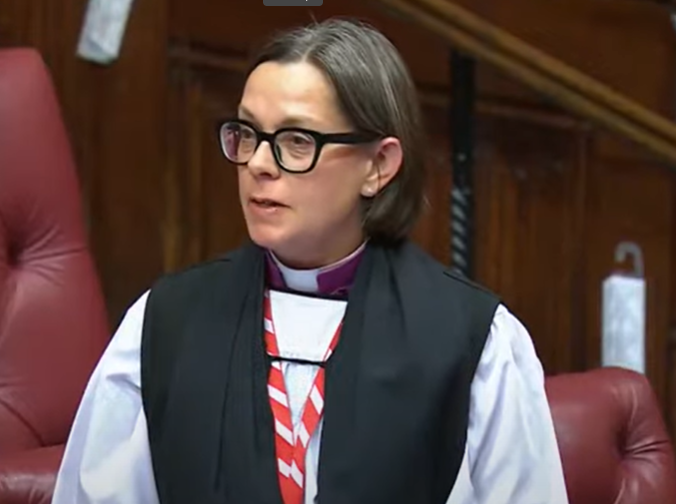
The Bishop of Newcastle spoke at the second reading of the Conduct of Undercover Policing and Surveillance Operatives Bill on 17th July 2026, emphasising the importance of trust and ethics in police work:
The Lord Bishop of Newcastle: My Lords, I am grateful to the noble Baroness, Lady Hamwee, for bringing this Bill before your Lordships’ House. It is an honour to follow the noble and learned Lord, Lord Thomas of Cwmgiedd, in this debate. I acknowledge the contributions from your Lordships who have drawn on their expertise and experience, which is far beyond my own.
Before turning to the substance of the Bill, which I support, I wish to acknowledge the extraordinary service that our police officers give to this country. In doing so, I pay tribute to PC Jess Turnbull of Northumbria Police, who tragically died in the line of duty at just 19 years of age. Her funeral was held in Newcastle Cathedral last Friday. We continue to hold her family, friends and colleagues in our thoughts and prayers, giving thanks for her life and her willingness to serve others at such a young age. Her death reminds us that policing is a vocation of public service, often carried out at great personal cost. It is in that spirit that I approach the Bill.
This Bill is not about preventing legitimate activities. Rather, it addresses one specific question, which, at its heart, is an ethical question before it is a legal one. The Bill concerns one of the most fundamental aspects of human life: the ability to trust another person. When an intimate relationship is deliberately entered into or maintained under a false identity for the purposes of surveillance, genuine consent is fundamentally compromised and profound harm can result. We have heard the testimony of those whose lives have been permanently affected by such experiences.
Recognising that harm is not a criticism of policing or the secret services. Rather, it affirms that those engaged in covert work, and those who authorise it, deserve clear ethical and legal boundaries within which to carry out their responsibilities. I therefore believe the Bill rightly recognises an ethical boundary that should not be crossed. Clear statutory limits are not a sign of distrust in such operations; they provide clarity for those exercising exceptional powers, protection for the public, and confidence that those powers are exercised within a clear moral and legal framework.
Public trust is one of the greatest assets that our police possess. It is painstakingly built but easily diminished. Effective policing depends upon not only the lawful exercise of power but public confidence that such authority will be exercised wisely, proportionately and with integrity. As the Bill progresses, I hope we will give careful attention to whether its provisions are sufficiently clear, oversight is sufficiently robust, and those undertaking covert work are themselves given the guidance and protection they need. Ethical clarity is not an obstacle to effective policing; it is one of its foundations.
The tragic death of PC Jess Turnbull reminds us of the courage that policing demands. We honour that courage by ensuring that those entrusted with extraordinary responsibilities are supported by laws that reflect the highest ethical standards. In doing so, we strengthen not only our policing but the trust between the police and the communities they serve, upon which our common life ultimately depends.
Extracts from the speeches that followed:
Lord Katz (Lab, Government Whip): Public trust in the police is important, as the right reverend Prelate the Bishop of Newcastle said. I join her in paying tribute to PC Jess Turnbull, who, as she said, paid the ultimate price for serving and protecting us. As the noble and learned Lord, Lord Thomas of Cwmgiedd, said, the reputation of the police is an important part of our discussions. I pay tribute to the noble Baroness, Lady Neuberger—once, and technically still, my rabbi at West London Synagogue—and what she said about their acts that we see daily and the way they protect all communities, particularly, over recent weeks and months, the Jewish community. When we talk about things that harm the reputation of the police, we must do so with great care and deliberation.
As noble Lords know, and as was mentioned many times in the debate, the Undercover Policing Inquiry was established to get to the truth of those events that we heard about and to ensure that lessons are learned for the future. Yesterday, my noble friend Lord Hanson of Flint announced his intention to run a focused public consultation to decide the future of the inquiry. The information gathered from this consultation will inform the next phase, ensuring that any new approach is effective, proportionate, timely and firmly grounded in the needs and priorities of those affected. The Government will, of course, carefully consider the inquiry’s findings and any recommendations in due course.


You must be logged in to post a comment.