On 15th January 2020 the House of Lords considered amendments to the Government’s European Union (Withdrawal Agreement) Bill at its second day in Committee. The Bishop of Worcester, Rt Revd John Inge, spoke in support of an amendment in the name of Lord Dubs and the Bishop of Durham, to ensure the continuation of the refugee children and family reunification provisions of the European Union (Withdrawal) Act 2018. The amendment was withdrawn by Lord Dubs at the end of the debate, with a commitment to return to it at a later stage.
Clause 37: Arrangements with EU about unaccompanied children seeking asylum. Debate on whether Clause 37 should stand part of the Bill.
The Lord Bishop of Worcester: My Lords, I am pleased to support this amendment, to which my friend the right reverend Prelate the Bishop of Durham has put his name. He is sorry not to be able to be in the Chamber today. A few weeks ago, we celebrated the story of Christmas. In the nativity, the happy events in a Bethlehem stable were followed by the more dramatic flight of the holy family to escape the violent persecution of King Herod. As we discuss this amendment, that story of the child Jesus and his parents fleeing from violence to a foreign land resonates loudly.
Children are among the most vulnerable victims of conflict, persecution and violence around the world. We all know that they do not choose to become refugees separated from their families. We as a nation can choose to reunite some families torn apart by conflict by offering children shelter, hope and a future. That is what I believe the majority of people in this country wish, and I am sure that is what the Government wish. This amendment seeks to ensure it by guaranteeing a safe, legal, effective and managed route for child refugees to join their families in this country. Continue reading “European Union (Withdrawal Agreement) Bill: Bishops support Dubs amendment on refugee children family reunion”
 The Lord Bishop of Leeds: My Lords, I think that the context has changed. When the Benn amendment went through, it was suspected of having the intention to thwart or delay Brexit. We are not in that position now: Brexit is going to go ahead. Surely, then, it is the job of the whole of Parliament to defend and promote its own interests and those of the Government in the negotiations going forward. So, in a perverse way, this amendment strengthens the hand of the Government by bringing in Parliament to back it and provide support as they embark on their negotiations; it does not diminish it.
 The Lord Bishop of London: My Lords, I am sure the Minister knows that safety is about not just numbers but the continuing development and supervision of nurses and midwives. Can she comment on what the Government are doing to ensure that both nurses and midwives are funded properly for clinical supervision and professional development?
 On 14th January 2020 Lord Oates (LD) moved Amendment 2 to the European Union (Withdrawal Agreement) Bill during its Committee Stage*. The Bishop of Leeds, Rt Revd Nick Baines, spoke in the debate on the amendment:
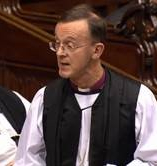 On 14th January 2020 Baroness Bennett of Manor Castle asked the Government “what plans the Constitution, Democracy and Rights Commission has to engage with civil society”. The Bishop of Worcester, Rt Revd John Inge, asked a follow-up question:
 On 13th January 2020 the Bishop of Leeds, Rt Revd Nick Baines, spoke in the second reading debate in the House of Lords of the European Union (Withdrawal Agreement) Bill:
 On the 13th January Baroness Lister of Burtersett asked the Government “what assessment they have made of the impact on low-income families of the four-year freeze in working age and children’s benefits”. the Bishop of Durham, the Rt Revd Paul Butler, asked a follow-up question:
 On 10th January 2020, Andrew Selous MP, the newly appointed Second Church Estates Commissioner, answered a written question from Jim Shannon MP, about Kurdish and other persecuted Christians:


You must be logged in to post a comment.