Bishop of Chester questions case for renewal of Trident nuclear deterrent

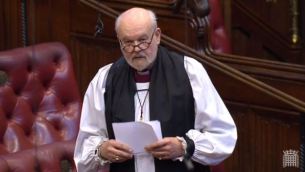
On 13th July 2016 the House of Lords debated a Government motion “That this House takes note of the Government’s assessment in the 2015 National Security Strategy and Strategic Defence and Security Review that the United Kingdom’s continuous at sea nuclear deterrent should be maintained.” The Bishop of Chester, Rt Revd Peter Forster, spoke in the debate:
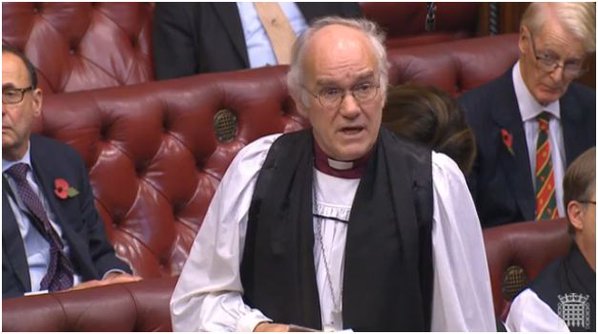
ChesterThe Lord Bishop of Chester: My Lords, the issue before the other place is the procurement of four new submarines, but it is not unreasonable at this time to contribute to our ongoing reflection upon why we have a nuclear deterrent at all. It is often said that countries and armies tend to prepare to fight the war that was fought 50 or more years ago without noticing how the world has changed, not least technology. Indeed, our recollection of the Battle of the Somme—when infantry charged machine guns—brings that rather vividly to mind. Continue reading “Bishop of Chester questions case for renewal of Trident nuclear deterrent”
Archbishop of Canterbury asks Government about efforts to restore peace in South Sudan

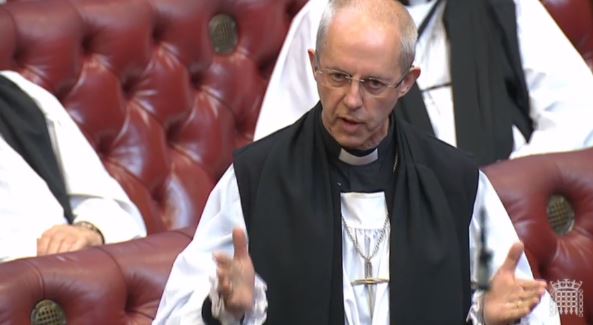
On 13th July 2016 Baroness Kinnock of Holyhead asked Her Majesty’s Government “what assessment they have made of the resurgence of violence in South Sudan.” The Archbishop of Canterbury, Most Revd & Rt Hon Justin Welby, asked a follow up question:

2ABCEUdebateThe Archbishop of Canterbury: My Lords, I have been in South Sudan twice in the past two years and in Kenya a week ago. Is the Minister encouraging the Government of Kenya to use the powers they have in their area, as most of the leaders of South Sudan have their families, farms and education of their children in Kenya, to encourage them to observe their ceasefire? What are Her Majesty’s Government doing to support the work of the peace and reconciliation commission led by the Anglican Archbishop of South Sudan and Sudan?

Continue reading “Archbishop of Canterbury asks Government about efforts to restore peace in South Sudan”

Bishop of London responds to the Chilcot Report on the invasion of Iraq

“There is no doubt that someone who dwells on history can be somewhat tedious, but at the same time someone with a sense of destiny and no sense of history can be very dangerous.”- Bishop of London, 12/7/16

On 12th July 2016 the House of Lords debated a Government motion “That this House takes note of the Report of the Iraq Inquiry”. The Bishop of London, Rt Rev and Rt Hon Richard Chartres, spoke in the debate:

Bp London 131015The Lord Bishop of London: My Lords, it is humbling to follow such a powerful and authoritative voice. I am also grateful to the Minister for the constructive way he introduced this debate and invited us to think about the lessons we can apply now. Sir John Chilcot recommends more thorough analysis before military action and a more collaborative approach to policy-making. I imagine that every one of your Lordships would probably agree that the case is well made, but politicians caught up in oppressive events, a rapidly changing situation and a 24/7 news environment, and with an ally who is losing patience, do not have much time for pondering decisions. Therefore—this echoes many of the remarks of the previous noble Lord—the culture and assumptions that leaders bring to the crisis are hugely significant. Continue reading “Bishop of London responds to the Chilcot Report on the invasion of Iraq”

Church Commissioners written answer: Mothers and Babies

Caroline SpelmanOn 12th July 2016 the Second Church Estates Commissioner, Rt Hon Caroline Spelman MP, answered a written question from Mark Hendrick MP about facilities for mothers and babies in local churches.

Mr Mark Hendrick (Preston): To ask the right hon. Member for Meriden, representing the Church Commissioners, what facilities are available for (a) lactating mothers and (b) the changing of babies within churches in the Diocese of Blackburn (i) during church services and (ii) at other times. Continue reading “Church Commissioners written answer: Mothers and Babies”

Bishop of London asks Government to work with church schools on youth volunteering

Bp London 131015On 11th July 2016, Lord O’Shaughnessy asked the Government “what steps they are taking to promote long-term, full-time volunteering among young people.” The Bishop of London, the Rt Hon and Rt Revd Richard Chartres, asked a supplementary question:
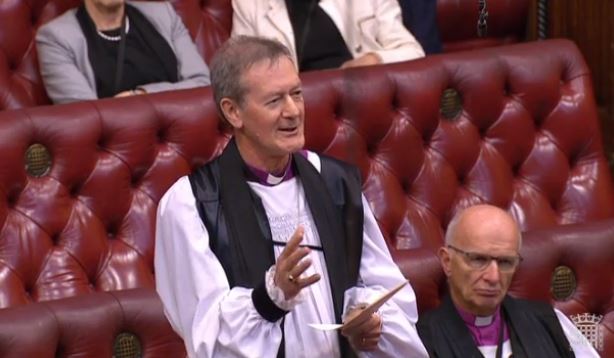

The Lord Bishop of London: My Lords, bearing in mind the more than 1 million young people—ethnically very diverse and from every part of the country—in Church of England schools, will the Minister authorise a direct conversation with the national society about the virtues of volunteering, with a view to joint action, a joint strategy and disseminating good practice? Continue reading “Bishop of London asks Government to work with church schools on youth volunteering”

Church of England Week in Westminster, 4th-8th July 2016

Westminster-abbeyWelcome to the Church of England’s weekly round-up of activity in Parliament.

This week the Archbishop of Canterbury and the Bishop of Ely took part in a two day debate in the House of Lords on the outcome of the EU referendum. Bishops scrutinised the Government’s Children and Social Work Bill, spoke on the rural economy, modern slavery and responded to the Government’s statement on the Chilcot Report. Bishops also asked questions on EU citizens in the UK, alcohol buying, war in Sudan, development aid and university research and voted on tobacco regulations. In the House of Commons MPs put questions to the Second Church Estates Commissioner, including on out of school settings, poverty, women bishops and human trafficking. Continue reading “Church of England Week in Westminster, 4th-8th July 2016”

Modern Slavery (Transparency in Supply Chains) Bill [HL] – speech by Bishop of Derby

On 8th July 2016 the House of Lords considered the Modern Slavery (Transparency in Supply Chains) Bill [HL],  a Private Members’ Bill from Baroness Young of Hornsey. The Bishop of Derby spoke in the debate:

Derby 191115cThe Lord Bishop of Derby: My Lords, I too thank and congratulate the noble Baroness, Lady Young, and support these suggestions. I declare an interest in that I am the chairman of the advisory panel to the Independent Anti-Slavery Commissioner and am therefore, among other things, quite heavily involved in some of these issues.

My first point is that the Modern Slavery Act recognised very clearly the importance of information, which gives power. If you hide information, people get the wrong kind of power to behave badly. Besides trying to press companies to behave well and have good practices, we need to remind ourselves that this is not simply to fight on behalf of victims—although that is of course the priority—but to fight against serious organised crime, which in itself is a very successful business model that is expanding all the time, as we speak. It is therefore in the interests of proper companies to help us all to push back against criminal business behaviour, which has these appalling human consequences and is also enormously damaging to the health of our economy and the well-being of business more generally. Continue reading “Modern Slavery (Transparency in Supply Chains) Bill [HL] – speech by Bishop of Derby”

Church Commissioner Written Answer: Human Trafficking

Caroline SpelmanOn 7th July 2016 the Second Church Estates Commissioner, Rt Hon Caroline Spelman MP, answered a written question from Jim Shannon MP on human trafficking:

Jim Shannon (Strangford): To ask the right hon. Member for Meriden, representing the Church Commissioners, what steps are being taken by the Church of England to tackle human trafficking.

Mrs Caroline Spelman: In March 2014 the Archbishop of Canterbury, with Pope Francis and other global faith leaders, gave their backing to the Global Freedom Network (www.globalfreedomnetwork.org), a ground breaking ecumenical initiative to combat modern slavery and human trafficking. The Archbishop is planning an international conference in 2017 with the Ecumenical Patriarch.  Continue reading “Church Commissioner Written Answer: Human Trafficking”

Church Commissioner written answer: First World War commemorations

Caroline SpelmanOn 7th July 2016 the Second Church Estates Commissioner, Rt Hon Caroline Spelman MP, answered a written question from Jim Shannon MP on commemorations for the First World War:

Jim Shannon (Strangford):  To ask the right hon. Member for Meriden, representing the Church Commissioners, whether the Church of England has plans for educational projects to commemorate the First World War in addition to existing centenary events.

Mrs Caroline Spelman: The Church of England has led many of the commemorative events for the First World War at a local and national level. It would not be possible to list all the activities taking place now and in the future to commemorate the sacrifice of those who fought in the First World War, but each diocese and parish is marking the centenary in its own way. Continue reading “Church Commissioner written answer: First World War commemorations”

Bishop of St Albans highlights challenges to the rural economy outside the EU

“We can create all the life chances we like, but that is futile if families cannot afford to put food on the table” – Bishop of St Albans, 7/7/16

On 7th July 2016 the House of Lords debated a motion from Lord De Mauley, “That this House takes note of the current and future roles agriculture and horticulture play in Britain’s rural economy and the role that advances in agricultural science can play in the further development of that sector.” The Bishop of St Albans, Rt Revd Alan Smith, spoke in the debate:

StAlbans171115The Lord Bishop of St Albans: My Lords, I add my thanks to those from other noble Lords to the noble Lord, Lord De Mauley, for securing this important debate at this time of significant uncertainty for the agricultural and horticultural sectors. I also declare my interest in the register as president of the Rural Coalition.

As noble Lords have already stated, the agricultural and horticultural industry is an essential feature not only of the rural economy but of the wider national economy. It is often said in this Chamber that the defence of the people is the first duty of government, but I wonder whether feeding the people should be an equally primary duty. Establishing food security is an essential role of all Governments, never more so than in the current climate of global uncertainty. Continue reading “Bishop of St Albans highlights challenges to the rural economy outside the EU”