Bishop of Derby asks Government about pastoral care and training for those on zero-hour contracts

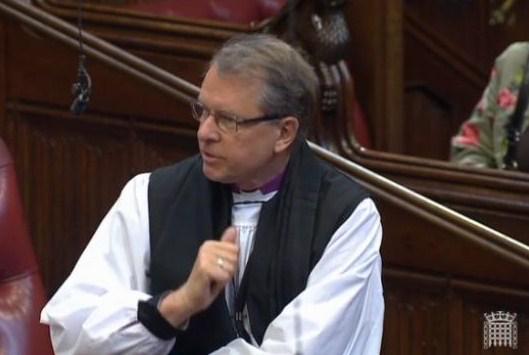
On 29th June 2016 Baroness Quin asked Her Majesty’s Government “in the light of the increased use of zero-hours employment contracts nationally and regionally, what assessment they have made of the effects of such contracts on an individual’s chances of gaining full-time salaried employment, and on specific sectors, both public and private, of the UK economy.” The Bishop of Derby, Rt Revd Alastair Redfern, spoke in the debate.
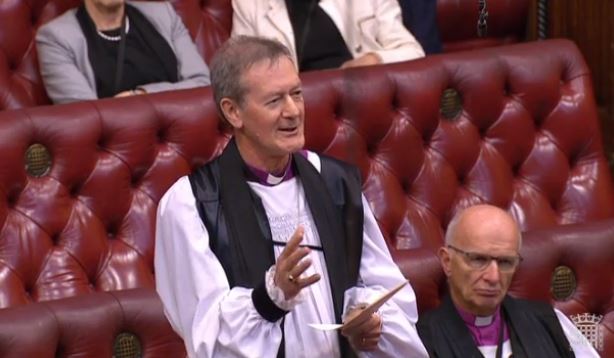
Derby 191115cThe Lord Bishop of Derby: My Lords, I, too, thank the noble Baroness, Lady Quin, for introducing this important event. It does feel lonely over here, and I hope you will not think that I am the Opposition.

I have become interested in this issue in part because of my work on modern slavery. I name that, alongside this issue, because we are in a perfect storm that is making slavery and zero-hours contracts increasing phenomena in our society. We have heard about this perfect storm: this tightness in margins and the shifting of risk; the desire for flexibility; the fact that people are so mobile they do not develop a strong relationship with any employer anyway; and the fact that, as the noble Lord, Lord Monks, and the noble Baroness, Lady Dean, said, economic inequality is increasing so much that people are desperate for work. Then migration, and especially illegal migration, adds another degree of desperation. There is a market to be exploited, both through slavery and through the unscrupulous use of zero-hours contracts, although we know these do suit some people. Continue reading “Bishop of Derby asks Government about pastoral care and training for those on zero-hour contracts”

Bishop of Chelmsford condemns hate crime, calls for better religious literacy

On 29th June 2016 Lord Ahmed repeated to the House of Lords a Government statement made in the House of Commons about hate crime. The Bishop of Chelmsford, Rt Revd Stephen Cottrell, asked a follow up question about religious literacy and education.Chelmsford 251115

The Lord Bishop of Chelmsford: My Lords, perhaps I may ask the Minister two specific questions about religious literacy and religious education. First, I welcome the Statement and the responses from the other Front Benches, and of course to express my own great dismay at the incidents that we have experienced in recent days. As I said in the House on Monday, the diocese where I serve includes some of the most multicultural parts of this country. I have heard many disturbing stories, and even more of them here today.

My first question relates to religious education. We have discovered in recent days something that is already there within us and that has been stirred up and legitimised by some of the debate, yet religious education has less of a place in the national curriculum than it used to. I wonder whether this is another opportunity for the Government to look again at the place of religious education in schools.

My second question is about religious literacy. I serve on this House’s Select Committee on Communications. We have recently completed a report on the renewal of the BBC charter. Religious broadcasting has almost disappeared from public service broadcasting, and the BBC no longer has a commissioning editor for religious broadcasting. Surely this is a time when we need to do more about this. It is a very practical matter that the Government could address. Continue reading “Bishop of Chelmsford condemns hate crime, calls for better religious literacy”

Bishop of Chelmsford asks about Free Speech in Universities

Chelmsford 251115On the 27th June 2016, Lord Leigh of Hurley asked the Government “what steps they are taking to counter anti-Semitism on university campuses in the United Kingdom.” The Bishop of Chelmsford, the Rt Revd Stephen Cottrell, asked a supplementary question: Continue reading “Bishop of Chelmsford asks about Free Speech in Universities”

Bishop of Chelmsford calls for action to counter fear and race hatred after EU referendum

Chelmsford 251115On 27th June 2016, Baroness Stowell of Beeston repeated a statement on the result of the EU Referendum, made by the Prime Minister in the House of Commons. The Bishop of Chelmsford, Rt Revd Stephen Cottrell, asked a follow up question:
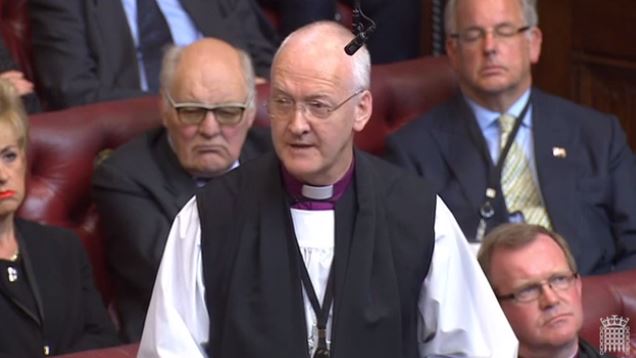

Lord Bishop of Chelmsford: My Lords, some commentators have said that the result of the referendum was a resounding victory for Brexit. I am not sure that I see it that way: 52 to 48 is, to my mind, a rather narrow victory. Where there is no overwhelming consensus, there is an overwhelming need to take account of the views of others. Nobody likes a bad winner. There has been too much hyperbole and spite in this debate. Yes, one side did win, the result is clear and we have to act on it. Those who advocated leave obviously need to take the lead in the negotiations that will take place. But we urgently need the sort of wise leadership that can build consensus. We need some sort of national Government—a coalition of good will where we can work together.

I serve the diocese of Chelmsford, which is, “east London in and Essex out”. Yesterday I spoke to a head teacher who said that the children were frightened when they went to school on Friday and that she had seen an increase in race hatred and intolerance. What plans are there to address the lack of unity in our nation and to counter the fear and race hatred that is on the rise? Can we ensure that those who lost this vote, as well as those who won, can be part of the planning going forward? Continue reading “Bishop of Chelmsford calls for action to counter fear and race hatred after EU referendum”

Bishop of Leeds pays tribute to Jo Cox MP

On 20th June 2016 both Houses of Parliament were recalled to pay tribute to Jo Cox MP.

In the House of Lords the Bishop of Leeds, Rt Revd Nick Baines, spoke on behalf of the Bishops’ Benches. His tribute follows:

Leeds160620The Lord Bishop of Leeds: My Lords, I speak on behalf of the Archbishops and Bishops and the Church of England. I do not want to repeat what has already been said but to associate ourselves with those remarks and offer deep sympathy to Brendan, the children and the wider family, and to the Members of the other place.

We live with our mortality and the fragility of civilisation. It is not very deep, and it can be easily penetrated. When I heard of Jo’s death, in my office in Leeds, I was reminded of those words from “Julius Caesar”:

“Cowards die many times before their deaths. The valiant never taste of death but once”.

There are many cowards around who have died inside, and Jo was the antithesis of that: she was full of life. She was passionate, she was intelligent and she was always generous. Her constituents, among whom I have spent the last few days, are unequivocal about that. Continue reading “Bishop of Leeds pays tribute to Jo Cox MP”

Church of England Week in Westminster, 13th-17th June 2016

Welcome to the Church of England’s weekly round-up of activity in Parliament.

WestminsterThis week the Bishop of Gloucester read prayers in the House for the first time, becoming the first woman to do so in the history of Parliament. Bishops also asked questions on the attacks in Orlando, persecuted Christians in the Middle East, fostering of child refugees and the impact of stop and search on the black community. Bishops also spoke in debates on the Government’s Children and Social Work Bill and the migrant crisis. The Bishop of St Albans’ bill on gambling received its First Reading in the Lords. In the Commons the Second Church Estates Commissioner answered a question on deprived communities. Parliament rose on Wednesday for the short EU referendum recess.

Members of both Houses responded with shock and sadness to the news of the death of Jo Cox MP, who had been attacked outside her constituency advice surgery. The Bishop of Sheffield, on duty in the Lords for the week, published thoughts on this tragic event.  
Continue reading “Church of England Week in Westminster, 13th-17th June 2016”

The darkest valley: a reflection on this week in Parliament by the Bishop of Sheffield

The Bishop of Sheffield, Rt Revd Steven Croft posted the following article on the Sheffield Diocese website on 17th June 2016:

sheffield“Even though I walk through the darkest valley, I fear no evil; for you are with me”

These words from Psalm 23 have been in my mind this week following the atrocities in Orlando and the terrible murder of Jo Cox yesterday.

I’ve been in Parliament for my final week of duty there as the Bishop of Sheffield. It’s been a sombre week. The House of Lords kept a minute’s silence on Monday afternoon before prayers for the victims of the Orlando shootings. On Monday evening I walked through Soho on the way to meet my son. I was moved by the powerful display of solidarity by the LGBTI community there and across the world. Continue reading “The darkest valley: a reflection on this week in Parliament by the Bishop of Sheffield”

Bishop of Sheffield speaks on Church response to the migrant crisis

On Wednesday 15th June 2016 the House of Lords debated the Report from the European Union Committee The EU Action Plan against migrant smuggling (4th Report, Session 2015–16, HL Paper 46). The Bishop of Sheffield, Rt Revd Steven Croft, spoke in the debate:

14.03.27 Bishop of SheffieldThe Lord Bishop of Sheffield: My Lords, I welcome the two reports before us in all their complexity and I thank the members of the European Union Committee for their expertise, which is already evident in this debate. I particularly welcome the committee’s recommendation in paragraph 8 that the mandate of Operation Sophia is reviewed and renewed, along with the EU’s subsequent decisions. Clearly, this operation alone cannot be the complete answer to the challenges that we face. However, the European Union must not return to the position that it held before the Lampedusa tragedy of apparent indifference to those who seek to cross the Mediterranean in danger of their lives. Nor can we neglect the spread of people-smuggling on and across our borders. Continue reading “Bishop of Sheffield speaks on Church response to the migrant crisis”

Deprivation: Church Commissioners Written Answer

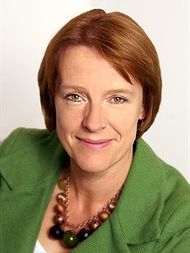
Caroline SpelmanOn 15th June 2016 the Second Church Estates Commissioner, Rt Hon Caroline Spelman MP, answered a written question from SNP MP Deidre Brock, on deprived communities.

Deidre Brock (Edinburgh North and Leith): To ask the right hon. Member for Meriden, representing the Church Commissioners, if the Church of England will make an assessment of the effect of austerity on communities in the most deprived areas as measured by the English Indices of Deprivation 2015 [40353].

Mrs Caroline Spelman: The Church Commissioners have no plans to undertake such an assessment. Through its network of parishes and dioceses the Church of England is present in all the communities of England. The clergy and people of the Church of England are well placed to hear, articulate and respond to the needs and concerns of local communities. This plays an important role in informing the public engagement of the Church on social policy matters especially at local level.

(via Parliament.uk)

Bishop of Durham welcomes direction of Government’s Children and Social Work Bill

On 14th June 2016 the Bishop of Durham, Rt Revd Paul Butler, spoke during the Second Reading debate on the Government’s Children and Social Work Bill: 

Bp Durham June 2015 bThe Lord Bishop of Durham: My Lords, I am grateful that in the scheduling I find myself following the noble Earl, Lord Listowel, whose passion and commitment to those in care and care leavers is widely known.

In greeting the main thrust of this Bill in my comments on the gracious Speech, I welcomed the measures to strengthen adoption, and also said:

“We need to ensure that life chances for those in residential or foster care are as good as for all other children”.—[Official Report, 19/5/16; col. 41.]

A focus on long-term life outcomes is likely to lead to better decisions in placing children, including non-consensual adoption, but 75% of looked-after children are fostered, and it is no less important for them and for those in other forms of care that their long-term well-being outweighs any other considerations of economy or convenience. It is regrettable that the Bill has not addressed further issues of fostering and kinship care, as other noble Lords have already noted. Continue reading “Bishop of Durham welcomes direction of Government’s Children and Social Work Bill”