
Church Commissioners Written Answer on property development in Peterborough

On the 20th November 2015 the Second Church Estates Commissioner answered a written question about property development in Peterborough.
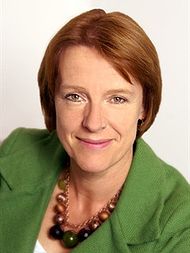


Caroline SpelmanMr Stewart Jackson (Peterborough): To ask the right hon. Member for Meriden, representing the Church Commissioners, for what reason the Church Commissioners have not released land for the construction of a primary school, in accordance with previous legal undertakings, at the Paston Reserve urban extension in Peterborough; and if she will make a statement.

Mrs Caroline Spelman: The Church Commissioners are involved in the development of Paston Reserve in Peterborough. Within the development there is provision for a site and financial contributions towards the delivery of a primary school site as outlined within the agreed Section 106 legal agreement that accompanied the planning permission and that was varied by agreement with the Council in 2010. The Section 106 agreement provides that the primary school site must be delivered prior to any house occupation on the third phase of development on the site and also outlines the trigger points at which the financial contributions for the school will be provided. Continue reading “Church Commissioners Written Answer on property development in Peterborough”
Trade unions, the church and modern slavery – speech by the Bishop of Derby

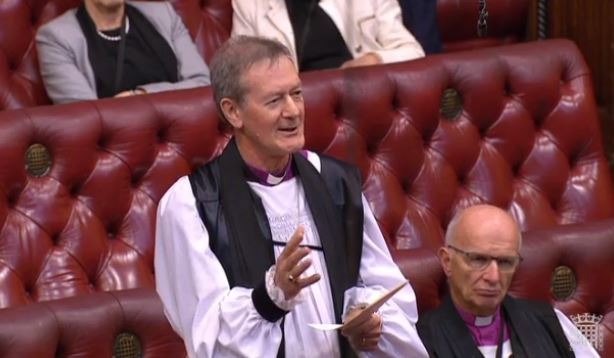
On 19th November 2015 the House of Lords debated a motion from Labour Peer Lord Foulkes of Cumnock “That this House takes note of the role of trade unions in a democracy and their contribution to the general economic wellbeing of the nation.” The Bishop of Derby, Rt Revd Alastair Redfern, spoke in the debate about the historic connection between trade unions and the churches, today’s ‘non-joining’ culture and the role unions can play in combating modern slavery. The speech can also be watched online, here.


Derby 191115c

The Lord Bishop of Derby: My Lords, I, too, thank the noble Lord, Lord Foulkes, for this timely and important debate, and for his introduction to it. I want to say a little about the context in which we are having the debate and then make one or two points about the future of the trade union movement. As the noble Lord, Lord Foulkes, hinted, the trade union movement as we know it came out of chapels and churches and concern for the welfare of human beings in the world of work. We face similar challenges. If I may, I shall name some of the challenges that face not just churches but trade unions.

We live in what I call a non-joining culture. People want their rights and services in their lives but there is less energy to join and put your back to the wheel to make it happen. As people do not join and our numbers go down, there are fewer people to take up this important work. That is a real challenge for the trade union movement, as it is for the church, not least as the world of work gets more complex. We need more energy, more wisdom and more contribution from the experience of those in the world of work. Continue reading “Trade unions, the church and modern slavery – speech by the Bishop of Derby”

Divisions – European Union Referendum Bill

On 18th November 2015 the Bishop of Chester, the Rt Revd Peter Forster, took part in two votes on amendments to the Government’s European Union Referendum Bill –  on votes for 16 year olds and eligibility of overseas commonwealth citizens to vote in the referendum.

Continue reading “Divisions – European Union Referendum Bill”

Bishop of Worcester praises ‘common good’ value of restorative justice

On 18th November 2015 Lord Blair of Boughton asked Her Majesty’s Government “what assessment they have made of the effectiveness of restorative justice services in England and Wales.” The Bishop of Worcester, Rt Revd John Inge, asked an additional question:


WorcesterThe Lord Bishop of Worcester: My Lords, does the Minister accept that, whatever the statistics regarding effectiveness, for those who participate in it restorative justice is a profoundly affecting experience? I have witnessed the restorative justice programme in HM Prison Hewell in my diocese, and for all concerned—particularly for members of the community—it is a deeply affecting experience which is profoundly for the common good. Continue reading “Bishop of Worcester praises ‘common good’ value of restorative justice”
Welfare Reform Bill – Bishop of Durham raises child poverty concerns

On 17th November 2015 the House of Lords debated at Second Reading the Government’s Welfare Reform and Work Bill. The Bishop of Durham, Rt Revd Paul Butler, raised concerns about the impact on child poverty of proposed changes, including the two-child limit. The Bishop of St Albans also spoke in the debate.


Durham171115The Lord Bishop of Durham: My Lords, I support many of the principles underlying this Bill: the importance of personal, as well as collective, responsibility; the value of decent work, not just financially, but for human dignity; the role of the welfare system in encouraging positive behaviours; the recognition that poverty is not simply about lack of income; and the desire for fairness for those who receive from and contribute to the system, including the vast majority of us who do both at different points in our lives. None of these is completely new, but the Government’s approach to welfare reform has certainly reinvigorated the debate about poverty, helping to challenge implicit assumptions and some very tired thinking. Governments naturally want to distinguish themselves, but in seeking to introduce a fresh perspective on old problems, there is always a danger of going too far or of throwing out the good with the bad. That is my concern about some of the measures being discussed today.
Continue reading “Welfare Reform Bill – Bishop of Durham raises child poverty concerns”

Welfare Reform Bill – Bishop of St Albans raises support for vulnerable adults

On 17th November 2015 the House of Lords debated at Second Reading the Government’s Welfare Reform and Work Bill. The Bishop of St Albans, Rt Revd Alan Smith, raised concerns about potential impact on vulnerable adults, both in the proposals for supported housing and for those receiving the Employment Support Allowance. The Bishop of Durham also spoke in the debate.


StAlbans171115

The Lord Bishop of St Albans: My Lords, I will pick up on some of the themes that have been raised by some of my noble friends who have spoken today, particularly on the area of vulnerable adults and those who are disabled. I invite the Government to think about two issues in particular. The first relates to the clause in the Bill legislating for a mandatory 1% annual reduction in social housing rents over the next four years. I, like other noble Lords, understand that the Government have their reasons for introducing this mandatory reduction, not least the considerable savings on housing benefits that such a rate reduction would deliver. I welcome the discretionary power that the Secretary of State will have to waive the requirement for rent reductions. This will go some way to protecting those housing associations which find themselves financially exposed due to circumstances outside their control. Continue reading “Welfare Reform Bill – Bishop of St Albans raises support for vulnerable adults”

Paris attacks – Bishop of Birmingham stresses need for community integration

On 17th November 2015 the Leader of the House of Lords repeated a statement by the Prime Minister on the Paris terrorist attacks of 13th November, and the G20 summit. The Bishop of Birmingham, Rt Revd David Urquhart, responded to the statement from the Bishops’ Benches.


Birmingham 171115The Lord Bishop of Birmingham: My Lords, I am grateful to the Minister for her repeating of the Statement and, from these Benches, join your Lordships in offering our sympathy for the tragic loss of life and the injuries that occurred in Paris—and, as the noble and learned Lord, Lord Wallace, said, in other parts of the region, in recent weeks.
On the area of ideology, the third of area in the Statement, can the Minister go a bit further? While we make every effort, as we must, to deal with this issue by military power and by counter-extremism measures, the area of ideas is a matter which I ask the Minister to consider very seriously in terms of quite small but important resources, as we try to develop the right relationships in the community that the Prime Minister so wants—not just asking Muslims to argue for a good Islam, but also to join people of faith, or no faith, of all parts in developing right thinking, friendship and deep relationships, which will allow us to move on from this ghastly use of violence into a more integrated society. Will she also encourage us to make a successful integration of the new wave of Syrian refugees fleeing from death in their own country? Continue reading “Paris attacks – Bishop of Birmingham stresses need for community integration”

Bishop of St Albans asks Government about security of Camp Liberty

StAlbans171115On 16th November 2015, the Bishop of St Albans, Rt Revd Alan Smith, received written answers to questions about the security of Camp Liberty in Iraq.


Bishop of St Albans: To ask Her Majesty’s Government what is their assessment of the recent missile attacks on Camp Liberty in Iraq. Continue reading “Bishop of St Albans asks Government about security of Camp Liberty”

Church of England Week in Westminster 9th-13th November 2015

WestminsterWelcome to the Church of England’s weekly round-up of activity in Parliament.

Before the House rose for its short November recess bishops spoke about bilateral trade between the UK and African nations and took part in a debate on the Government’s Bank of England Bill. Questions were asked about private sponsorship schemes for Syrian refugees and support for farmers with delayed rural payments.  Continue reading “Church of England Week in Westminster 9th-13th November 2015”

Bishop of Southwark raises Zimbabwe and Senegal during Lords debate on bilateral trade between UK and Africa

On 11th November 2015 the House of Lords debated a motion from Lord Sheikh: “To ask Her Majesty’s Government what plans they have to encourage more bilateral trade between the United Kingdom and African countries.” The Bishop of Southwark, Rt Revd Christopher Chessun, spoke in the debate, raising the situation of Zimbabwe and the tax treaty between the UK and Senegal.


Bp Southwark May 2015The Lord Bishop of Southwark: My Lords, I am grateful to the noble Lord, Lord Sheikh, for a debate so pertinent to the times in which we live. I, too, look forward to the maiden speech of the noble Lord, Lord Oates. Although my knowledge of Africa at large is somewhat limited, I am a regular visitor to Zimbabwe, with my diocese having close links to four of its five Anglican dioceses: those of Central Zimbabwe, Manicaland, Matabeleland and Masvingo. The bishops, clergy and people of those places share a good deal of the reality of their lives and faith with me, and demonstrate remarkable resilience and strong hope in the face of adversity. Continue reading “Bishop of Southwark raises Zimbabwe and Senegal during Lords debate on bilateral trade between UK and Africa”