Church of England Week in Westminster, 18th – 22nd January 2016

Welcome to the Church of England’s weekly round-up of activity in Parliament.

cropped-palace_of_westminster_london_-_feb_2007.jpg

This week bishops in the House of Lords have asked questions about the importance of religious literacy in Government, Basic Farm Payments and forced underage marriage. They have spoken during debates on education in prisons and on the Government’s Immigration Bill.  In the House of Commons the Second Church Estates Commissioner spoke in a debate about the regulation of out of school settings and answered a written question on property development in Peterborough. Continue reading “Church of England Week in Westminster, 18th – 22nd January 2016”

Immigration Bill: Bishop of Southwark supports amendment to allow asylum seekers to work

On the 20th January 2016 the Bishop of Southwark, the Rt Revd Christopher Chessun spoke in support of an amendment to the Government’s Immigration Bill, in the name of Lord Kennedy of Southwark. The Bishop supported the aim of the amendment that asylum seekers should be allowed to work whilst waiting for their claims to be processed. The Bishop pointed to a resolution from the General Synod of the Church of England, which considered this issue in 2009 and favoured a 9 month period after which individuals could seek work. The amendment was withdrawn at the end of the debate.

BishSouthwarktaxcreditsThe Lord Bishop of Southwark: My Lords, Amendment 134, which I wish to support, is simple, just and proportionate in its aims. I accept that Home Office officials must, in the discharge of their duties in this area, deal with barriers of language, emotional distress, the fear of authority, the complexity of people’s lives and, on occasion, deceit. All this takes time. However, it is far from unknown for applicants for asylum to wait months or even years for a substantive decision in their case. This subjects them to a fearful limbo, with limited means of support and the background anxiety of not knowing for a very prolonged period what the outcome will be. Furthermore, we know from the experience of our own citizens the deleterious effects of prolonged inactivity on their emotional and physical well-being, and how this can erode an individual’s skill base

Continue reading “Immigration Bill: Bishop of Southwark supports amendment to allow asylum seekers to work”

Church Commissioner’s speech in MPs debate on regulating out-of-school education settings

On the 20th January 2016 Sir Edward Leigh, MP for Gainsborough, hosted a Commons debate on the regulation of out-of-school education settings. The Rt Hon Caroline Spelman, the Second Church Estates Commissioner, spoke twice during the debate, urging a more proportionate policy in order to avoid unintended consequences. The Minister for Schools Mr Nick Gibb responded to the debate for the Government and his remarks are included below.

Caroline SpelmanMrs Caroline Spelman (Meriden) (Con): Like, I am sure, many others present, I have had to go through the process of a Criminal Records Bureau check, which is now a Disclosure and Barring Service check. Does my hon. Friend agree that it is an important butonerous process? Sometimes, one has to be checked more than once, because it does not transfer to another activity that one might undertake with children if one is foolish enough to do a full weekend with the Sunday school. It is a very rigorous process, and if it was applied to the people who teach children Islam in all teaching environments, it would be a very good tool to deal with any excess problem that there might be.

Sir Edward Leigh: I agree with my right hon. Friend. We should be using DBS checks if, for instance, people are trying to teach extremism, jihadism or whatever in an out-of-school setting or at home. We should use intelligence and existing powers to deal with the problem, not try to take a great sledgehammer to crack a nut. Continue reading “Church Commissioner’s speech in MPs debate on regulating out-of-school education settings”

Bishop of Peterborough speaks about the importance of education on the prison estate

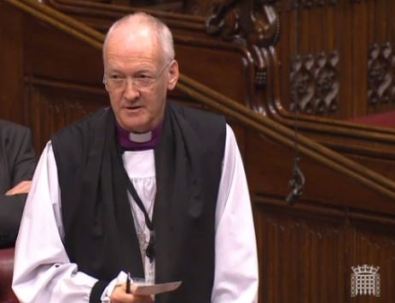
On the 19th January 2016 the Bishop of Peterborough, the Rt Revd Donald Allister, took part in a short debate tabled by Lord Hanningfield, “To ask Her Majesty’s Government what steps they are taking to help improve education standards in United Kingdom prisons.” Bishop Donald spoke about his recent visits to several prisons and the challenges presented by studying for qualifications within a prison. The Bishop also urged the Government to include restorative justice as part of its education provision within the prison estate.

14.02 PeterboroughThe Lord Bishop of Peterborough: My Lords, I, too, am grateful for this debate. I also note with great pleasure a number of changes made to policy and practice in this area by Mr Gove since he became Secretary of State. I gladly thank him and the Government, particularly for allowing prisoners greater and easier access to books. But if educational standards in prisons are to be improved, as they desperately need to be, we still need much more joined-up thinking. I will give two examples. Continue reading “Bishop of Peterborough speaks about the importance of education on the prison estate”

Bishop of Derby highlights work of prison chaplains and value of educational and arts projects

On the 19th January 2016 the Bishop of Derby, the Rt Revd Alistair Redfern took part in a short debate  tabled by Lord Hanningfield “To ask Her Majesty’s Government what steps they are taking to help improve education standards in United Kingdom prisons.” The Bishop spoke from his own experience of visiting a number of prisons in his diocese and of the important work of chaplains, musicians and arts projects within prisons.

DerbyThe Lord Bishop of Derby: My Lords, I, too, thank the noble Lord, Lord Hanningfield, for his introduction to the debate, especially for linking education with vocation for people in prison. As the noble Lord, Lord Addington, said, it is a very complex territory with very deep needs. A lot of research shows that the prison population represents people with multiple needs. Therefore, the task of education and vocation will be challenging. I see the importance of formal education for literacy and numeracy to help people to get jobs. I am all in favour of that, but I want to look behind that at the informal fashioning of vocation and the development of character and confidence, which allows people to enter formal learning. I will draw on my own experience of going into prisons. Continue reading “Bishop of Derby highlights work of prison chaplains and value of educational and arts projects”

Bishop of St Albans asks questions about forced and underage marriage

StAlbans171115On the 18th January, the Rt Revd Alan Smith, Bishop of St Albans, received written answers to questions about the incidence of forced and underage marriage in the UK and abroad.


The Lord Bishop of St Albans: To ask Her Majesty’s Government on how many cases the Forced Marriage Unit provided advice or support in (1) 2014, and (2) 2015. Continue reading “Bishop of St Albans asks questions about forced and underage marriage”

Bishop of Peterborough questions Government about Basic Farm Payments

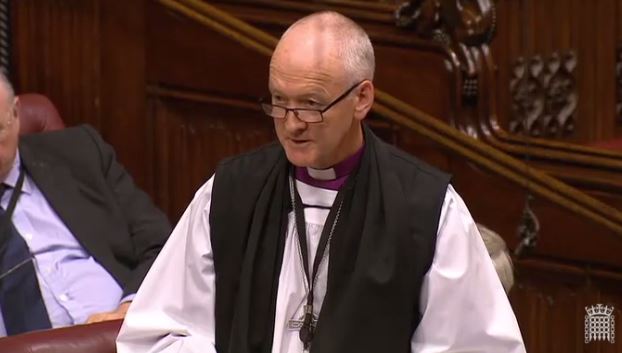
On the 19th January 2016 Baroness McIntosh of Pickering asked Her Majesty’s Government “what percentage of the Basic Payment Scheme was paid to farmers by the end of December 2015, and what assessment they have made of the delivery mechanisms of that funding”. The Bishop of Peterborough, the Rt Revd Donald Allister, asked for assurances that payments would be made promptly and in full.

14.02 PeterboroughThe Lord Bishop of Peterborough: My Lords, I speak as one who, until very recently, has been privileged to serve as a trustee of the Farming Community Network, which supports many farmers with difficulties of this sort. Is the Minister aware, as FCN certainly is, that many of those who have been told they will not receive their payments until after the end of this month—more than two months late—are farming in upland areas, not just common grazing, and are often the poorest farmers in the most need? Is it possible for at least some payment to be made on account? Can the Government assure noble Lords that payments will be made on time, and in full, in the next cycle?

Continue reading “Bishop of Peterborough questions Government about Basic Farm Payments”

Church Commissioners Written Answer – Peterborough property development

Caroline SpelmanOn the 19th January 2016 the Second Church Estates Commissioner, the Rt Hon Caroline Spelman MP answered a written question relating to the Church Commissioners’ property developments in Peterborough.

Mr Stewart Jackson: To ask the right hon. Member for Meriden, representing the Church Commissioners, what recent progress has been made on (a) residential development and (b) infrastructure planning on Church Commissioner land allocated as an urban extension by Peterborough City Council at (i) Paston Reserve and (ii) Norwood; and if she will make a statement. [21889]

Mrs Caroline Spelman: There are no further developments to report since the answer given by the Church Commissioners to question 16388 on the 20 November 2015.

(via Parliament.UK)

Bishop of Durham highlights the importance of religious literacy at all levels of government

14.06.10 Bishop of Durham 5On the 18th January 2016 Baroness Butler-Sloss asked the Government, on behalf of Lord Harries of Pentregarth, “what is their response to the report of the Commission on Religion and Belief in British Public Life Living with Difference published on 7 December”. Rt Revd Paul Butler, Bishop of Durham, asked a supplementary question.  Continue reading “Bishop of Durham highlights the importance of religious literacy at all levels of government”

Church of England Week in Westminster, 11th – 15th January 2016

Welcome to the Church of England’s weekly round-up of activity in Parliament.cropped-cropped-palace_of_westminster_london_-_feb_2007.jpg

This week bishops in the House of Lords led a debate on recent flooding and spoke in debates on Lords powers, the NHS and the protection of cultural property in armed conflict. They also took part in debates on the Government’s Trade Union Bill and Welfare Reform and Work Bill. Bishops also asked questions on rough sleeping and human rights in China and in Eritrea. In the House of Commons the Second Church Estates Commissioner answered questions on flooding, roof repairs and preparedness for the EU referendum.


Wednesday 30th December

The Bishop of St Albans received an answer to a written question concerning the detention of Chinese Human Rights lawyer, Pu Zhiqiang


Monday 11th January

RochesterThe Bishop of Rochester asked a question about rough sleepers.

The Bishop also spoke during the Second Reading debate of the Government’s Trade Union Bill.


Tuesday 12th January

Bishop of St AlbansThe Bishop of St Albans asked a question about human rights in Eritrea.

The Bishop of Rochester co-sponsored an amendment on supported housing to the Welfare Reform and Work Bill.


Wednesday 13th January

The Second Church Estates Commissioner answered a question on flooding in Blackburn diocese.

The Bishop of Rochester spoke in a debate on the Strathclyde Review into powers of the Lords.


Thursday 14th January

LeedsThe Bishop of Leeds led a debate on flooding, in which the Bishop of St Albans also spoke.

Both the Bishops of Leeds and St Albans also spoke in a debate on the NHS.

BishPortsspeechtaxcreditsThe Bishop of Portsmouth spoke in a debate about protecting cultural property in armed conflict.


Caroline SpelmanFriday 15th January

The Second Church Estates Commissioner answered questions on EU exit vote preparedeness and church roof repairs.