Housing Bill: Bishop of Rochester asks about affordable housing and lifetime secure tenancies

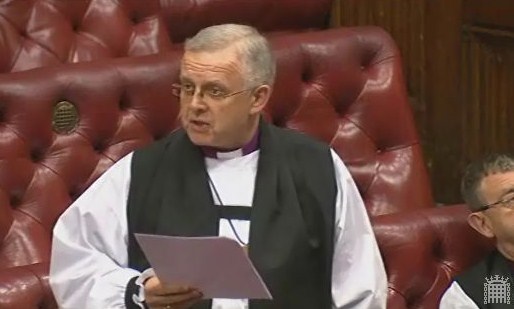
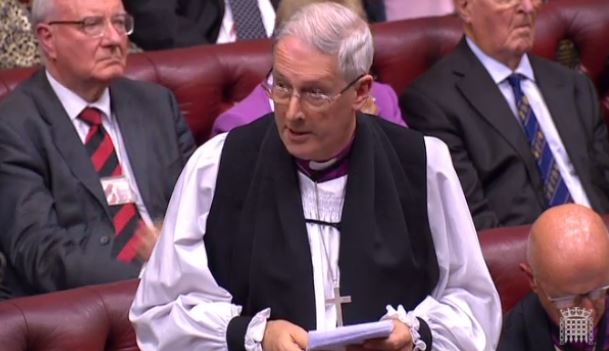
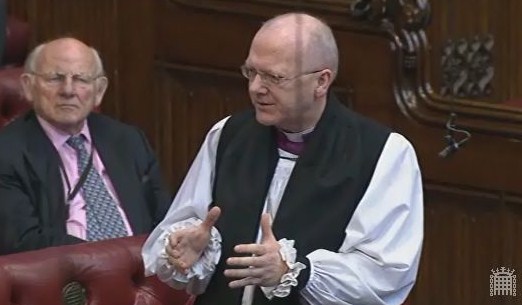
On 26th January 2016, the Bishop of Rochester, the Rt Revd James Langstaff, took part in the Second Reading debate of the Government’s Housing and Planning Bill. The Bishop raised concerns about the impact of the bill on affordable housing and lifetime secure tenancies. The Bishop of St Albans also spoke in the debate.

RochesterThe Lord Bishop of Rochester: My Lords, I, too, welcome the opportunity to hear the maiden speeches of the noble Baroness, Lady Thornhill, and the noble Lord, Lord Thurlow. I look forward to the contributions that they will make to your Lordships’ House.

There is a clear view on all sides of this House, the other place and across large parts of the nation that more housing is needed. The questions concern whether this Bill will help to deliver that housing in the right way and in the right places for the people who need it most. Within my diocese at Ebbsfleet we have one of the largest single housing developments in the United Kingdom—a completely new development which will house up to 45,000 new people. While I have questions about some of the details of that development, and some of the details are as yet unknown, I am generally supportive of what is intended. So I am not against new development and I welcome those things in the Bill which may make that possible in appropriate ways. Continue reading “Housing Bill: Bishop of Rochester asks about affordable housing and lifetime secure tenancies”

Archbishop of York urges Government not to slant policy against larger families

On 26th January 2016 Baroness Lister of Burtersett asked Her Majesty’s Government “what impact the Family Test has had on policy-making.” The Archbishop of York, Most Revd & Rt Hon John Sentamu, asked a follow up question:

Archbishop of YorkThe Archbishop of York: My Lords, I hope that the family test recognises that poor families come in different shapes and sizes and that there is no intention of pushing a particular policy, of which we saw a little in China. Margaret and I had two children of our own and then fostered two children who came to us at the ages of eight and one and a half. They are now working adults. Had this family test been around, I would have been worried, as Ruth is, because that child would have found it very difficult. Will the Minister assure us that when the family test comes, common sense will prevail, not numbers? Continue reading “Archbishop of York urges Government not to slant policy against larger families”

Bishop of Worcester asks how Government’s family test will shape its life chances strategy

On 26th January 2016 Baroness Lister of Burtersett asked Her Majesty’s Government “what impact the Family Test has had on policy-making”. The Bishop of Worcester, Rt Revd John Inge, asked a follow up question:

WorcesterThe Lord Bishop of Worcester: My Lords, I have not consulted their Graces the most reverend Primates the Archbishops, but I feel confident in saying that we on these Benches welcome the thrust of the life-chances strategy, which the Prime Minister outlined in a recent speech. We believe, as does the Prime Minister, that the family is the best anti-poverty measure ever invented—invented by God, in fact, although the Prime Minister did not add that. The increase in funding for relationship support is welcome, but could the Minister indicate how the priorities articulated in the family test might shape the development of the life-chances strategy as it is published and implemented in due course? Continue reading “Bishop of Worcester asks how Government’s family test will shape its life chances strategy”

Introduction of the Bishop of Newcastle

On 26th January 2016 the Rt Revd Christine Hardman, Bishop of Newcastle, was Introduced to the House of Lords and took her seat.

From Hansard:

2.37 pm

Christine Elizabeth, Lord Bishop of Newcastle, was introduced and took the oath, supported by the Archbishop of York and the Bishop of Southwark, and signed an undertaking to abide by the Code of Conduct.


Welfare Reform Bill: Bishop of Durham supports amendments to rename Social Mobility Commission with ‘Life Chances’


On 25th January the House of Lords considered the Government’s Welfare Reform and Work Bill at its Report Stage. The Bishop of Durham, the Rt Revd Paul Butler,spoke to amendments he had co-sponsored with Baroness Lister of Burtersett, to replace Social Mobility definitions with those of ‘Life Chances’. The amendments were not put to a division, but withdrawn after the debate. The Bishop’s speech and those of others are below.

14.06.10 Bishop of Durham 4

The Lord Bishop of Durham: My Lords, I support this amendment. Yesterday, I spent a delightful evening with a small number of academics after preaching at Evensong in an Oxford college—Worcester College. It was a very pleasant evening. However, as I sat there, I kept coming back in my mind to today’s debate because I was reminded of the extraordinary privilege of being in an Oxford college and the elite nature of it. This is not to criticise it or put it down; I had the privilege of studying in a private hall in Oxford when I trained for my ordination. However, I found myself thinking about the vast number of children and young people I meet in schools and colleges around the north-east, and have met in other parts of the country over the years, for whom such privilege is not their aim. Continue reading “Welfare Reform Bill: Bishop of Durham supports amendments to rename Social Mobility Commission with ‘Life Chances’”

Bishop of Durham tells Peers of support on offer for unaccompanied child refugees

Bp Durham June 2015 bOn 25th January 2016, the Bishop of Durham, the Rt Revd Paul Butler, responded to a statement in the House of Lords regarding the plight of unaccompanied refugee minors.

The Lord Bishop of Durham: My Lords, I declare an interest as one of the co-chairs of the National Refugee Welcome Board. Is the Minister aware that the organisations Home for Good and Coram have somewhere between 9,000 and 10,000 families already offering to take unaccompanied minors? Of course, they have to have all the safeguarding checks and they will not all be suitable, but there is a vast body of people already willing to offer to help to resettle unaccompanied children in this country. The National Refugee Welcome Board is committed to working with the Government to try to help in that, with those organisations.

Lord Bates: That is a very generous welcome and one that we appreciate very much indeed. We are conscious that a lot of the people who are coming in the first wave are those who are most in need; those who have been victims of torture, with acute medical needs, and those most at risk. They may not be appropriate for the type of generous hospitality being suggested. But certainly as the scheme progresses we will very much want to call on that active and typical generosity on behalf of the British people.

(via Parliament.uk)

Welfare Reform Bill: Bishop of Durham passes amendment to Bill on measurement of child poverty

On 25th January 2016, the Bishop of Durham, Rt Revd Paul Butler, led a debate on an amendment he had tabled to the Government’s Welfare Reform and Work Bill. The amendment, at the Bill’s Report Stage, sought to ensure that Government would continue to use income as part of its measurement for child poverty.The amendment was supported by the Labour and Liberal Democrat frontbench and by a crossbench Peer. The Bishop put the amendment to a vote, which the House passed by 290 to 198. His speech and others from the debate are below.

14.06.10 Bishop of Durham 5 Continue reading “Welfare Reform Bill: Bishop of Durham passes amendment to Bill on measurement of child poverty”

Welfare Reform Bill: Bishop of St Albans supports amendment on Disability reporting

StAlbans171115On 25th January 2016, Baroness Campbell of Surbiton led a debate on an amendment she had tabled to the Government’s Welfare Reform and Work Bill. The amendment, at the Bill’s Report Stage, would require Government to commit to statutory reporting of the disability employment gap. The Bishop of St Albans, the Rt Revd Alan Smith, spoke in support of the amendment. It was withdrawn after the debate, following assurances by Government. The Bishop’s speech and extracts of those by the Minister and Baroness Campbell are below. 

Continue reading “Welfare Reform Bill: Bishop of St Albans supports amendment on Disability reporting”

Bishop of St Albans asks about protection for forests

StAlbans171115On the 25th January, Baroness Royall of Blasidon asked the government “what assessment they have made of the social and environmental impacts of the potential extraction of coal-bed methane on forests such as the Forest of Dean.” The Bishop of St Albans, the Rt Revd Alan Smith, asked a follow up question.


The Lord Bishop of St Albans: My Lords, this Question raises a much broader issue, which concerns many people, about the protection both of the ancient forest lands and of the forestry estates. Could the Minister update your Lordships’ House on what progress has been made towards the appointment of the new public forest body, which was the recommendation of the independent forestry report? If no progress has been made, what role is, for example, the Forestry Commission taking in protecting this land, which the public hold so dear and for which they have such great concern?

Continue reading “Bishop of St Albans asks about protection for forests”