
On the 16 March 2016 the Bishop of Salisbury, Rt Revd Nicholas Holtham, took part in a debate to approve the Government’s draft Renewables Obligation Closure Etc. (Amendment) Order 2016. Baroness Featherstone also tabled a Motion to Regret the change. The draft instrument closes the renewables obligation from 1 April 2016 (12 months early) to solar PV generating stations at 5 megawatts and below. It applies both to new generating stations and to existing stations that wish to add additional capacity up to the 5 megawatts threshold. The Bishop’s speech is below and the vote on the Regret Motion can be seen here.
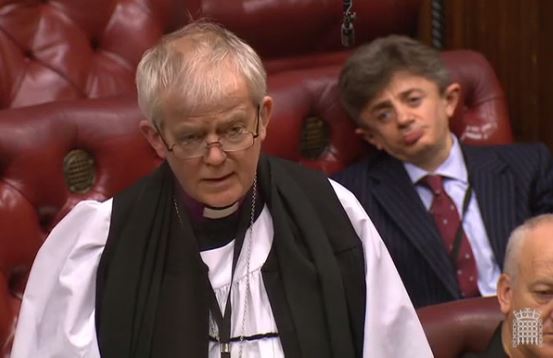 The Lord Bishop of Salisbury: My Lords, it is curious to rehearse the same arguments so soon after the recent debate on feed-in tariffs. It is very disappointing in the wake of the success in Paris of COP 21, and the enthusiasm engendered from that about a new level of ambition in response to human-caused climate change. I feel as though the Minister is in a position of defending the indefensible. The noble Baroness, Lady Byford, made a very good point about the place of subsidies and pump-priming. Therefore, it is disappointing that the Government are not working more effectively with the renewable energy sector to build on the considerable success of that industry.
Continue reading “Bishop of Salisbury urges a rethink on Government renewable energy proposals”
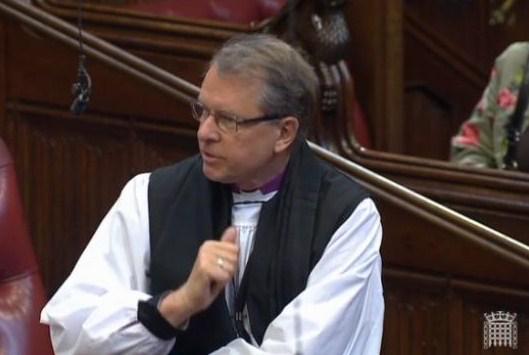
 On 15th March 2016, Baroness Lister moved an amendment to the Government’s Immigration Bill which would extend the period for those transitioning from asylum support to work or benefits from 28 to 40 days. The Bishop of Norwich, the Rt Revd Graham James, spoke in support of the amendment. Lord Bates responded on behalf of the Government.
  On 15th March, the Bishop of Norwich, the Rt Revd Graham James, moved an amenment to the Immigration Bill that would ensure a best interests assessment was undertaken for an child separated from their parents due to an immigration appeal. Lord Keen of Elie responded on behalf of the Government.


 The Lord Bishop of Leeds: My Lords, the BBC has three core purposes: to inform, to educate and to entertain. Will the Minister comment on a fourth purpose, which is to interpret? Diversity has been perceived in terms of regional diversity when one could also say that ethnic and religious diversity in the country need to be taken more seriously. Religion is a primary motivator of individuals and communities, inspiring and informing their political, economic, ethical and social behaviour.

You must be logged in to post a comment.