The Bishop of Chester responds to Government statement on Sri Harmandir Sahib

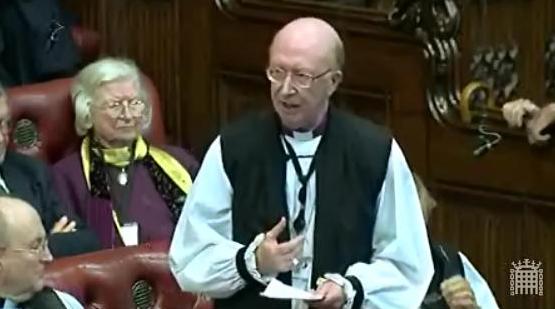
The Lord Bishop of Chester: My Lords, the noble Lord, Lord Desai, made the point that using force to resolve a situation is nearly always counterproductive and has results that you do not anticipate. Are there two additional lessons from this? First, the speed with which this report has been produced is commendable. I think of the Chilcot inquiry that we are still waiting for. This has been done in a few weeks and it seems to me to be a lesson for other situations in which a bit more speed can help the reconciliation process. Secondly, is one of the lessons that understanding religious sensitivities is something the modern world can find hard to do? One thinks of Ariel Sharon going to the Temple Mount and starting the second intifada, with all the consequences that have flowed from that. Is that a lesson that we should draw from these events?

Baroness Warsi: I thank the right reverend Prelate for his warm words in relation to the way in which this inquiry was conducted quickly. It was certainly part of the clear remit set by the Prime Minister at the outset. The right reverend Prelate makes an important point. To understand the sentiment within the British Sikh community it is important to understand the significance of Sri Harmandir Sahib; the significance of the timing of Operation Blue Star; the implications in relation to the damage that was done to Sri Harmandir Sahib; and the basis of some of the concerns that were being raised by the dissidents. It is an important point. This is the challenge that I have in a sometimes aggressively secular world; some of these sensitivities are not properly explored and understood.

(via parliament.uk)

Bishop of St Albans calls on Government to include churches in voter registration initiatives

Lord Roberts of Llandudno asked Her Majesty’s Government what steps they are taking to support National Voter Registration Day on Wednesday 5 February, which seeks to encourage new, especially young, people to register to vote.

The Bishop of St Albans asked a supplementary question:

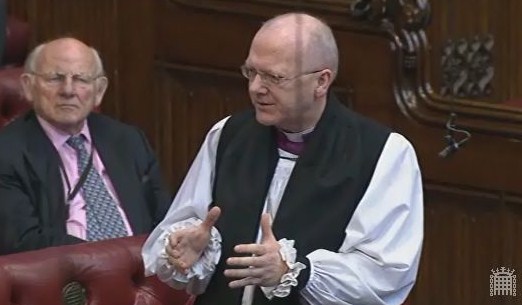
The Lord Bishop of St Albans: My Lords, the Church of England is involved in the education of more than 1 million young people and we want to play our part in supporting this. Will Her Majesty’s Government talk with the department to see if, in future, they will write not only to schools but to the 43 statutory diocesan boards of education, many of which employ full-time schools workers, and to dioceses? My diocese has an average of 30 to 40 full-time paid youth workers and many volunteer ones. We would be delighted to use our communication resources to support this sort of initiative.

Lord Wallace of Saltaire: My Lords, the Government recognise that they alone cannot do everything in this regard. We welcome conversations with all other organisations. I wondered whether the right reverend Prelate was going to promise that the Church of England would give sermons on the subject. Once, when I was a parliamentary candidate, I was taken by a young woman called Liz Barker—the noble Baroness, Lady Barker, as she is now—to the Methodist church in which her father had been a minister. The sermon came as close as possible to suggesting that the congregation might like to vote for me.

Bishop of Worcester calls for gender equality to be at heart of next generation of development goals (Written Question)

The Lord Bishop of Worcester asked Her Majesty’s Government what steps they are taking to include a robust gender mainstreaming goal in the post-2015 Millennium Development Goals.

Baroness Northover: The UK has been clear in its advocacy for a standalone post-2015 goal on gender equality and girls’ and women’s empowerment as well as ensuring that these issues are mainstreamed in the goals and targets in the framework to be agreed by the United Nations.

We are working with others across the international community, including civil society, to ensure that this is achieved.

(via parliament.uk)

Bishop of St Albans asks questions on affordable energy for rural households

The Lord Bishop of St Albans: To ask Her Majesty’s Government what discussions they have had with the Office of Fair Trading about securing an affordable energy supply for rural households that are off the gas grid.

The Parliamentary Under-Secretary of State, Department of Energy and Climate Change (Baroness Verma):
Representatives of the Office of Fair Trading attend the Roundtable meetings chaired by my Rt. Hon. Friend the Minister of State for Energy. The Roundtable brings together Government, regulators, advisory and charitable bodies, the fuel supply industry and others to work together to improve the security and affordability of off-grid fuel supply.14.03 Bishop of St Albans

The Lord Bishop of St Albans: To ask Her Majesty’s Government what discussions they have had with the energy companies about reducing the price of electricity paid by households that are not dual fuel customers because they do not have access to the gas grid.

Baroness Verma: DECC Ministers regularly meet with energy supply companies to discuss a range of energy issues. Electricity prices for household consumers are a commercial matter for the companies concerned.

(via Parliament.uk)

Bishop of Wakefield urges Government to support pupils in areas of rural deprivation

Lord Horam asked Her Majesty’s Government what plans they have to increase the Pupil Premium for the most disadvantaged primary school children.

The Bishop of Wakefield asked a supplementary question:

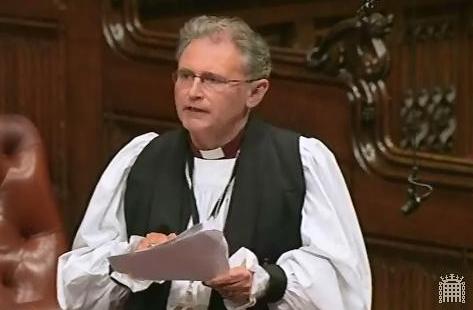
The Lord Bishop of Wakefield: My Lords, can the Minister tell us whether the Government are considering ways in which an increase in the pupil premium can be targeted at the forms of deprivation most difficult to address? Rural deprivation, for example, particularly in church schools, is very significant in our part of West Yorkshire, in the Diocese of Wakefield.

Lord Nash: The right reverend Prelate is quite right to point out the problems with rural deprivation; it is similar to coastal deprivation. There are particular schemes that schools follow: mentoring; systemic feedback; much more involvement of parents; early intervention, particularly using the better teachers; and peer tutoring. Much can be learnt from groups like Ark, whose academy in Portsmouth, for instance, which is in a classic coastal town, has improved results in four years from 24% to 68%.

(via parliament.uk)

The Bishop of St Albans raises concerns about affordable energy in rural areas (Written Questions)

The Lord Bishop of St Albans asked Her Majesty’s Government what discussions they have had with the Office of Fair Trading about securing an affordable energy supply for rural households that are off the gas grid.

The Parliamentary Under-Secretary of State, Department of Energy and Climate Change (Baroness Verma): Representatives of the Office of Fair Trading attend the Roundtable meetings chaired by my Rt. Hon. Friend the Minister of State for Energy. The Roundtable brings together Government, regulators, advisory and charitable bodies, the fuel supply industry and others to work together to improve the security and affordability of off-grid fuel supply.

The Lord Bishop of St Albans asked Her Majesty’s Government what discussions they have had with the energy companies about reducing the price of electricity paid by households that are not dual fuel customers because they do not have access to the gas grid.

Baroness Verma: DECC Ministers regularly meet with energy supply companies to discuss a range of energy issues. Electricity prices for household consumers are a commercial matter for the companies concerned.

Bishop of Wakefield highlights Church’s role in preventing sexual violence in the DRC

Lord McConnell of Glenscorrodale asked Her Majesty’s Government what is their assessment of recent developments in the Democratic Republic of the Congo.

The Bishop of Wakefield asked a supplementary question:

The Lord Bishop of Wakefield: My Lords, I am sure that the Minister will be aware that my colleague and friend the most reverend Primate the Archbishop of Canterbury is visiting the DRC today with the Minister for Africa. Could she inform the House of the work of Her Majesty’s Government, currently being promoted by them, in the protection of women in the DRC, particularly from gender-based violence?

Baroness Warsi: The Minister for Africa will have meetings with the most reverend Primate the Archbishop of Canterbury and the Archbishop of the DRC, particularly to support HEAL Africa, a project which aims to support women who have been subjected to sexual violence.

(via parliament.uk)

Votes – Children and Families Bill

House of Lords Division Lobby

On 28th and 29th January 2014, the Bishop of St Albans took part in two votes on the Government’s Children and Families Bill, during its Report Stage.

Continue reading “Votes – Children and Families Bill”

Bishop of St Albans seeks clarification on underoccupancy charge contingency plans

The Rt Revd Alan Smith, Lord Bishop of St Albans asked a supplementary question relating to the underoccupancy charge and its impact on tenants. The Bishop asked about tenants in the North of England and Wales who believed they would be unable to pay their rent in full due to the introduction of the new charge for an empty bedroom. Lord Freud responded to say 14.03 Bishop of St Albansduring the transition the Government were making available adequate funds for discretionary housing payments.

Baroness Hollis of Heigham asked Her Majesty’s Government what assessment they have made of the effect of the underoccupancy charge on tenants.

Continue reading “Bishop of St Albans seeks clarification on underoccupancy charge contingency plans”

Bishop’s Palace in Wells: Church Commissioners’ Written Answers

Second Church Estates Commissioner, Rt Hon Sir Tony Baldry MP, answered three written questions from Tessa Munt MP on the Church Commissioners plans for the Palace at Wells.

Tessa Munt: To ask the right hon. Member for Banbury, representing the Church Commissioners, pursuant to the answer of 23 January 2014, Official report, column 317W on Bishop of Bath and Wells, in relation to the Bishop’s living accommodation, what repairs or maintenance were identified in the Church Commissioners Quinquennial Review dated 2013.

The Palace at Bath and Wells (picture courtesy of bishopspalace.org.uk)

Sir Tony Baldry: The reason for moving the Bishop’s accommodation is to give the Bishop more privacy and not to do with the cost of repairs and restoration to the flat. Continue reading “Bishop’s Palace in Wells: Church Commissioners’ Written Answers”