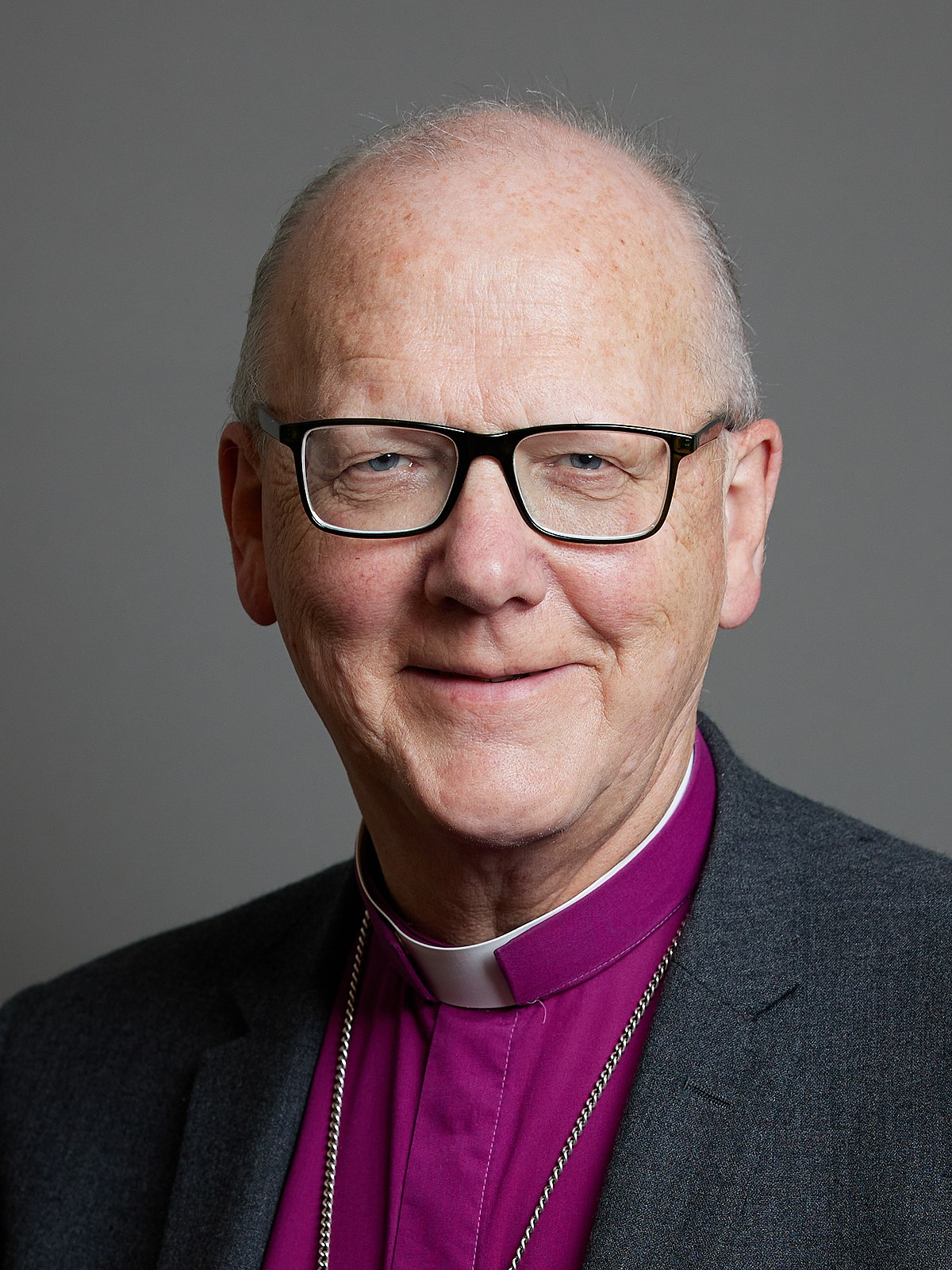
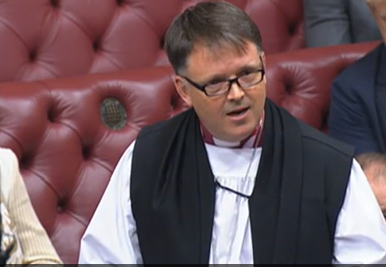
Bishop of London speaks in debate on new healthcare roles

The Bishop of London took part in a debate on the upcoming review of the Physician and Anaesthetist Associate Roles on 5th December 2024, highlighting the need for clarity and trust in the healthcare system:

The Lord Bishop of London: My Lords, it is good to participate in this important debate and I am grateful to the noble Baroness, Lady Bennett, for having secured it. I declare my entry in the register of interests, specifically that I was formerly the Government’s Chief Nursing Officer.

This is clearly a complex issue, and I join other noble Lords in welcoming the Government’s recently announced review of the physician associates and anaesthetist associates. In building an NHS fit for the future, it is right that the right people with the right training and the right competence undertake the right roles. Over the last 20 years, we have seen an expanding of roles to release medical staff to do what only they can do; for example, the development of nurse-led assessment, advanced nurse practitioners and nurse prescribing, and the expansion of the role of pharmacists. In some sense, the development of physician associates and anaesthetist associates is part of this change. However, any change in role and the healthcare workforce needs to be carefully implemented and regulated. Therefore, I welcome the regulation of physician associates and anaesthetist associates, but I too question whether their regulation should take into account the outcome of this review, rather than moving ahead at present.

The main points I will make are around clarity and trust. Noble Lords will often hear me speak in this place about the essential commodity of trust in healthcare and the health of the nation. Research carried out by Healthwatch found that the public awareness of physician associate roles is mixed, particularly among older people, who are less likely to know the difference between a PA and a GP. Clear information needs to be given to people about the healthcare worker they are seeing, and they need to be reassured that they are competent and working to clear standards.

Continue reading “Bishop of London speaks in debate on new healthcare roles”

Bishop of St Albans speaks in debate on housing, highlighting the needs of rural communities

On 5th December 2024, the Bishop of St Albans also spoke in a debate on housing, emphasising the effects of the housing crisis on rural areas:

The Lord Bishop of St Albans: My Lords, I too thank the noble Baroness, Lady Warwick of Undercliffe, for securing this important debate. I declare my interests as president of the Rural Coalition and vice-president of the LGA. I offer my thanks to the most reverend Primate the Archbishop of Canterbury for his valedictory speech. During his tenure, he has been a champion of housing, and we have already referred to the Coming Home report, which is pertinent both to today’s debate and to His Majesty’s Government, with their very good and ambitious targets to build more housing. I hope we can assist the Government in achieving that.

Homelessness and rough sleeping are on the rise. Government statutory homelessness figures, released last week, reveal that 159,380 children are now homeless and living in temporary accommodation, a 15% increase in a year and the highest figure since records began in 2004. More particularly, the November 2023 CPRE report on the state of rural housing showed that rural homelessness has increased by 20% since 2021 and 40% since 2018-19.

Continue reading “Bishop of St Albans speaks in debate on housing, highlighting the needs of rural communities”

Archbishop of Canterbury makes valedictory speech on the need for safe, stable, and affordable housing

On 5th December 2024, the Archbishop of Canterbury made his valedictory speech in the House of Lords during a debate on housing:

The Lord Archbishop of Canterbury: My Lords, it is often said and it is a cliché to say it—but hey, I am the Archbishop still—that if you want to make God laugh, make plans. On that basis, next year, I will be causing God more hilarity than anyone else for many years, because the plans for next year were very detailed and extensive. If you pity anyone, pity my poor diary secretary, who has seen weeks and months of work disappear in a puff of a resignation announcement.

The reality, which I wish to start with—then pay some thanks, and then talk about housing—is that there comes a time, if you are technically leading a particular institution or area of responsibility when the shame of what has gone wrong, whether one is personally responsible or not, must require a head to roll. There is only, in this case, one head that rolls well enough. I hope not literally: one of my predecessors in 1381, Simon of Sudbury, had his head cut off and the revolting peasants at the time then played football with it at the Tower of London. I do not know who won, but it certainly was not Simon of Sudbury.

The reality is that the safeguarding and care of children and vulnerable adults in the Church of England today is, thanks to tens of thousands of people across the Church, particularly in parishes, by parish safeguarding officers, a completely different picture from the past. However, when I look back at the last 50 or 60 years, not only through the eyes of the Makin report, however one takes one’s view of personal responsibility, it is clear that I had to stand down, and it is for that reason that I do so.

Next, I want to say thank you to so many people in the House. In these 12 years, I cannot think of a single moment when I have come in here and the hair on the back of my neck has not stood up at the privilege of being allowed to sit on these Benches. It has been an extraordinary period, and I have listened to so many debates of great wisdom, so many amendments to Bills that have improved them, so much hard work.

Continue reading “Archbishop of Canterbury makes valedictory speech on the need for safe, stable, and affordable housing”

Archbishop of Canterbury asks about financial support for Ukraine’s resistance to Russian invasion and for the UK armed forces

The Archbishop of Canterbury asked a question on financial support for those battling the Russian invasion of Ukraine and for the UK’s own armed forces on 5th December 2024:

The Lord Archbishop of Canterbury: My Lords, I have made two visits to Ukraine, one earlier this year, and many of my colleagues have visited as well. Having seen the very sharp deterioration in civilian morale, we know that external support from the NATO powers, particularly the United Kingdom, makes a significant difference. We are seeing the northern NATO countries not only giving verbal support but actively preparing for the risk of conflict in order to deter it. The situation on the ground will not wait for the SDR. What steps are the Government taking to indicate, by their actions as well as by their words, ahead of the SDR, that we are deeply committed financially to the support of Ukraine, not only by giving weapons but by renewing our Armed Forces?

Continue reading “Archbishop of Canterbury asks about financial support for Ukraine’s resistance to Russian invasion and for the UK armed forces”

Bishop of London asks about leadership in heathcare

The Bishop of London asked a question on leadership and productivity in the healthcare service on 5th December 2024:

The Lord Bishop of London: My Lords, productivity is now often spoken of in relation to the National Health Service, which the Minister mentioned in his Answer to the Question. The Health Foundation looked at NHS productivity and identified maintaining morale and motivating the workforce as key to it. Alongside essential things such as targets, what effort are the Government making to continue softer leadership, including listening to the workforce and fostering good industrial relations?

Continue reading “Bishop of London asks about leadership in heathcare”

Bishop of Lincoln asks about rate of teaching turnover in special needs education

The Bishop of Lincoln received the following written answer on 4th December 2024:

The Lord Bishop of Lincoln asked His Majesty’s Government what steps they are taking to address teacher burnout and turnover in special education schools due to low pay and temporary contracts.

Continue reading “Bishop of Lincoln asks about rate of teaching turnover in special needs education”

Bishop of London speaks in debate on the importance of fracture liaison services

The Bishop of London spoke in a debate on fracture liaison services on 4th December 2024, highlighting the importance of the service for vulnerable communities and as an early intervention:

The Lord Bishop of London: My Lords, it is very good to participate in this important debate on the fracture liaison service, especially since the issue of prevention in healthcare seems to be gathering pace. I thank the noble Lord, Lord Black, for having moved this debate.

We have heard that the fracture liaison service identifies people at risk of osteoporosis and reduces the risk of long-term fractures. Treatment provided by the fracture liaison service is often excellent, and often nurse-led. But, as we have heard, there are just not enough of them. Like many aspects of healthcare that we discuss in your Lordships’ House, provision varies by region, and there are also other inequalities of access to these services. We know that bone density decline can be accelerated by other factors, including smoking, diet and other illness.

Continue reading “Bishop of London speaks in debate on the importance of fracture liaison services”

Bishop of Manchester asks about support for civil society organisations

The Bishop of Manchester asked a question on ongoing support for voluntary civil society organisations providing stress support for communities on 3rd December 2024, following a government statement on anti-social behaviour:

The Lord Bishop of Manchester: My Lords, I declare my interest as the co-chair of the national ethics committee of the National Police Chiefs’ Council. However, it is more in my role as Bishop of Manchester that I am speaking now. I get to go out from time to time at night with Street Angels or Street Pastors groups, as they are sometimes called. Many of these originated in the churches, but they are not exclusively church-based organisations. They provide gentle support on the streets, often late at night in city and town centres, helping to keep the peace. They help to deal with people who have become distressed—perhaps somebody who has had too much to drink and is either not safe themselves or cannot keep those around them safe.

Continue reading “Bishop of Manchester asks about support for civil society organisations”

Bishop of London asks about safeguarding in asylum processing

On 3rd December 2024, the Bishop of London asked a question on safeguarding practices for enforced return of asylum seekers whose claims have been found ineligible:

The Lord Bishop of London: My Lords, I welcome the action that the Government are taking to get on top of the asylum backlog and to process claims formerly deemed as inadmissible. I appreciate, therefore, that more individuals may be found ineligible for asylum and may need to return. Therefore, are the Government going to review the current safeguarding policies in place for enforced return and, if so, how?

Continue reading “Bishop of London asks about safeguarding in asylum processing”

Bishop of St Albans asks about gambling taxation

The Bishop of St Albans received the following written answer on 3rd December 2024:

The Lord Bishop of St Albans asked His Majesty’s Government what assessment they have made of the impact of the current remote gaming duty levels on economic growth.

Continue reading “Bishop of St Albans asks about gambling taxation”