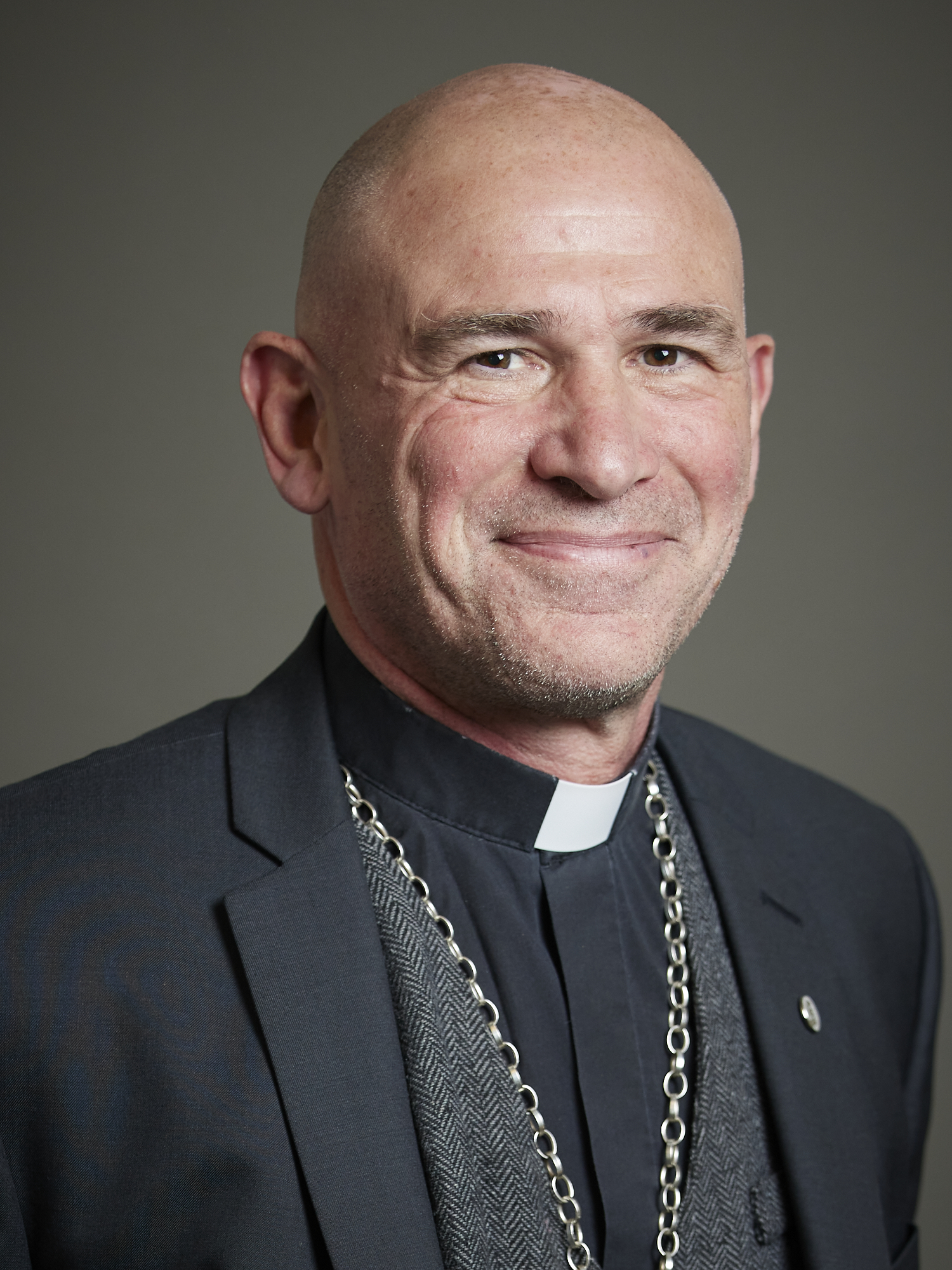
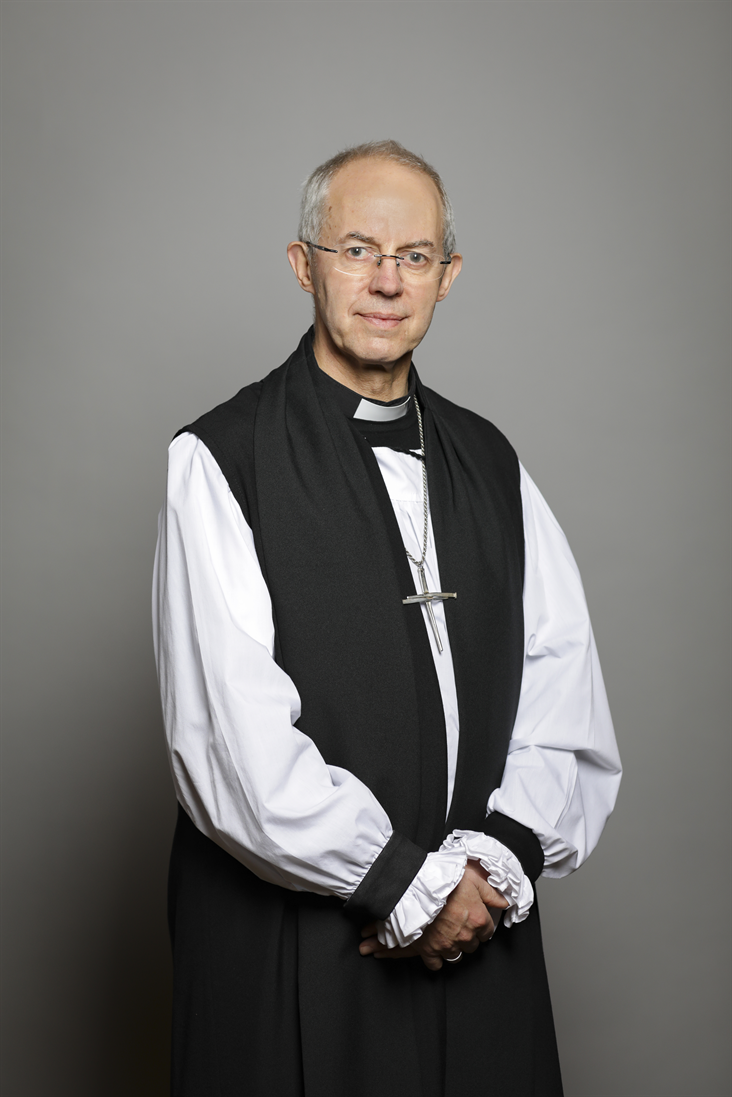
On 4th September 2024, the House of Lords debated a regret motion to the Holocaust Memorial Bill. A vote was held on the motion, in which Bishops took part:

On 4th September 2024, the House of Lords debated a regret motion to the Holocaust Memorial Bill. A vote was held on the motion, in which Bishops took part:

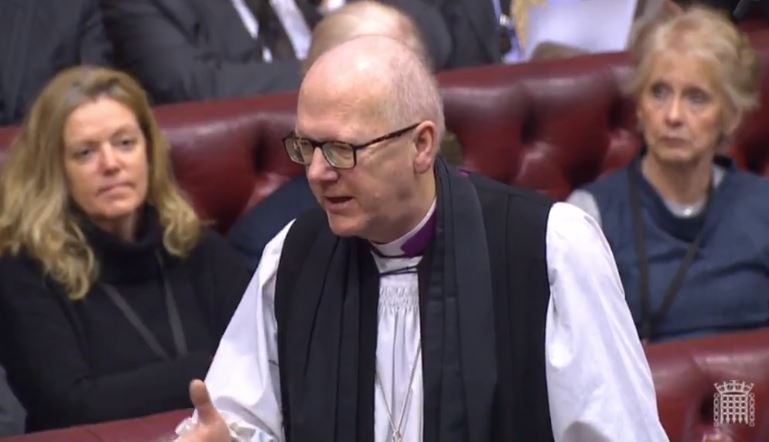
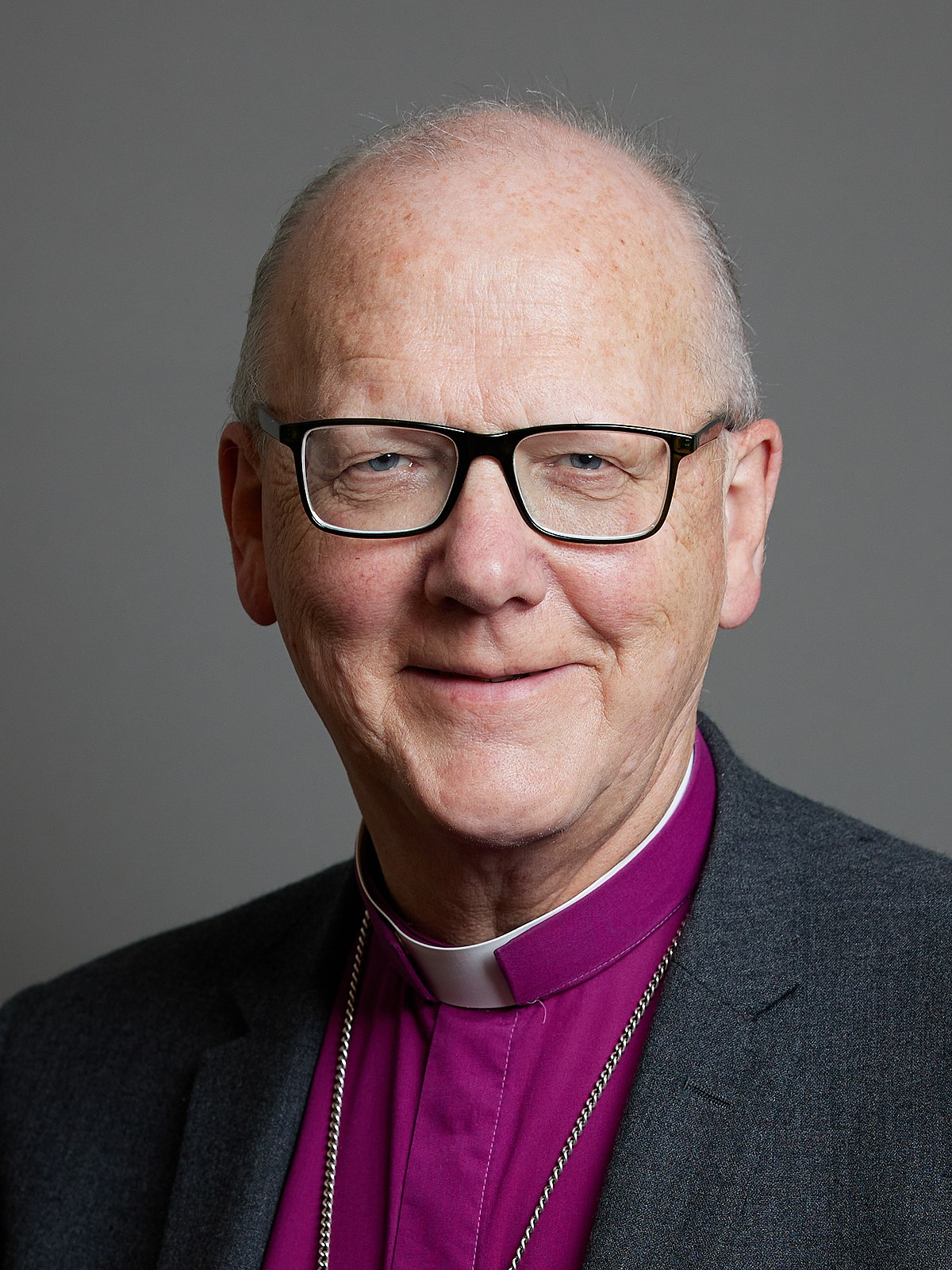
On 4th September 2024, the Bishop of Southwark spoke in a debate on the Holocaust Memorial Bill, expressing concern that the proposed site would not allow the memorial to act in its originally proposed capacity as a learning centre, and noting the importance of this in the context of rising antisemitism and Britain’s own role in the history of the Holocaust:
The Lord Bishop of Southwark: My Lords, like my right reverend friend the Bishop of St Albans, I speak personally in this debate. I have had the privilege of knowing a good number of Holocaust survivors, which has been life-changing and life-enriching for me. Future generations will be denied that privilege, which is why it is so important that we get this right.
I acknowledge the desire of His Majesty’s Government and so many of your Lordships to proceed with a matter that was, in many minds, settled back when the commission reported in 2015 and when the then Government came forward with proposals in 2016, as we have heard. I am also grateful to the noble Lord, Lord Pickles, and the secretariat at the Ministry of Housing, Communities and Local Government for its recent briefing note, which addresses, so helpfully, many of the objections to the current scheme.
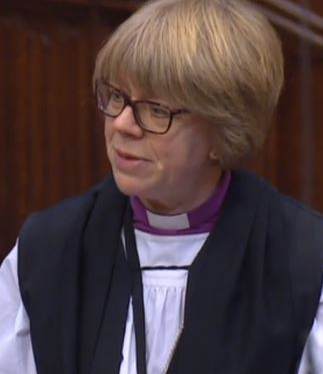
Continue reading “Holocaust Memorial Bill: Bishop of Southwark expresses concern over location of memorial site”The Bishop of St Albans spoke in a debate on the second reading of the Holocaust Memorial Bill on 4th September 2024, supporting the memorialisation of the holocaust but opposing the proposed site for the memorial, citing concerns over security and the removal of a green space in Westminster if the memorial were to be built in Victoria Tower Gardens:
The Lord Bishop of St Albans: My Lords, I rise with a certain reticence to speak, partly because of my own lack of experience of family members or others being involved in the Holocaust. I am aware that many Members of this House will have personal reasons why this is so raw and important. I underline that I am not trying to speak on behalf of the Church of England or the Lords spiritual. We hold a number of differing views on the Bill.
It hardly needs repeating, but I personally know of nobody who opposes the Bill because they are against the concept of having a prominent Holocaust memorial in this nation’s capital. As someone who has visited a significant number of Holocaust memorials in other parts of the world and other capital cities, I am well aware of their importance and how moving they can be.
Continue reading “Holocaust Memorial Bill: Bishop of St Albans raises concerns over planned site of memorial”The Bishop of London tabled a question on the adequacy of funding for end of life and palliative care on 4th September 2024:
The Lord Bishop of London: To ask His Majesty’s Government what assessment they have made of the adequacy of funding arrangements for accessible and equitable palliative and end of life care.
Baroness Merron (Lab, DHSC): My Lords, we want a society where every person receives high-quality, compassionate care, including at the end of their life. Integrated care boards are responsible for the commissioning of palliative and end-of-life care services to meet the needs of their local populations. This is to promote a more consistent national approach and supports commissioners in prioritising palliative and end-of-life care. We will be considering the next steps, including funding, more widely in the coming months.
Continue reading “Bishop of London asks about funding for end-of-life care”On 3rd September 2024, the Bishop of London spoke in a debate on the first report of the COVID-19 Enquiry, highlighting the reports findings on pre-existing health inequalities in the UK, and the significance of faith to healthcare needs:
The Lord Bishop of London: My Lords, I declare my interest as set out in the register. It is good to have this opportunity to speak in this debate and to acknowledge the important recommendations of this first report from the Covid inquiry. The pandemic was a seismic event for us all, and a great tragedy for many. My thoughts and prayers go to those who have lost individuals because of the pandemic. My thanks and gratitude go to those who stepped up and beyond to care for and protect us.
I want to highlight a couple of points from the report. The first is that the clearest flaw identified in the risk assessment was the underlying health of the UK population prior to 2020, as mentioned by the noble Baroness, Lady Tyler. We are all aware of the entrenching and exposing effect that the pandemic had on health inequalities. We are all aware of the impact that non-clinical factors such as housing have on our health. We are all aware of the vast difference in healthy life expectancy depending on where we live. We are all aware that those living in more deprived areas are more clinically vulnerable on average, but spend much more time in front-line jobs.
Continue reading “Bishop of London speaks in debate on COVID-19 Enquiry Report”The Bishop of Southwark asked a question on the recent unrest and riots in the UK on 3rd September 2024, enquiring whether the government would set up an enquiry or similar mechanism to address the underlying economic and social issues in UK communities affected by the events:
The Lord Bishop of Southwark: My Lords, I express appreciation to the Minister and his right honourable friend the Home Secretary for the Government’s Statement. I extend heartfelt sympathy to the families of the victims of recent violent disorder. I support the Government’s strong and determined response, including the swift apprehension of perpetrators and bringing them to justice. I also applaud the strong and positive signal that this sends: protest cannot extend to violence and abuse. I am grateful that Members of the House have spoken so powerfully on the evil of anti-Semitic, Islamophobic and racist incidents, which the Minister rightly addressed as criminality. In addition to the measures announced, are His Majesty’s Government seeking to address, perhaps through an inquiry, some of the underlying economic and social issues that can render people vulnerable to exploitation and incitement, to their own cost and to the detriment of the wider community?
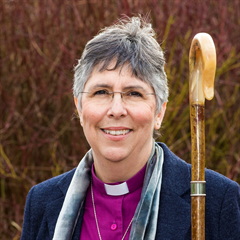
Continue reading “Bishop of Southwark asks about possibility of inquiry to address causes of recent social unrest”During a discussion on the conflict in Israel and Gaza on 3rd September 2024, the Bishop of Gloucester asked a question on growing settler violence in the West Bank and Occupied Palestinian Territories, and the recent attack on and dispossession of a Palestinian Christian family
The Lord Bishop of Gloucester: My Lords, I am grateful to the Foreign Secretary for holding together the trauma of the Israeli hostages and their families and communities, and that of the families and communities of Gaza.
I am very concerned that, as has been said by the noble Lord, Lord Purvis, we do not lose sight of the Palestinians in the Occupied Territories of the West Bank. I had the painful privilege of visiting there very recently and I was deeply perturbed, not least by the growing settler activity and, as has been said, the illegal settler outposts, including the abhorrent attack and subsequent dispossession of the Kissieh family of Palestinian Christians near Bethlehem. Will the Government take action on this as well as on the issue of arms licences?
Continue reading “Bishop of Gloucester asks about settler violence in Israel and the Occupied Palestinian Territories”On 3rd September 2024, the Bishop of Southwark asked a question on gender based discrimination in Bangladesh, asking that UK aid take into account the voices of Dalit women and girls particularly:
The Lord Bishop of Southwark: My Lords, the Minister will be aware that, notwithstanding the change in government in Dhaka and the protections that the laws and constitution of Bangladesh afford all its citizens, Bangladeshi women still face gender-based discrimination, and Dalit women and girls are particularly vulnerable to untouchability practices and violence. Will the Minister assure the House that UK aid in this area will now be shaped by consultations with representatives of Dalit women and girls, who rarely have access to decision-making in the society in which they live?
Continue reading “Bishop of Southwark asks about discrimination against women and girls in Bangladesh”The Bishop of Southwark asked a question on government plans to address issues in adult social care on 2nd September 2024:
The Lord Bishop of Southwark: My Lords, I welcome the Minister to her post. Does she recognise that one principal reason why fundamental issues around adult social care have not been addressed in the past 25 years is not only the complexity and cost—it is because adult social care is largely invisible and lacks political priority? Do the Government intend to address this?
Continue reading “Bishop of Southwark asks about issues in prioritising adult social care”The Bishop of St Albans received the following written answer on 2nd September 2024:
The Lord Bishop of St Albans asked His Majesty’s Government, further to the Written Answer by Lord Bellamy on 21 March (HL3214) what assessment has been made of the drop in prosecutions for poaching in England, from 107 in 2019 to 34 in 2023.
Baroness Hayman of Ullock (Lab, DEFRA): The Government recognises the problems and distress which poaching can cause for local communities. Tackling it is one of the UK’s national wildlife crime priorities.
Continue reading “Bishop of St Albans asks about drop in poaching prosecutions”
You must be logged in to post a comment.