
 On 18th March 2020 Baroness Thornhill asked the Government “what assessment they have made of the results of the Housing Delivery Test, published on 13 February.” The Archbishop of Canterbury, Most Revd Justin Welby, asked a follow-up question:
The Archbishop of Canterbury: The Question from the noble Baroness, Lady Thornhill, is pertinent. Last year I set up a commission to look at the building of housing and communities. Simply the delivery of more houses does not create better communities. The mere existence of houses is not in itself a virtue. It comes back to fattening the pig, as the noble Baroness put it so well. What powers will the planned legislation give to local authorities to ensure that affordable housing is delivered? The experience is that, although there may be a commitment to it in the early stages of planning, as the process goes on the number of affordable houses diminishes very severely. There is a lack of imagination over the forms of ownership. If we are to have communities, we must have facilities and the capacity to build those communities together. Does the Minister agree with that, and what are the plans?
 On 27th February 2020 Lord Young of Cookham asked Her Majesty’s Government “what progress they have made in meeting their target of delivering 300,000 homes per year by the mid-2020s.” The Bishop of London, Rt Revd Sarah Mullally, asked a follow up question:
 On 13th June 2019 the Second Church Estates Commissioner, Rt Hon Dame Caroline Spelman MP, answered a written question from Frank Field MP on affordable housing:
 The Lord Bishop of Newcastle: My Lords, it may be no coincidence of timing that as we debate the performance of the major housebuilders, every day this week in the financial press we have seen the trading results of many of these major companies, the latest being Barratt this morning, the country’s largest housebuilder. There is a consistent picture of extraordinarily high levels of profit and cash being returned to shareholders. However, my first point is that past history tells us this will not last. Housebuilding is a highly cyclical industry and when the next recession comes, new house sales will plummet, as they did in 2003 and 2008. Housebuilders, especially the smaller ones, will fail, and there will be high unemployment in the building trades.
 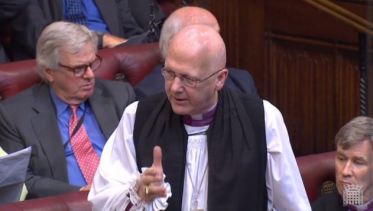 On 29th November 2016, Lord Beecham asked Her Majesty’s Government, “further to the announcement in the Autumn Statement that they will invest £1.4 billion to deliver 40,000 affordable homes, how many affordable houses to rent they expect local authorities to build by 2020.” The Bishop of St Albans, the Rt Revd Alan Smith, asked a follow up question.
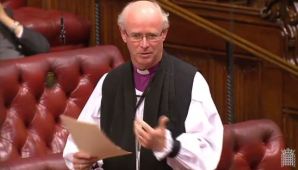 On 11th October 2016, Baroness Bakewell of Hardington Mandeville asked the government “how they plan to improve the quality and affordability of housing in the United Kingdom”. The Bishop of Rochester, the Rt Revd James Langstaff, contributed to the debate.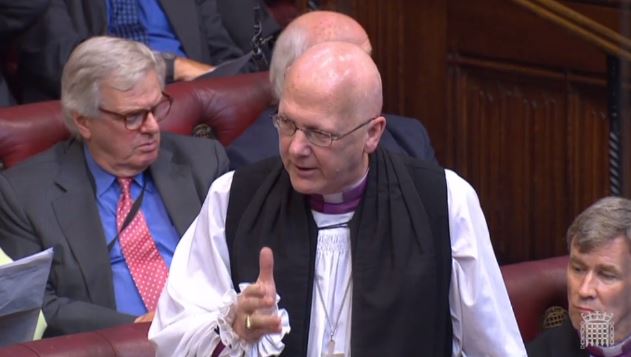
 On 18th April 2016, the House of Lords debated an amendment to the Housing and Planning Bill that would mean victims of domestic violence who leave a secure social tenancy would be able to access a new secure tenancy, rather than the proposed short-term tenancies. The amendment had been tabled by Baroness Lister, with the support of the Bishop of St Albans, the Rt Revd Alan Smith. The Bishop of Peterborough, the Rt Revd Donald Allister spoke to the amendment on the Bishop of St Albans’ behalf.
 The Church of England in Parliament
You must be logged in to post a comment.