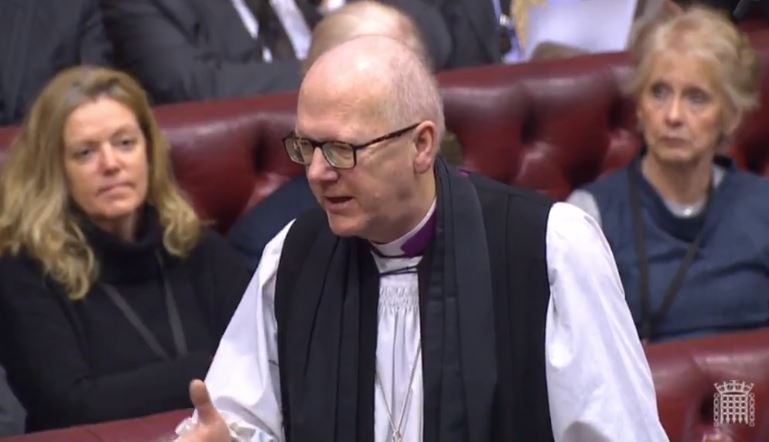
Bishop of Newcastle speaks on debate on horticultural sector

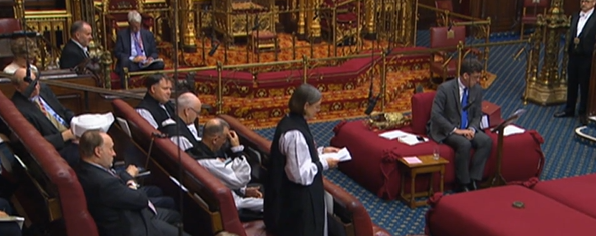
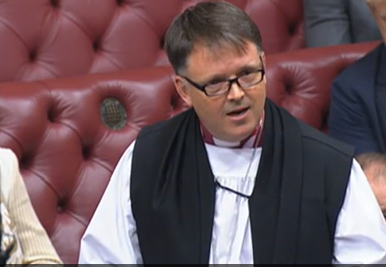
The Bishop of Newcastle spoke in a debate on a report from the Horticulture Sector Committee on 19th April 2024, with a focus on the welfare of seasonal workers and the benefits of promoting connections with nature:

The Lord Bishop of Newcastle: My Lords, I thank the members of the Horticultural Sector Committee for their work in producing a thorough report highlighting the challenges that this undervalued sector experiences. I also thank the noble Lord, Lord Redesdale, for his excellent summary when opening this debate. It is an honour to follow the noble Earl, Lord Caithness.

My understanding of this sector has been greatly helped by conversations with horticultural business owner Matt Naylor in south Lincolnshire, whom I met at the Oxford Farming Conference a few years ago. Listening to Matt has brought home to me the immense obstacles that the horticultural sector has faced in recent years. As other noble Lords have indicated, the sector is not in isolation from the totality of the farming and agricultural sector. To ensure food security for the future, of which horticultural activity is an integral part, we need joined-up, long-term thinking. I share the disappointment of noble Lords in this debate that the Government scrapped their plans last year to publish a horticultural strategy for England.

I want to focus my remarks on two issues. The reality of the seasonal work that the sector requires is not suited to most UK residents, resulting in a reliance on migrant seasonal workers. Without them, the industry could not function. However, their working arrangements often place them in positions of vulnerability. As evidence to the committee revealed, their protection under UK employment law is frequently not upheld. Seasonal workers often face abuse and poor pay and working conditions. I agree with the remarks made by the noble Baroness, Lady Bennett, on this matter.

Continue reading “Bishop of Newcastle speaks on debate on horticultural sector”

Bishop of St Albans asks about impact of the agricultural transition on food production and farm business viability

The Bishop of St Albans received the following written answer on 15th April 2024:

The Lord Bishop of St Albans asked His Majesty’s Government whether they will undertake an assessment of the impact of the agricultural transition on food production and farm business viability.

Continue reading “Bishop of St Albans asks about impact of the agricultural transition on food production and farm business viability”

Bishop of Southwell and Nottingham asks about limiting solar plants on agricultural land

The Bishop of Southwell and Nottingham received the following written answer on 26th March 2024:

The Lord Bishop of Southwell and Nottingham asked His Majesty’s Government what consideration they have given to limiting the size of solar plants in areas of best and most versatile agricultural land.

Lord Callanan (Con, Department for Energy Security & Net Zero): Planning policy and associated guidance set out that the effective use of land should be prioritised by directing large scale solar projects to locate on previously developed and non-greenfield land.

Continue reading “Bishop of Southwell and Nottingham asks about limiting solar plants on agricultural land”

Bishop of Norwich welcomes sustainable farming incentives

On 25th January 2024, the Bishop of Norwich spoke in a debate on sustainable farming, welcoming the sustainable farming incentive scheme and calling for a new regulatory framework around nature protection:

The Lord Bishop of Norwich: My Lords, it is a pleasure to follow a fellow tree planter, the noble Lord, Lord Robathan. I give a tree to every person I confirm as a sign of the care of God’s creation. I am grateful to the noble Earl, Lord Caithness, for securing this debate. I declare an interest as a member of Peers for the Planet and as a Church Commissioner.

Landowners and conservationists with whom I have spoken have broadly welcomed the changes to the sustainable farming incentive, not only the increased payment rates, which make uptake more attractive, but the new areas of action, the increased flexibility and the promise of a simpler, clearer and faster application service. Let us hope it does what is says on the new, streamlined tin. This better-rounded and more holistic agri-environmental scheme in England will undoubtedly see a greater uptake across all agricultural sectors. The tools are certainly in place to help deliver both sustainable food production and nature recovery.

In particular, I welcome the new emphasis on soil health. Being under our feet, we too often forget it, but soil is perhaps our greatest natural asset and the key to so much nature recovery. I am glad that the noble Baroness, Lady Bennett of Manor Castle, shares my enthusiasm for soil. Healthy soil supports a range of environmental, economic and societal benefits. These include food production, climate change mitigation and increased biodiversity. These vital soil functions are at risk from poor soil management or inappropriate land use, leading to soil degradation, soil compaction and soil erosion from wind and water. Ecological breakdown of our soils together with climate change are perhaps the primary threats to food security.

Continue reading “Bishop of Norwich welcomes sustainable farming incentives”

Bishop of St Albans asks about support for regenerative agriculture and funding for local communities

The Bishop of St Albans received the following written answers on 17th October 2023:

The Lord Bishop of St Albans asked His Majesty’s Government what steps they are taking to support regenerative agriculture.

Lord Benyon (Con, DEFRA): Environmental land management (ELM) is the foundation of our new approach to farming. ELM includes the Sustainable Farming Incentive (SFI). This pays farmers for actions that support food production and can help improve farm productivity and resilience, while protecting and improving the environment. It will support sustainable food production and contribute towards the environmental targets set out in the government’s Environmental Improvement Plan. The SFI 2023 opened for applications on 18 September 2023, and farmers who have a live SFI 2023 agreement before the end of the year will receive an accelerated payment in the first month of their agreement.

Continue reading “Bishop of St Albans asks about support for regenerative agriculture and funding for local communities”

Bishop of St Albans asks about uptake of renewables among British farmers

The Bishop of St Albans received the following written answer on 4th September 2023:

The Lord Bishop of St Albans asked His Majesty’s Government what steps they are taking to upgrade three-phase power supply to support British farmers with the uptake of renewables.

Continue reading “Bishop of St Albans asks about uptake of renewables among British farmers”

Bishop of St Albans asks about exemptions from ban on sale of horticultural peat

The Bishop of St Albans received the following written answer on 16th June 2023:

The Lord Bishop of St Albans asked His Majesty’s Government what exemptions will there be to the general ban on the sale of peat and peat-containing products in the retail horticultural sector from 2024.

Continue reading “Bishop of St Albans asks about exemptions from ban on sale of horticultural peat”

Bishop of Exeter asks about land use and diseases affecting trees

The Bishop of Exeter received the following written answers on 5th June 2023:

The Lord Bishop of Exeter asked His Majesty’s Government how many acres of agricultural land which were previously being farmed were set aside for rewilding in (1) 2018, (2) 2019, (3) 2020, (4) 2021, and (5) 2022.

Lord Benyon (Con): The Government does not instruct farmers to ‘set aside’ land for rewilding. We are phasing out subsidies so that we can invest the money in policies that work for farm businesses, food production and the environment. We are co-designing our reforms with farmers and, as we said in the Agricultural Transition Plan, the intention of our environmental land management schemes is to be flexible and to provide more choice and control to farmers.

Continue reading “Bishop of Exeter asks about land use and diseases affecting trees”

Bishop of St Albans asks for support for agricultural growers

The Bishop of St Albans asked for assurances to the Lea Valley Growers Association in his diocese that support for their planning would be available going forward, during a debate on the upcoming ban on the sale of horticultural peat on 9th May 2023:

The Lord Bishop of St Albans: My Lords, the Lea Valley in my diocese is an area sometimes known as Britain’s salad bowl. The Lea Valley Growers Association already faces huge problems, mainly because of the increase in energy costs at the moment, and many of these growers are going out of business. Its concern is that some crops are grown in very specialist ways, and some of the alternatives are not working very well. The association wants real guarantees and help to make sure that, where there are not good alternatives, growers have some security for their planning at a time when many of them are not planting anymore. Can the Minister give those assurances?

Continue reading “Bishop of St Albans asks for support for agricultural growers”

Bishop of Exeter asks about horticultural exports

The Bishop of Exeter received the following written answer on 17th April 2023:

The Lord Bishop of Exeter asked His Majesty’s Government what was the total amount of exports from the horticultural sector in (1) 2018, (2) 2019, (3) 2020, (4) 2021, and (5) 2022.

Continue reading “Bishop of Exeter asks about horticultural exports”