
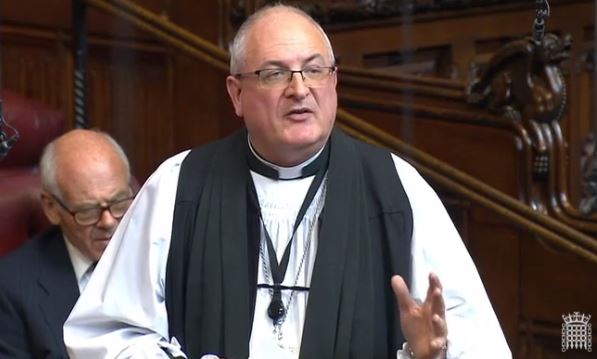
On 2nd February 2026, the Bishop of Lincoln spoke in a debate on amendments relating to the decriminalisation of abortion in the Crime and Policing Bill, highlighting the importance of supporting women and the need for a change in the way police investigations of terminations of pregnancies are carried out, while reiterating opposition to full decriminalisation on the grounds of the sanctity of life:
The Lord Bishop of Lincoln: My Lords, I am one of those old men. I am also a single man, so I have no children of my own, but I am regularly in contact with very young families through baptism. Only last Thursday, I was in hospital in an acute cardiac unit for babies, anointing a two week-old baby who had just had open-heart surgery. So I know quite a lot about babies through a very long ministry. I also offer my thanks to the noble Lord, Lord Winston, for a television series that he oversaw about seeing a pregnancy from conception to delivery some years ago. That series reinforced my conviction about the sanctity of life.
The fact that we are here today in this Chamber means that we must recognise that we are on precious ground. Of course we are here to support women who have been abused and coerced. I think that the amendment proposing that we should require the Attorney-General to intervene would be rather too late if there had been a year-long investigation of a woman in between. I have been investigating this with the Lincolnshire constabulary: we need to look at how police procedure can be changed and invested in, enabling us to move away from treating these women as criminals to treating them as witnesses and victims, so that the police activity is primarily engaged in going after coercers and bad actors. I therefore agree with the noble Baroness in how that should proceed.
At the same time, noble Lords will not be surprised to hear me say that I entirely endorse the Church of England’s principle position in opposing the abortion of late-term foetuses who are viable, unless otherwise affected by the Abortion Act. I would like to see a different way of interpreting the law, which is differently enforced, which does not decriminalise or take away investigation, precisely for the protection of women and the preservation of unborn life.
To do that, we need to look urgently at how we allow investigations to take place and how we seek to support a woman, often a woman going through acute distress and bereavement. I quite understand the point about unexplained deaths, and we need to make sure that women are protected. But I signed a letter with 200 other clergy, back when Clause 191 first came out, expressing our dismay at the way in which this decriminalisation could so easily lead inadvertently, even if it is only a small number of babies, to the termination of the lives of viable children into the future. That, I am afraid, I could never support.


You must be logged in to post a comment.