Terminally Ill Adults (End of Life) Bill: Bishop of Hereford highlights importance of nuanced understanding of artificial intelligence

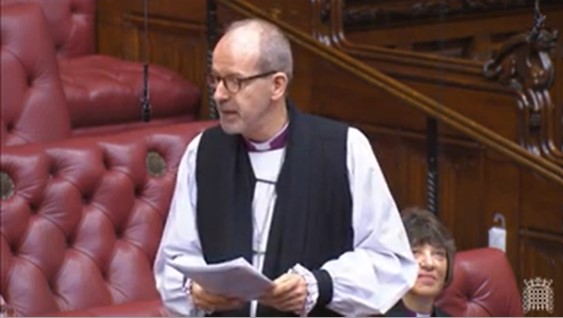
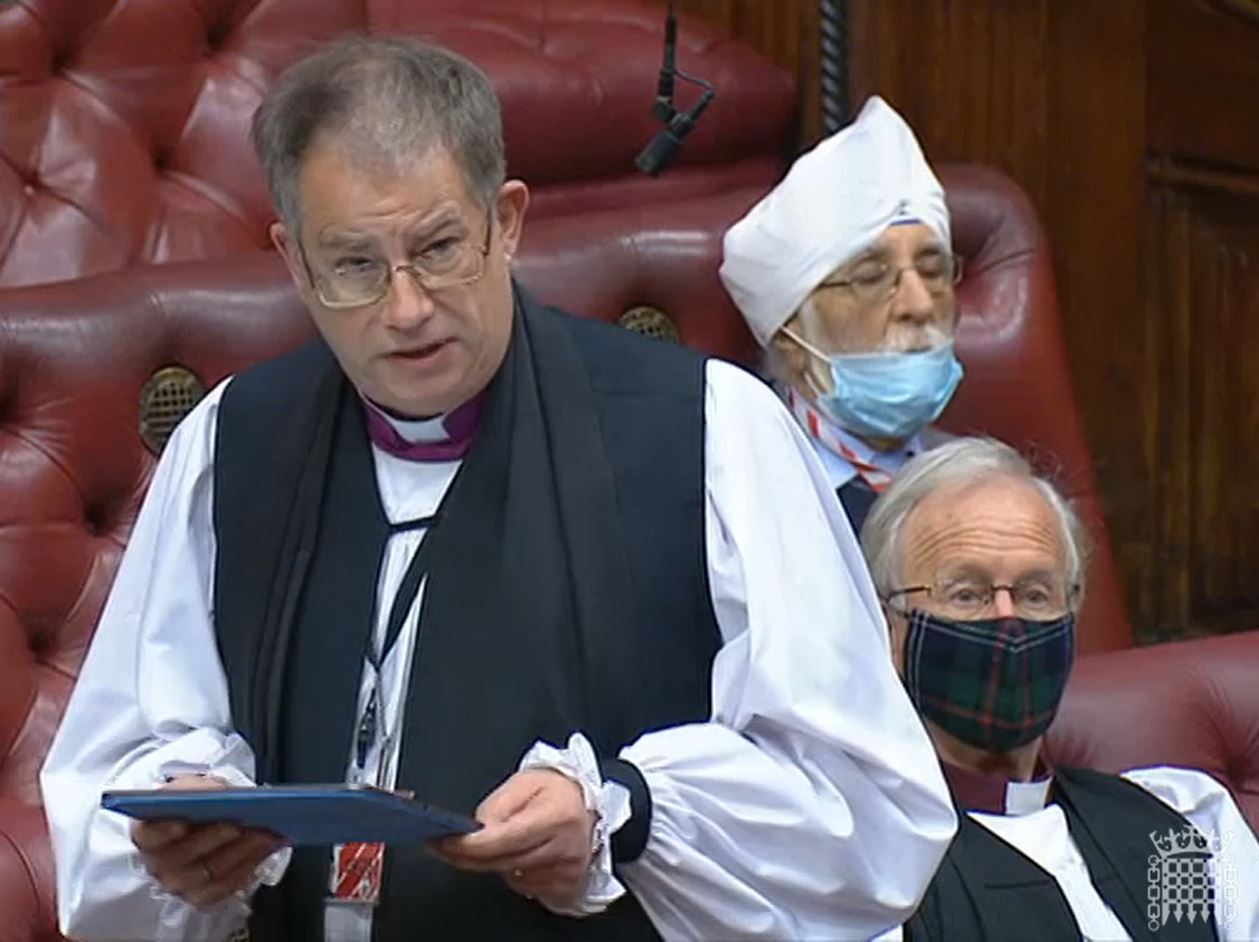
The Bishop of Hereford spoke during a committee debate on the Terminally Ill Adults (End of Life) Bill on 30th January 2026, pointing out a distinction between AI tools and artificial intelligence generally in regards to an amendment proposed by Baroness Coffey, which would stipulate that “(4) Artificial intelligence must not be used to carry out any functions in any section or schedule of this Act.”

The Lord Bishop of Hereford: I thank the noble Baroness, Lady Coffey, for raising a very important issue in this amendment. However, I am concerned that, as it stands, as the noble Baroness said, this amendment is too blunt an instrument. It is important that we distinguish between AI tools and the more dangerous artificial general intelligence, or superintelligence. The use of AI in medical diagnostics in patient care is already commonplace. AI tools are currently used to read scans and X-rays and will frequently perform as well as, if not better than, clinicians. To exclude the use of AI altogether might deprive patients who are considering assisted dying of valuable diagnostic assistance and care at a very vulnerable time.

Continue reading “Terminally Ill Adults (End of Life) Bill: Bishop of Hereford highlights importance of nuanced understanding of artificial intelligence”

Bishop of Hereford speaks in debate on establishing moratorium on super-intelligent AI

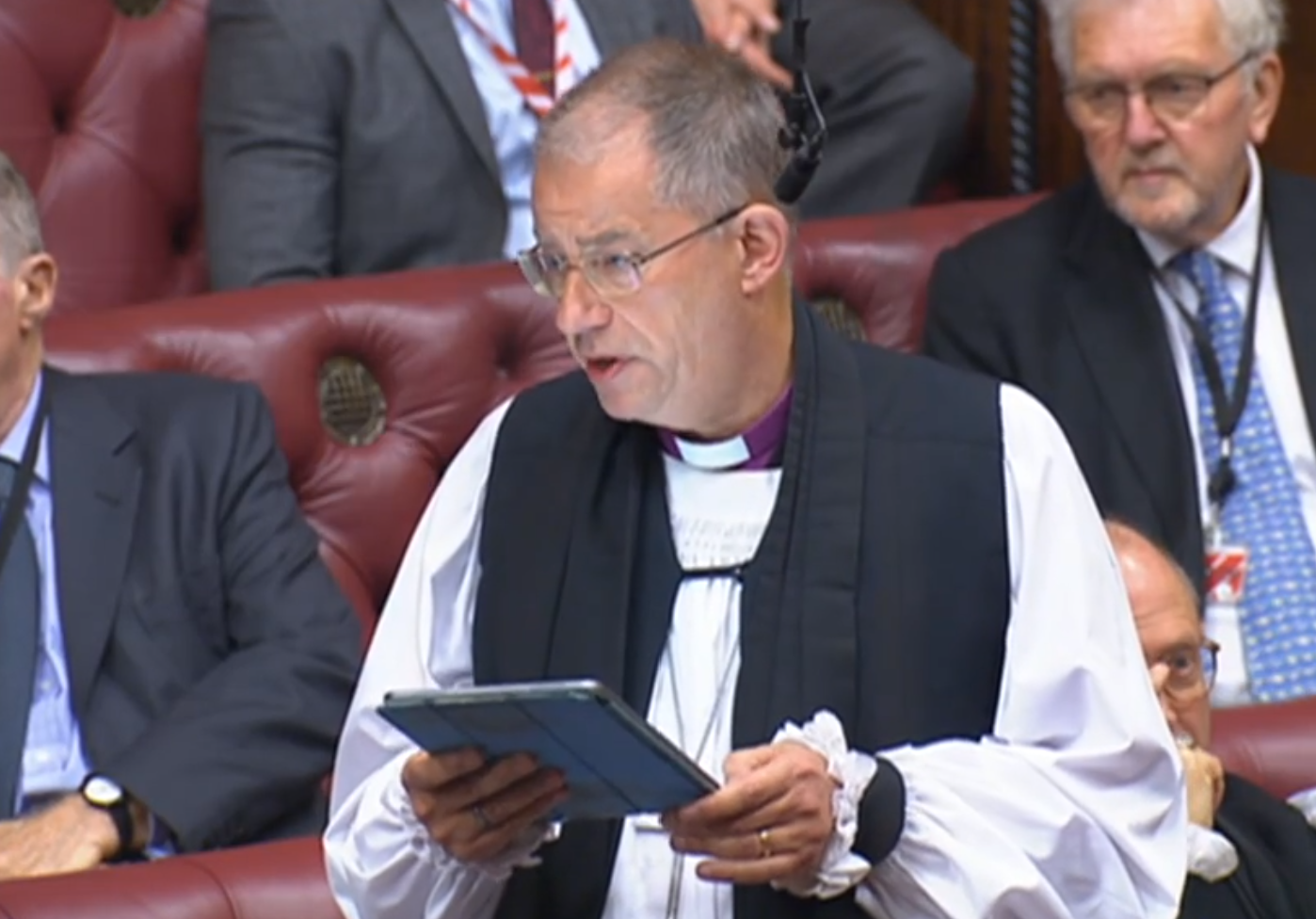
The Bishop of Hereford spoke in a debate on proposals for an international moratorium on the development of superintelligent AI on 29th January 2026, highlighting the importance of tempering “intelligence” with love and human collaboration, and urging the government to support a moratorium:

The Lord Bishop of Hereford: My Lords, it is appropriate that this debate happens the day after the Church celebrated the life and work of the great divine Thomas Aquinas, one of the founding intellectual fathers of western thought, because this debate cuts to the very heart of how we understand ourselves.

Our debate is about the regulation of superintelligence. We know that intelligence is simply

“the ability to learn, understand and think in a logical way about things; the ability to do this well”.

Continue reading “Bishop of Hereford speaks in debate on establishing moratorium on super-intelligent AI”

Bishop of Gloucester asks about role of Ofcom in regulating online deepfakes

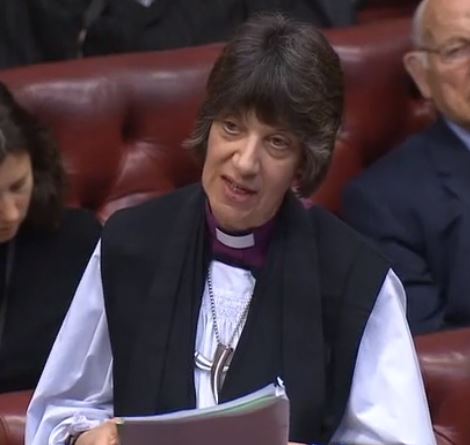
The Bishop of Gloucester asked a question on the effectiveness of Ofcom during a discussion on the proliferation of non-consensual sexual deepfakes of women on X/Twitter on 14th January 2026:

The Lord Bishop of Gloucester: My Lords, I welcome moves by the Government on this issue. I came off X last September and there is wider debate to be had about that site. Given that we know that the use of AI tools to harm women will only accelerate—recent research has found thousands of nudification apps available—I repeat my question from earlier this week: what more will the Government do to create a robust framework so that AI will be used responsibly in the whole landscape of misogyny and abuse?

Continue reading “Bishop of Gloucester asks about role of Ofcom in regulating online deepfakes”

Bishop of Gloucester asks about efforts to combat use of AI as a tool of harassment

The Bishop of Gloucester asked a question on responsible use of AI and combatting its use in harassment of women and girls online on 12th January 2026:

The Lord Bishop of Gloucester: My Lords, following on from that question, I am very grateful for the action being taken by Ofcom to investigate X and the Grok AI chatbot, but what are the Government doing to create a robust framework so that AI will be used responsibly in this whole landscape of sexual harassment experienced by women and girls?

Continue reading “Bishop of Gloucester asks about efforts to combat use of AI as a tool of harassment”

Bishop of Derby asks about AI implementation standards for government and local authorities

The Bishop of Derby asked a question on maintaining high ethical standards for AI implementation by government and local authorities on 15th December 2025:

The Lord Bishop of Derby: My Lords, impressive work is already under way to drive technological innovation across local and regional government. Derby City Council was the first in the UK to introduce phone assistants powered by generative AI—they are called Darcie, Ali and Perrie; do come and ask me why they have those names if you want to know—to streamline call centre interactions with residents. I declare my interest as Bishop of Derby and a member of the Derby City Partnership board. How will the Minister’s department learn from best practice and pilot initiatives across local and regional government to ensure that AI implementation maintains inclusivity and high ethical standards in all sectors?

Continue reading “Bishop of Derby asks about AI implementation standards for government and local authorities”

Bishop of Sheffield asks about further education sector

The Bishop of Sheffield received the following written answers on 16th September 2025:

The Lord Bishop of Sheffield asked His Majesty’s Government what plans they have to promote and support vocational development and training between United Kingdom further education institutions and their equivalents overseas.

Continue reading “Bishop of Sheffield asks about further education sector”

Bishop of Oxford asks about impact of AI on youth unemployment

The Bishop of Oxford asked a question on the impact of artificial intelligence on youth unemployment on 11th September 2025:

The Lord Bishop of Oxford: My Lords, I too welcome and commend the Minister’s passion and commitment. I recently met around 100 young people, as part of the work our diocese is doing, and their number one concern is the impact of technology and AI on their future jobs. There is now robust research in the United States on the likely impact of AI on entry-level jobs. Are the Government aware of that research and do they intend to commission research on the likely impact on the UK of artificial intelligence and strategies that might emerge?

Continue reading “Bishop of Oxford asks about impact of AI on youth unemployment”

Bishop of Oxford asks about use of AI in government work and cybersecurity

The Bishop of Oxford asked a question on joined up thinking in defence and cybersecurity, and the risks of AI use in government work, on 10th September 2025:

The Lord Bishop of Oxford: My Lords, on Monday the All-Party Parliamentary Group on Artificial Intelligence heard a striking presentation from the Polish Minister for defence and cybersecurity, who talked about the joined-up thinking his nation has developed on defence and commercial attacks of this kind. I ask the Minister what the Government are doing to join up thinking in defence and industry, in terms of cyber- attacks. In light of the Government’s promotion of artificial intelligence, do they consider that this increases the risk of cyberattacks of this kind? What steps are the Government taking to advocate responsible and cautious adoption of AI to mitigate this risk?

Continue reading “Bishop of Oxford asks about use of AI in government work and cybersecurity”

Bishop of Newcastle asks about environmental impact of AI data centres

The Bishop of Newcastle asked a question on the environmental impact of AI data centres during a discussion on artificial intelligence legislation on 21st July 2025:

The Lord Bishop of Newcastle: My Lords, I am very pleased that Blyth in north-east England has been chosen as the site of a new AI data centre. This represents good investment in training and skills and in transport infrastructure. However, data centres have a lot of impact on the environment and local communities, particularly in terms of water shortages. What ongoing assessment has been done of the impact, particularly on water shortages in local communities?

Continue reading “Bishop of Newcastle asks about environmental impact of AI data centres”

Bishop of Oxford asks about ethical use of medical data

The Bishop of Oxford asked a question on the ethical questions around use of medical data and outsourcing of this data to private companies on 9th July 2025, following a government statement on the NHS 10-Year Plan:

The Lord Bishop of Oxford: My Lords, I welcome the Minister to her place and, like others, send good wishes to the noble Baroness, Lady Merron.

I welcome very much, as others have done, the three aspirations in Fit for the Future. I think that they are significant and that they are the right ones. I think they are bold and visionary. However, while I welcome the move from analogue to digital, for me, the document raises significant questions. We are looking to build a National Health Service which cares for whole people, not machines. We need, therefore, to be concerned for physical, mental, emotional and spiritual health, at every stage of life, across the NHS. That demands continuous investment in people, including, of course, chaplains.

Continue reading “Bishop of Oxford asks about ethical use of medical data”