
On December 19th 2018 the House of Lords debated a motion from Lord Moynihan, “That this House takes note of how sport, recreation, and the arts contribute to wellbeing of society.” The Bishop of Chichester, Rt Revd Martin Warner, spoke in the debate:
 The Lord Bishop of Chichester: My Lords, I too am grateful to the noble Lord, Lord Moynihan, for introducing the debate and for his magnificent speech, which covered so many areas which indicate how transformative sport can be—in ways that I think the arts can mirror.
This Christmas very large numbers will attend carol services in churches across the country. Church of England statistics for 2017 indicate that nearly 8 million people attended a Christmas service of some kind, drawn by a combination of music, architectural environment and the drama of liturgy—a topical example of the arts and social well-being in the bringing together of practising Christians and others who find that this celebration of Christmas breaches barriers and creates community and a deep sense of belonging and well-being. Of course, this experience is not only for those who are privileged but happens in our churches that serve the outer estates and areas of deprivation in our nation. Continue reading “Bishop of Chichester on how the arts contribute to the wellbeing of society”
 The Lord Bishop of Chichester (Maiden Speech): My Lords, I begin by recording my thanks for the welcome and encouragement that I have received both today and on so many occasions since being introduced into your Lordships’ House.
  On 2nd March 2017 the Second Church Estates Commissioner, Dame Caroline Spelman MP, answered oral and written questions in the House of Commons, covering wi-fi in churches, art exhibitions in churches, the Anglican Church in South Sudan, the House of Bishops’ Report on Human Sexuality, and church building repairs. A full transcript follows:
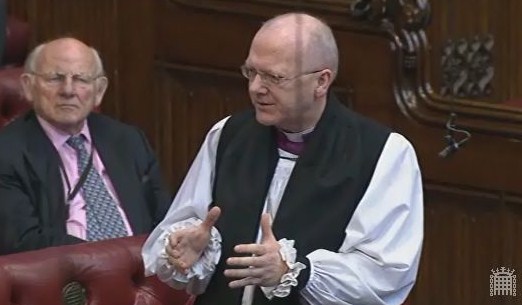
 The Lord Bishop of Derby: My Lords, I, too, thank the noble Lord, Lord Hanningfield, for his introduction to the debate, especially for linking education with vocation for people in prison. As the noble Lord, Lord Addington, said, it is a very complex territory with very deep needs. A lot of research shows that the prison population represents people with multiple needs. Therefore, the task of education and vocation will be challenging. I see the importance of formal education for literacy and numeracy to help people to get jobs. I am all in favour of that, but I want to look behind that at the informal fashioning of vocation and the development of character and confidence, which allows people to enter formal learning. I will draw on my own experience of going into prisons.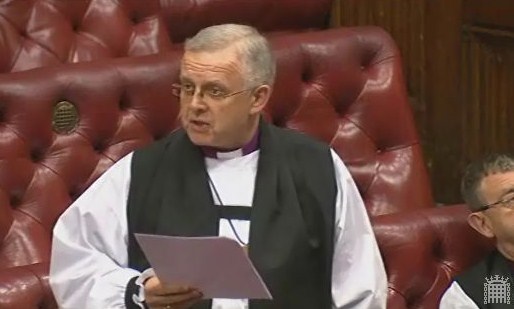
 The Church of England in Parliament
You must be logged in to post a comment.