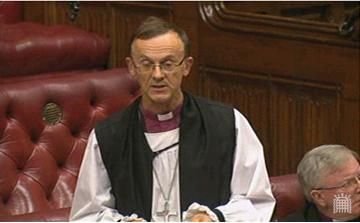
Health and Care Bill: Bishop of Durham opposes amendment on assisted dying

On 16th March 2022, the House of Lords debated amendments to the Health and Care Bill at the report stage. The Bishop of Durham spoke in the debate, stating his opposition to an amendment that would require parliament to consider a bill permitting assisted dying:
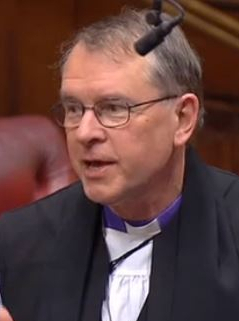
The Lord Bishop of Durham: My Lords, I agree with those who have already spoken opposing the amendment. First, the amendment is not appropriate as a use of the legislative process accompanying this Bill through your Lordships’ House. There is a question of purpose. If opportunity for debate is the goal, we must underestimate neither the significance of the Bill of the noble Baroness, Lady Meacher, in October and the thorough, careful and considered debate, nor the possibilities of calling for Committee. I would also support that time being given in this House. There are important constitutional questions which arise if the amendment enacted by this House does in fact instruct the Secretary of State in the other place to propose and introduce a draft Bill—as the noble Lord, Lord Hunt, has just outlined. If that is not the case—and if the noble Lord, Lord Forsyth, is not advocating for this draft to be introduced—what is the purpose of the amendment?

Continue reading “Health and Care Bill: Bishop of Durham opposes amendment on assisted dying”
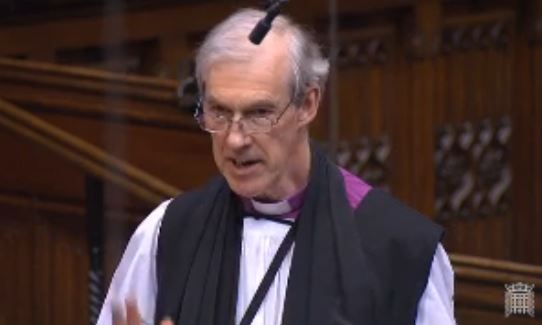
Votes: Health and Care Bill

On 16th March 2022, the House of Lords debated the Health and Care Bill in its report stage. Votes were held on several amendments to the bill, in which Bishops took part.

Continue reading “Votes: Health and Care Bill”

Health and Care Bill: Bishop of Carlisle raises concerns on assisted dying

On 26th January 2022, the House of Lords debated the Health and Care Bill in committee. The Bishop of Carlisle spoke on issues of assisted dying contained in amendments to the bill:

The Lord Bishop of Carlisle: My Lords, I recognise and respect the integrity and passion that underlie Amendment 297. However, I rise to agree wholeheartedly and briefly with those noble Lords and noble and learned Lords who have already expressed their significant reservations about it.

There are two problems in particular with that amendment. The first has to do with the many contentious arguments for and against any legislation permitting assisted dying, some of which have already been mentioned. Tempting though it is to rehearse some more of those, I am conscious not only of the time but of the fact that they have already been presented recently and at length, as we have been reminded by the noble and learned Lord, Lord Mackay, at Second Reading of the Assisted Dying Bill here in your Lordships’ House. The ongoing process of that Bill, however slow it may be, should not be undermined. We have also been assured that this is not primarily what Amendment 297 is all about. I might add that the terminology of that amendment is unhelpfully vague. “Vague” is a word that has already been used more than once in the debate today. For instance, we might ask exactly what is meant by “terminally ill” or “medical assistance”.

Continue reading “Health and Care Bill: Bishop of Carlisle raises concerns on assisted dying”

Health and Care Bill: Bishop of Carlisle supports amendments requiring specialist palliative care services

On 18th January 2022, the House of Lords debated amendments to the Health and Care Bill. The Bishop of Carlisle spoke in the debate, supporting amendments tabled by Baroness Finlay of Llandaff that would require specialist palliative care units to be set up in the UK:

The Lord Bishop of Carlisle: My Lords, it is always a pleasure to follow the noble Lord, Lord Patel. I am pleased to give my wholehearted support to Amendment 47 and to Amendment 52, to which I have added my name, which compellingly requires the commissioning of specialist palliative care services in every part of England. Throughout my life and work I have often had the privilege of being present with families and communities, supporting people of all ages through the final chapter of their life, so I have seen at first hand the enormous difference that high-quality palliative care can make to their experience of dying, death and bereavement.

However, as the noble Baronesses, Lady Brinton and Lady Masham, pointed out, 90% of people might need such care, but as things stand at present only about half of them will receive it. What is more, it is all too often those in our most deprived communities who are dying without the help and dignity they deserve.

To that end, a compelling body of evidence has been provided by Marie Curie, the end-of-life charity, which has been mentioned several times already in this debate. Building on that evidence, this amendment will not only prevent many people with a terminal illness dying in pain but deliver significant cost savings to the NHS by reducing unnecessary hospital admissions.

Continue reading “Health and Care Bill: Bishop of Carlisle supports amendments requiring specialist palliative care services”

Bishop of Chichester warns of unintended consequences of assisted suicide bill

On October 22nd 2021 Peers debated the Assisted Dying Bill of Baroness Meacher, at its Second Reading.

The Lord Bishop of Chichester: My Lords, I feel constrained to begin with a theological view, as the noble Lord, Lord Lipsey, challenged us to do. It is simply this: in the Christian view, God does not inflict evil on people. Indeed, the man God, Jesus Christ himself, sharing our life, experienced the evil and suffering of the cross in order that we, in the darkest moments of death, might find hope and the recovery of life in heaven. I believe that, in this debate, we have been treading on sacred ground as we have listened to personal stories, and we have done so with reverence.

Most of all, I want to speak about the wider context of vulnerability and to do so from the experience of the parishes where I have served; for example, the sex workers in the back streets of Plymouth, the largely black and Asian communities in Leicester, and the bedsits and overcrowded flats of Hastings, home to people with severe mental health issues and/or drug dependency. At the point of facing terminal illness, such people would reveal overwhelmingly that they have no family, and few friends or responsible partners to assist them through reaching the point of final death. Indeed, in many cases, they have had no experience of being given autonomy or power over their lives; at the end of their lives, they are woefully ill prepared for taking responsibility for their death.

The sanctity of life is central to Christian faith. It is also a view held with honour and conviction by people of other faiths, as we have heard. The Church’s sense of responsibility for all people stems from this conviction—responsibility especially for the vulnerable when they face death too often alone, but, at the moment, with the fundamental bulwark of protection in the law. This was a point made powerfully by the noble and right reverend Lord, Lord Harries, the noble Lord, Lord McColl, and, more recently, the noble Lord, Lord Herbert.

Many contributors have raised significant doubts about the level of trust in the capacity of the judiciary and the medical profession to meet the extraordinary demands of disadvantaged communities when terminal illness and incapacity face them. The call from the noble Lord, Lord Hastings, and others for urgent and sustained investment in palliative care would be a positive and worthy outcome to this important debate on a Bill whose humane intentions I respect profoundly but which, I believe, would lead to unintended consequences and which we should not let pass.

Hansard

Bishop of Carlisle – need to improve palliative care, not legalise assisted suicide

On October 22nd 2021 Peers debated the Assisted Dying Bill of Baroness Meacher, at its Second Reading.

The Lord Bishop of Carlisle: My Lords, it is a privilege to follow the noble Lord, Lord Alton. I too congratulate the noble Baroness, Lady Davidson, on such an excellent speech

My colleagues on these Benches have already expressed our profound opposition to any change in the law on assisted dying so I will not repeat the cogent points that they have already made. I hope it will be apparent that our position is not only theological but rooted in our pastoral experience and that of many chaplains in hospitals and hospices and clergy across the land, with arguments that, as this debate has effectively revealed, are important to a wide variety of people, whatever their beliefs.

I remember, when we last debated this issue in your Lordships’ House, being asked in a radio interview, “What’s new in this debate?” In terms of arguments rather than opinions, I am not at all sure that much was new then, and even less is new now. So in the brief time allocated to me today, I will simply reiterate two issues that have been raised several times but which seem of particular significance in this powerful, respectful and very moving discussion, in which we know that compassion motivates every one of us.

Continue reading “Bishop of Carlisle – need to improve palliative care, not legalise assisted suicide”

Assisted Dying Bill would make vulnerable less safe – Bishop of Durham

On October 22nd 2021 Peers debated the Assisted Dying Bill of Baroness Meacher, at its Second Reading.

The Lord Bishop of Durham: My Lords, I begin by noting the simple courtesy that has been expressed so far during the debate today. We know that humanity at its best always wants the best for the people we love, and we act to protect them where we can. It is natural to want to ease hardships and burdens for our loved ones, especially in a time of pain, but also in a time of rising care costs and stretched health services. But human beings do not always act in the best way. We are flawed creatures.

There is a very real danger that individuals will feel that they have become a burden and thus think that the dutiful option to their families is to end their life. In Oregon and Canada, where assisted dying has been legalised, fear of being a burden to family actually frequently accompanies the requests. The scope for abuse and pressure for people to end their lives is significant. It is not a giant leap but a small step. The practice of weighing the value of lives against emotional and financial cost simply is dehumanising.

The consequences of the Bill to the most vulnerable have to be deeply considered. If the value of people’s lives is called into question, it is likely that those who have been historically undervalued and overlooked will be again. Those with disabilities and mental health issues, and other minorities, are already vulnerable, and the difference of experience between those groups and others has again been evident during the pandemic. The Bill acts on the principle that people should have the ability to act upon their will to end their lives, but we have seen instances over the pandemic, as reported by the Care Quality Commission, of “do not attempt CPR” decisions that have been made either without or against the will of the vulnerable. Perhaps even more troubling was the aspect of the report by the CQC, which said that those decisions

“were being applied to groups of people”.

In a stretched and overwhelmed health service that has supported us over a long pandemic, safeguards against oversight cannot be guaranteed. What would have been the outcome of the pandemic if the medical stakes had been higher?

We must not overlook the cultural implications of passing a Bill that leads anyone to measure the worth of someone else’s life. Who are we to put a value on human life or determine that, in some instances, the person is not worth the cost? Let us not abandon the imperative principle that is innate to us of valuing every human life and protecting and caring for the vulnerable.

If I may, I have a reminder for the noble Lord, Lord Vinson:

“But when they came to Jesus and found that he was already dead, they did not break his legs”—

and then his side was pierced.

Hansard

Archbishop of Canterbury opposes Bill on assisted suicide

On October 22nd 2021 Peers debated the Assisted Dying Bill of Baroness Meacher, at its Second Reading.

The Archbishop of Canterbury: My Lords, I am grateful to the noble Baroness, Lady Meacher, and listened with great attention to her extremely powerful speech. This is an issue on which many of us have personal experiences, often painful and difficult. There is unanimity on these Benches that our current law does not need to be changed, but I know that people of faith hold differing views. No doubt we will hear those today and I look forward to them.

Everyone here shares the best of intentions. We should recognise that in how we listen and respond to each other. I hope no one will seek to divide the House today, but I welcome the amendment from the noble Lord, Lord Winston, because it draws our focus towards our use of language. We need clarity and precision in our terms.

Christ calls his followers to compassion, but compassion must not be drawn too narrowly—a point made indirectly and powerfully by the noble Baroness, Lady Meacher. It must extend beyond those who want the law to provide help to end their lives to the whole of society, especially those who might be put at risk. Our choices affect other people. The common good demands that our choices, rights and freedoms must be balanced with those of others, especially those who may not be so easily heard.

Continue reading “Archbishop of Canterbury opposes Bill on assisted suicide”

Bishop of Winchester asks if Ministers will meet those concerned about change to law on assisted suicide

On 23rd May 2019 Baroness Meacher asked the Government “what assessment they have made of whether the threat of prosecutions under the Suicide Act 1961 is causing suffering to mentally competent, terminally ill people at the end of their lives.” The Bishop of Winchester, Rt Revd Tim Dakin, asked a follow-up question:

Continue reading “Bishop of Winchester asks if Ministers will meet those concerned about change to law on assisted suicide”

Bishop of Worcester speaks against legalisation of assisted suicide in UK

WorcesterOn Monday 6th March 2017, Baroness Jay of Paddington tabled a debate in the House of Lords, asking the Government “what assessment they have made of recent legislation on assisted dying in North America; and whether those laws provide an appropriate basis for legislation in England and Wales.” The Bishop of Worcester, the Rt Revd John Inge, spoke in the debate.

The Lord Bishop of Worcester: My Lords, I oppose assisted dying not on religious, but on human grounds. Surely the only place in North America where legislation has been in place long enough to draw any reasonable conclusions is Oregon. The claim of those pressing for assisted suicide here, that there have been no documented cases of abuse or coercion in the two decades since it was passed, is highly contentious. Continue reading “Bishop of Worcester speaks against legalisation of assisted suicide in UK”