Nationality and Borders Bill: Bishop of Gloucester supports amendment on women’s safety and human trafficking

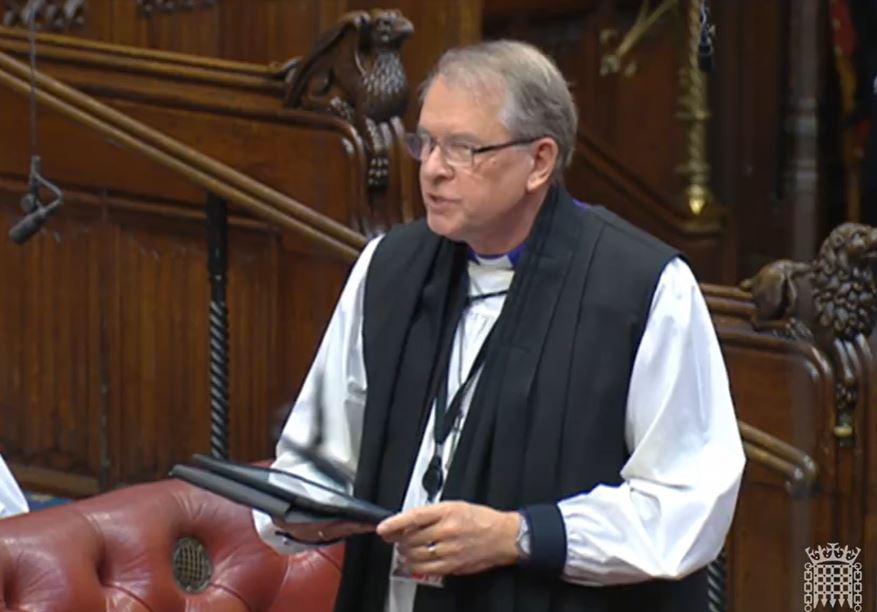
On 8th February 2022, the House of Lords debated the Nationality and Borders Bill in the fourth day of the Committee stage. The Bishop of Gloucester spoke in favour of amendment 105, tabled by Baroness Lister, which would remove restrictive wording in clause 32 of the bill, especially with regards to victims of trafficking:

“The amendment would remove the narrow restrictive and requirement in Clause 32 that, in order to qualify under the “particular social group” grounds of persecution for recognition as a refugee under the convention, two conditions must be met. The amendment would replace this with an either/or condition.” Hansard

The Lord Bishop of Gloucester: My Lords, I have added my name to Amendment 105 and the intention to oppose Clause 31 standing part of the Bill. I too am grateful to Women for Refugee Women and others for their briefings and support.

In the New Plan for Immigration and the briefings for the Bill, the Government have argued repeatedly that the existing asylum and refugee system is weighted against vulnerable women. The Home Secretary has repeatedly made the point that the large majority of channel crossings are by men aged under 40, for example. Given this, there might be some expectation that the Bill would contain some good news or ambitions on the part of the Government for better reaching and helping the women and girls who make up 50% of the world’s refugees and displaced people. Unfortunately, I do not see any such commitments. As a sting in the tail, in Clauses 31 and 32 we find proposals that seem to significantly disadvantage women further.

Continue reading “Nationality and Borders Bill: Bishop of Gloucester supports amendment on women’s safety and human trafficking”

Nationality and Borders Bill: Bishop of Durham speaks in support of amendments on offshoring of asylum seekers

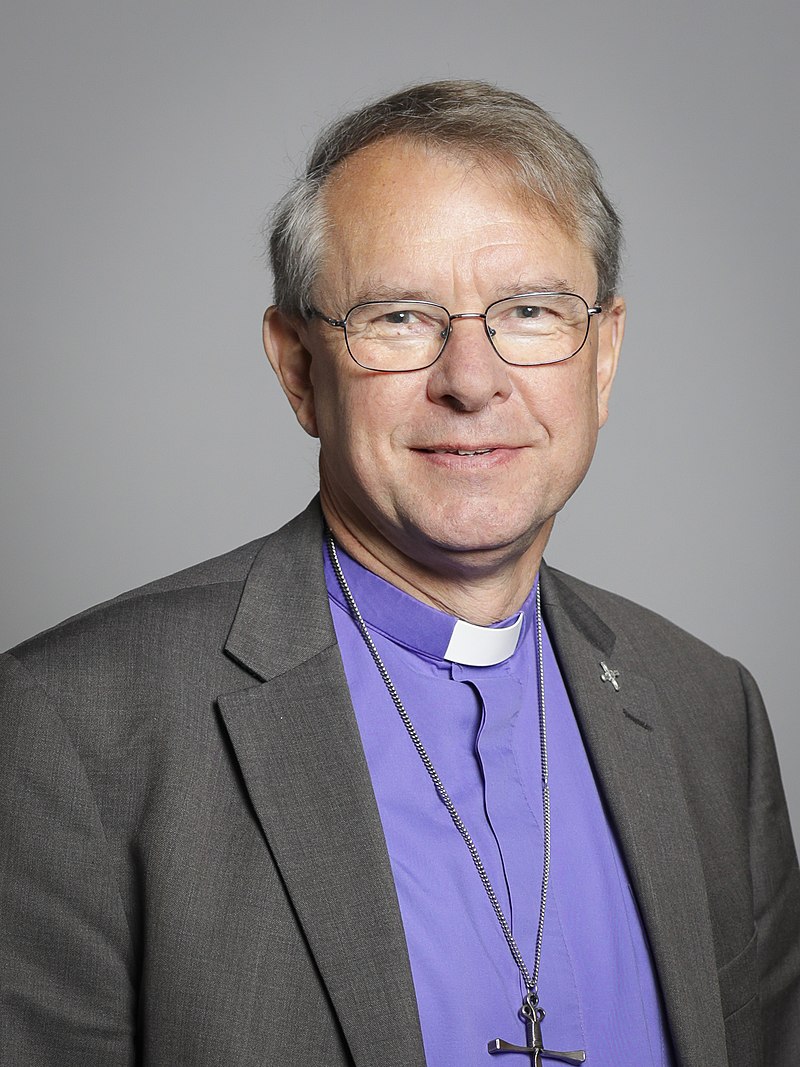
On 8th February 2022, the House of Lords debated the Nationality and Borders Bill in its fourth day of the Committee stage. The Bishop of Durham spoke in support of amendments 100 and 101, tabled by Lord Kirkhope of Harrogate, that would remove the powers in the bill to “offshore” asylum seekers before the consideration of their claims:

The Lord Bishop of Durham: My Lords, in rising to support Amendments 100 and 101, to which I have added my name, I declare my interests in relation to both the RAMP project and Reset, as set out in the register.

When people arrive on our shores seeking protection, we have a responsibility to treat them as we would wish to be treated if we had to flee for our lives. It is right that we have a process to determine who meets the criteria for refugee status, but while we determine this, we are responsible for people’s safety, welfare and care. If we move them to other countries for the processing of their asylum claims, I fear a blind eye will be turned to their treatment. How will we be sure that they are being treated humanely and fairly, and would our Government even give this much concern once they had left our shores? If we look to the experience of Australia and the refugees accommodated in Nauru, as the noble Lord, Lord Kirkhope, has just mentioned, we hear deeply shocking accounts of abuse, inhumane treatment and mental and physical ill-health.

As mentioned in relation to an earlier amendment, I visited Napier barracks last week to see improvements that have been made since the exposure of the disgraceful conditions at the beginning of last year. If what we have seen at Napier is permitted to happen in the UK, what can we expect overseas, where accountability and monitoring will be so much harder? The monitoring of asylum accommodation contractors in the UK is poor, which gives us some idea about the level of monitoring we could expect of offshore processing.

Continue reading “Nationality and Borders Bill: Bishop of Durham speaks in support of amendments on offshoring of asylum seekers”

Nationality and Borders Bill: Bishop of Chelmsford encourages alternative perspective on asylum seekers

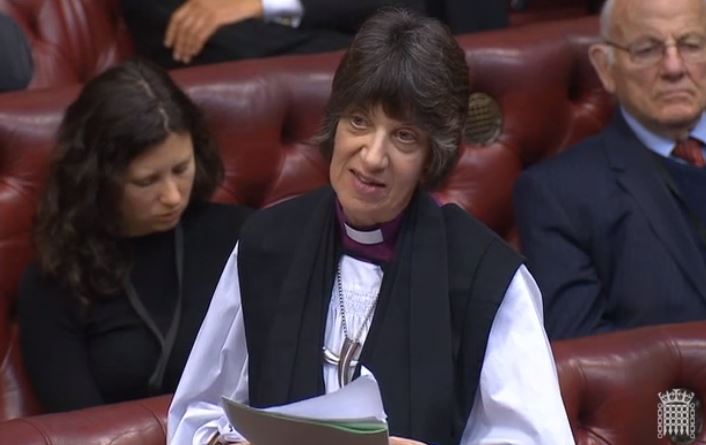
On 5th January 2022, during a debate on the newly introduced Nationality and Borders Bill, the Bishop of Chelmsford made a speech advocating for the value of viewing asylum seekers as potential future citizens, and emphasized the importance of treating them with dignity and respect:

The Lord Bishop of Chelmsford: My Lords, I must begin with an apology. As I am new to your Lordships’ House, there was an error in processing my request to speak, although I am grateful to the Whips for permission to interject at this point. It is a privilege to have been part of the debate and I look forward to following this Bill through and benefiting from the collective wisdom here.

I believe that I am among relatively few in the House who have experience of both sides of the asylum and refugee system, having first come to this country as a refugee from Iran in 1980. The plight of those fleeing violence and persecution and the difficulties in navigating identity and finding a new home are not abstract or intellectual propositions for me but part of who I am, and it is with that perspective that I offer some thoughts now.

Continue reading “Nationality and Borders Bill: Bishop of Chelmsford encourages alternative perspective on asylum seekers”

Nationality and Borders Bill: Bishop of Durham raises concerns about effects on children

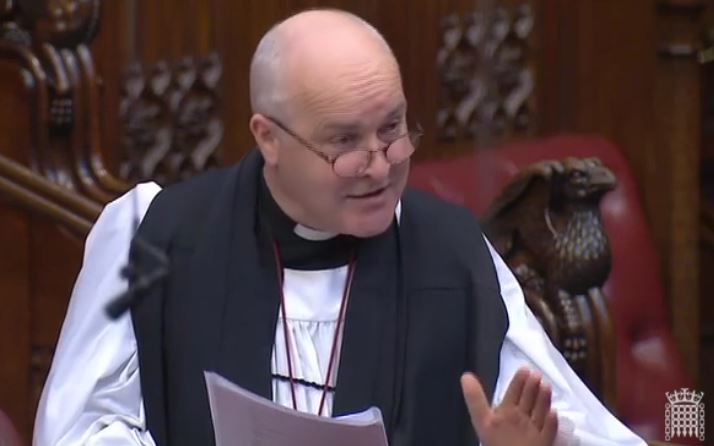
On 5th January 2022, the Nationality and Borders Bill was introduced to the House of Lords in its second reading. The Bishop of Durham spoke in the debate that followed, raising concerns that bill would fail to adequately protect children and others seeking asylum:

The Lord Bishop of Durham: I declare my interests as a member of the RAMP Project and a trustee of Reset, as laid out in the register. This Bill will raise strong views across the Chamber, as already illustrated by the three Front-Bench introductions, for which I thank all three, because I believe that they have served the House well in all three cases. I hope that we can have a debate that is reasoned and evidence-based, ever mindful of the individual humanity of each asylum seeker and refugee of whom we speak.

This Bill needs to be assessed against the Home Office’s own values of being compassionate, respectful, courageous and collaborative. Other values are important, too: the value of every human being as one made in the image of, and loved by, God, the value that we place on the rights of the child both through the United Nations and the Children Act 1989—and then there are the values relating to the right to family life.

Continue reading “Nationality and Borders Bill: Bishop of Durham raises concerns about effects on children”

Bishop of Durham asks about the UK asylum system

The Bishop of Durham received the following written answers on 8th December 2021:

The Lord Bishop of Durham asked Her Majesty’s Government how many children are currently waiting for a decision on their asylum application and have waited for over six months.

Baroness Williams of Trafford (Con): The Home Office publishes data on asylum in the Immigration Statistics Quarterly Release, which can be found on go.uk. Data on the number of people awaiting a decision on an asylum application are published in table ASY_D03 of the ‘asylum and resettlement detailed datasets’, which can be found attached. Age breakdowns are not available in the published data.

Continue reading “Bishop of Durham asks about the UK asylum system”

Bishop of Gloucester asks about alternative detention pilot scheme

The Bishop of Gloucester received the following written answer on 3rd December 2021:

The Lord Bishop of Gloucester asked Her Majesty’s Government when they will
publish the evaluation of the ‘Action Access’ alternative detention pilot.

Baroness Williams of Trafford (Con): The United Nations High Commissioner for Refugees (UNHCR) have appointed the National Centre for Social Research (NatCen) to independently evaluate this pilot.

NatCen will be publishing the evaluation on their website the aim is for the evaluation to be published by the end of the year.

Hansard

Bishop of Durham asks about use of Napier Barracks as asylum accomodation

The Bishop of Durham received the following written answer on 17th November 2021:

The Lord Bishop of Durham asked Her Majesty’s Government what is the definition of an accommodation centre applied by the Home Office; and what are the reasons Napier Barracks is not classified as such.

Continue reading “Bishop of Durham asks about use of Napier Barracks as asylum accomodation”

Police, Crime, Sentencing & Courts Bill: Bishop of Bristol supports amendment to limit data extraction powers of immigration officers

On 27th October 2021, during a committee debate on the Police, Crime, Sentencing and Courts Bill, the Bishop of Bristol spoke in support of an amendment tabled by Lord Rosser which would seek to remove immigration officers from lists of people authorised to carry out data extraction from personal devices:

The Lord Bishop of Bristol: My Lords, some common themes are emerging. I rise in support of Amendment 107, which was tabled by the noble Lord, Lord Rosser, and to which I have added my name, alongside that of the noble Baroness, Lady Jones.

The inclusion in this Bill of immigration officers among those authorised to undertake digital extractions strikes me as extremely troubling, particularly in the absence of significantly more detail on the safeguards, including the meaning of “agreement” and the specificity of the data sought, and the relevant training and expertise of these officers. Voluntary provision and agreement to extract data must surely rely on a level of informed consent. If it is not, then “voluntary” and “agreement” are just empty words.

Continue reading “Police, Crime, Sentencing & Courts Bill: Bishop of Bristol supports amendment to limit data extraction powers of immigration officers”

Archbishop of York asks about expedition of Afghan refugee claims

The Archbishop of York asked a question on the expedition of new and existing asylum claims for Afghan nationals in the UK on 6th September 2021, during a debate on the progress of bilateral return agreements with EU states for the return of asylum seekers arriving in the United Kingdom:

The Lord Archbishop of York: My Lords, care and justice for asylum seekers is obviously a matter very close to the heart of the Church, Jesus himself being a refugee. Last week, the Church of England published a toolkit for the many churches that have asked us what they can do to support Afghan refugees. The Minister will know that the Church and other faith communities are among the main support works for asylum seekers. There are more than 3,000 Afghan nationals with existing asylum claims waiting for a decision, some of whom have been waiting a long time. What steps are the Government taking to expedite procedures for dealing with existing or new asylum claims by Afghan nationals, given the very changed situation and the particular stress and trauma felt by these people?

Continue reading “Archbishop of York asks about expedition of Afghan refugee claims”

Bishop of Durham asks about government’s immigration plan

The Bishop of Durham asked a question on the government’s plan for supporting those seeking asylum in the UK on 14th April 2021, in response to a government statement on immigration:

The Lord Bishop of Durham [V]: I begin by declaring my interest as a trustee of Reset and a member of the RAMP Project, as in the register. The Minister knows that I have deep respect for her work, and I am extremely grateful for the co-working we have done on a range of issues over the last few years. There is much that I welcome on the refugee side in the Statement and the policy statement. However, I have some very deep concerns around the asylum side of this. I would almost divide it into one half good, one half bad. The specific question I would like to ask today is this: under the Government’s proposals, the route by which people seeking asylum arrive in the UK will be indicative of the leave they are granted and the support they receive throughout their time. What basic support package, even if less generous, will be available to those granted temporary protection for two and a half years, to ensure that they do not face destitution? How will such temporary systems enable effective integration, which is one of the things that the Statement and the policy statement seek to achieve? I look forward to some robust discussions with the Minister in the future.

Continue reading “Bishop of Durham asks about government’s immigration plan”