
On 6th February 2020 the House of Lords debated a motion from Lord Hunt of King’s Heath, “That this House takes note of the National Health Service’s performance in relation to its priority area targets; and the impact of adult social care pressures on patients of the National Health Service, and their safety.” The Bishop of Carlisle, Rt Revd James Newcome, spoke in the debate:
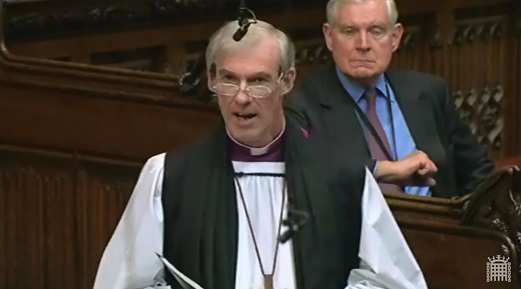 The Lord Bishop of Carlisle: My Lords, this is a very timely debate. I am most grateful to the noble Lord, Lord Hunt of Kings Heath, for securing it. I also look forward very much to the maiden speech of the noble Baroness, Lady Wilcox. We have already heard many statistics with regard to NHS targets and shall no doubt hear many more. But there seems to be general agreement that one of the biggest problems facing the NHS is what many now call a crisis in social care, which has been highlighted by this debate and emphasised by the noble Baroness, Lady Pinnock, and to which I will address this contribution.
Continue reading “Bishop of Carlisle speaks on need for investment in adult social care”
 The Lord Bishop of Carlisle: My Lords, I am greatly looking forward to the maiden speech of the noble Baroness, Lady Hunt of Bethnal Green, and I welcome
  The Lord Bishop of Carlisle: My Lords, I add my own congratulations and gratitude to the noble Baroness, Lady Bakewell, on securing this timely and important debate. Unlike my noble friend Lord Patel and other noble Lords yet to speak, I am not a scientist. However, I have vivid memories of following the Human Genome Project with a mixture of excitement and awe as I realised its huge potential for good. I have been equally impressed by the many recent developments in gene editing, including the 100,000 Genomes Project and CRISPR-Cas9, which we have heard about, and their implications for the prevention or treatment of diseases such as cystic fibrosis, muscular dystrophy and cancer.
  The Lord Bishop of Carlisle: My Lords, given Florence Nightingale’s genius for exploring and combining very disparate fields of study and practice, including the worlds of healthcare and faith, will Her Majesty’s Government and the Minister join me in commending the work of parish nurses, who now bring health and healing to more than 100 communities around the country, complementing the work of both the NHS and social care agencies?
  The Lord Bishop of Carlisle: My Lords, I too am most grateful to the noble Lord, Lord Young, for bringing this very important subject to our attention. Like him and both the noble Lords who have spoken, I do not suppose that anybody would argue against the value of apprenticeships, or the principles that undergird the apprenticeship levy. Indeed, the Church of England is a very strong supporter of both, as well as a significant contributor to the levy. If that is an interest, I am glad to declare it. We are keen to play our part in improving skills and increasing productivity throughout the UK workforce, as well as providing more opportunities for young people to find worthwhile employment.
 On 3rd July 2019 the Earl of Clancarty asked the Government “what support they are giving to people suffering from asthma, including on access to medicines”. The Bishop of Carlisle, Rt Revd James Newcome, asked a follow-up question:
 On 2nd July 2019 Baroness Goldie (Con) repeated a Government statement on Hong Kong. The Bishop of Carlisle, Rt Revd James Newcome, asked a follow-up question:
 On 1st July 2019 the Parliamentary Under-Secretary of State, Department of Health and Social Care repeated a statement made by the Secretary of State for Health and Social Care on the implementation of the NHS long-term plan. The Bishop of Carlisle, Rt Revd James Newcome, asked a follow-up question:
 On 24th June 2019 the Bishop of Carlisle, Rt Revd James Newcome, received a written answer from the Government about opiates and prescriptions for chronic pain:
 The Church of England in Parliament
You must be logged in to post a comment.