On 25th April 2019 the House of Lords debated a Motion from Lord Gilbert of Panteg, “That this House takes note of the Report from the Communications Committee UK advertising in a digital age (1st Report, HL Paper 116).” The Bishop of Durham, Rt Revd Paul Butler, spoke in the debate:
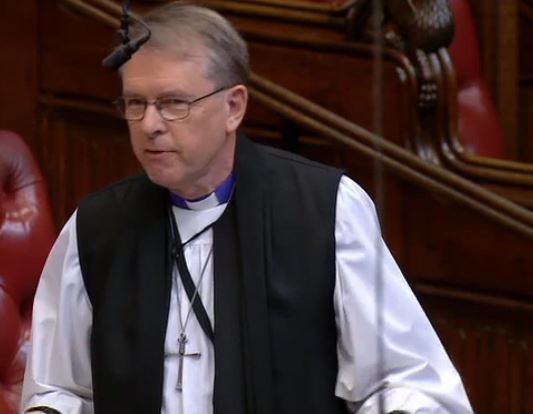 The Lord Bishop of Durham: My Lords, I also thank the noble Lord, Lord Gilbert of Panteg, and the committee for the report, which made for fascinating reading. My friend the right reverend Prelate the Bishop of Chelmsford sends his apologies for not being in his place today; he is elsewhere in the world with the most reverend Primate the Archbishop of Canterbury, and so asked me to address one or two matters. I take complete responsibility for what I say, although he said that I must talk about self-regulation.
We all love digital; at least, most of us do. We love its possibilities. I do not go anywhere without my phone, frankly: I keep looking at it and I get bombarded with adverts through it. It was not planned but, yesterday evening, as it happens, I watched a lecture from a two-day conference for theologians being held in Durham this week, entitled “Missio Dei in a digital age”. Maggi Dawn, a British theologian based at Yale University, tracked the history of the impact of digital on Christian mission. She said this about how we handle digital:
“We need to recognise both the glorious possibilities of digital and its profound brokenness”.
Her point was that although digital is wonderful, with glorious possibilities we must use to the full, we must not fail to recognise its profound brokenness because it is infected by human beings, who make all kinds of mistakes in their use of things. Continue reading “Bishop of Durham raises impact on children of digital advertising”

 On 16th May 2019 the Bishop of St Albans, Rt Revd Alan Smith, received a written answer to a question on forced marriage and children:
 The Lord Bishop of St Albans: My Lords, the UNCRC states that the best interests of the child must be paramount in all decision making and yet evidence that our Benches are collecting shows that the two-child limit policy is having a substantially negative impact on those families affected by it. In the light of the Government’s obligations under UNCRC, will the Minister undertake to commission independent research into the impact of the two-child limit policy on those families which are affected by it?
 The Lord Bishop of Durham: My Lords, it is my pleasure to follow the noble Baroness, Lady Tyler, and I fully endorse everything she said about the context of relationships being at the heart of all this. I welcome the discussion and the framework. The Church of England, as the biggest single education provider in the country, has been among the parties engaged in the consultation, for which we are deeply grateful.
 The Lord Bishop of St Albans:
 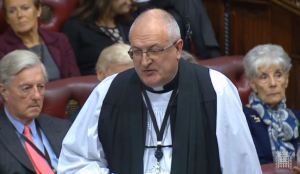 The Lord Bishop of Ely: My Lords, I understand that the purpose of the 2014 set of reforms was to ensure a holistic approach by health, education and social care services in the support of children with special needs and of their families. But when appeals take place, I understand that it is not uncommon for social care services to say that they do not know the child. Are the Government ensuring proactive co-operation between health, social care and education services in supporting such children and their parents?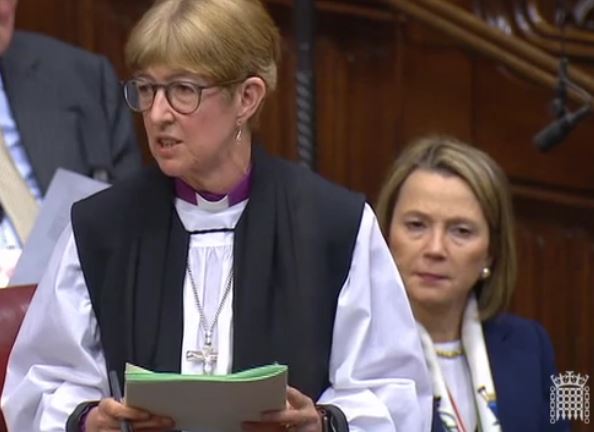
 The Lord Bishop of Durham:
 On 26th February 2019 Baroness Massey asked the Government a question about online safety. The Bishop of Chelmsford, the Rt Revd Stephen Cottrell asked a follow up question:
 On the 25th February 2019 the Bishop of Durham, the Rt Revd Paul Butler, received a written answer to a question about Universal Credit, the two-child limit and the cost of childcare.
 The Church of England in Parliament
You must be logged in to post a comment.