
On 20th March 2019 the Bishop of Durham, Rt Revd Paul Butler, received a written answer to a question on the early years education workforce:
 The Lord Bishop of Durham:
To ask Her Majesty’s Government what assessment they have made of the report by the Education Policy Institute The early years workforce in England, published on 17 January; and what steps they intend to take in response to that report in particular the need to ensure increased (1) skills, (2) diversity, and (3) pay levels in the early education workforce. Continue reading “Bishop of Durham asks Government about skills, diversity and pay in early years education”
 On 26th February 2019 Baroness Massey asked the Government a question about online safety. The Bishop of Chelmsford, the Rt Revd Stephen Cottrell asked a follow up question:
 On the 25th February 2019 the Bishop of Durham, the Rt Revd Paul Butler, received a written answer to a question about Universal Credit, the two-child limit and the cost of childcare.
 On 11th February 2019 Lord Dubs asked the Government “how many refugee children have arrived in the United Kingdom from Jordan, Lebanon and Turkey under the Vulnerable Children’s Resettlement Scheme, since its launch in April 2016.” The Bishop of Salisbury, Rt Revd Nicholas Holtam, asked a follow-up question:
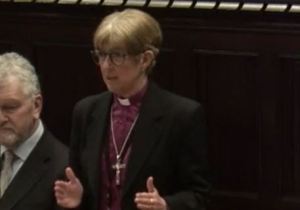 On 6th February 2019 the House of Lords considered the Government’s Offensive Weapons Bill in its third day of Committee. The Bishop of Newcastle, Rt Revd Chrisine Hardman spoke against Government amendments to create new Knife Crime Prevention Orders. The amendments were withdrawn following the debate, but the Minister indicated they were likely to be returned to again at a later stage:
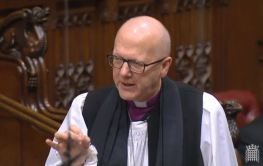 On 5th February 2019 Lord Clark of Windermere asked the Government “when they intend to publish the NHS Workforce Implementation Plan which was announced in the NHS Long Term Plan, published on 7 January”. Rt Revd Alan Smith, Bishop of St Albans, asked a follow up question about the support services made available to young people with gambling addictions.
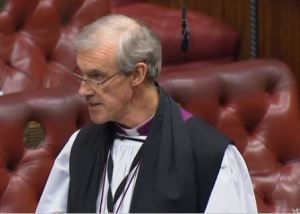 On 30th January 2019 the House of Lords debated a question from Baroness Tyler of Enfield, “To ask Her Majesty’s Government what assessment they have made of the recent concerns expressed by general practitioners that children and young people with mental health problems are unable to access National Health Service treatments; and what steps they will take to address them.” The Bishop of Carlisle, Rt Revd James Newcome, spoke in the debate:
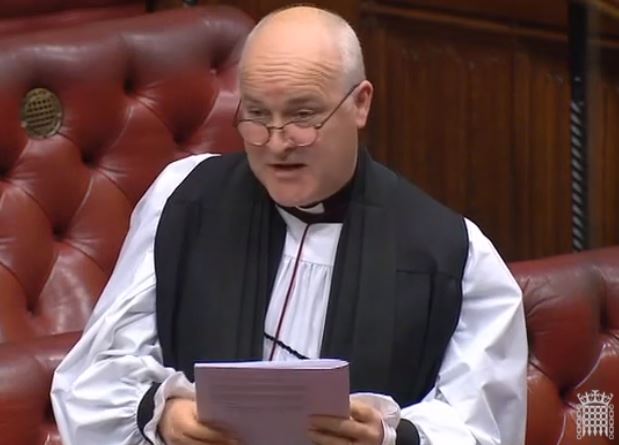 The Lord Bishop of Chelmsford: My Lords, an unregulated digital environment is causing moral decay. There is no time to reiterate the various harms that are being caused, but they are deep-seated, corrosive and pervasive. Just last week I was at a school in Essex talking to 7 to 11 year-olds about their use of a game called TikTok. All of them were using it. The lower age limit for using it is 13. As the noble Baroness, Lady Kidron, pointed out, the digital world assumes that all users are equal and all users are adults, whereas in fact one-third of users worldwide are children. Therefore, their health, well-being and development require us to ensure that the internet, and the many ways that children access it, are as safe as they can be. This has usually meant creating special safe places for children or safety options that can be activated.


You must be logged in to post a comment.