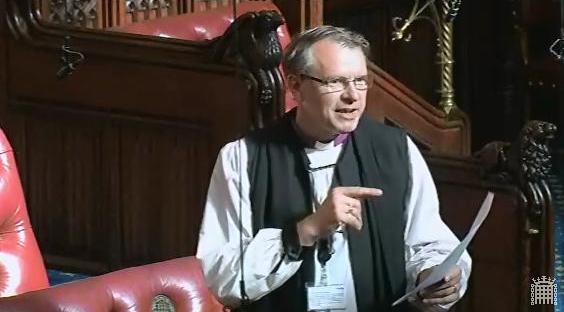
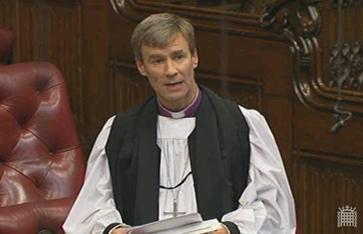
Lords debates social justice – speech by Bishop of Truro

I worry enormously that in our society we fall too easily into a tendency to demonise and victimise and fall between us and them… I suggest that there is clear evidence that our society is struggling to understand itself as a society today, and not enough evidence on the value of justice for all members of our society” – Bishop of Truro, 16/10/14

Bishop of Truro 20.6.13On 16th October 2014, the House of Lords debated a motion in the name of Baroness Tyler of Enfield, “that this House takes note of Her Majesty’s Government’s Social Justice strategy.” The Bishop of Truro gave the following speech:

The Lord Bishop of Truro: My Lords, I am very grateful to the noble Baroness, Lady Tyler, for initiating this debate and congratulate her on her very clear and comprehensive introduction to this very important topic. I am also very grateful to be speaking in a debate when my friend the right reverend Prelate the Bishop of Ely is going to make his maiden speech. If it were not presumably against the protocols of this House, I would like to congratulate him on doing so before he has done it. However, knowing him as I do, I think that that is probably very dangerous. Continue reading “Lords debates social justice – speech by Bishop of Truro”

Bishop of St Albans asks Government about impact of the under-occupancy charge on household debt and child poverty

On 30th July 2014, the Bishop of St Albans, Rt Rev Alan Smith, received answers to two written questions on the impact of the under-occupancy charge, on household debt and child poverty.

The questions and answers are reproduced in full below:

Bishop of St Albans

The Lord Bishop of St Albans: To ask Her Majesty’s Government what plans they have to mitigate the impact of the under-occupancy charge on household debt.[HL1588]

The Parliamentary Under-Secretary of State, Department for Work and Pensions (Lord Freud) (Con): The removal of the spare room subsidy was a necessary change in order to get the housing benefit bill under control, return fairness to the system and make better use of social housing stock. Continue reading “Bishop of St Albans asks Government about impact of the under-occupancy charge on household debt and child poverty”

Bishop of Durham supports amendements to tackle child abuse and neglect

“My Lords, I support the amendment. I begin by pointing out that, had I been in this House two years ago, I would not have supported it. It is my experience of listening to and hearing stories, not just from within the church sector but from many sectors, that has led me to be convinced that this is a move we need to make” – Bishop of Durham, 15.7.14

14.06.10 Bishop of Durham 4On 15th July 2014, the Bishop of Durham, the Rt Revd Paul Butler, co-sponsored two amendments to the Government’s Serious Crime Bill, during its Committee Stage. The first amendment sought to make three small changes to legislation making child neglect a criminal offense – raising the age of those covered by the provisions to 18, and made clarifications to the ways in which neglect would be classed as a criminal offense. The second amendment sought to create a duty to report abuse in institutions and activities where there are children and vulnerable adults. Both amendments were withdrawn after they had been debated, pending assurances from the Government.

Continue reading “Bishop of Durham supports amendements to tackle child abuse and neglect”

Bishop of Durham calls for independent public inquiry into institutionally-based abuse

“Powerful people have engaged in serious abuse and have worked with each other to create opportunities and share their vices and victims. As a nation we have to face up to the seriousness of institutionally based abuse against the most vulnerable in our society, both children and adults, which has gone on in the past and, sadly, continues today” – Bishop of Durham, 26.6.14

14.06.10 Bishop of Durham 5On 26th June 2014, Liberal Democrat Peer Baroness Walmsley led a debate in the House of Lords to take note of the measures being taken by Her Majesty’s Government to prevent and address the abuse of children and vulnerable adults. The Bishop of Durham, the Rt Revd Paul Butler, the Church of England’s lead bishop for safeguarding, took part in the debate. He focused his remarks on needing to listen to the voice of survivors, and put forward a number of measures to reflect this need – including mandatory reporting by professionals, creating safe spaces for victims of abuse, and broadening the law to strengthen preventative measures. He concluded by calling for an independent public inquiry into institutionally-based abuse. Continue reading “Bishop of Durham calls for independent public inquiry into institutionally-based abuse”

Impact on children and families of immigration removals: Bishop of St Albans questions Government

On 18th June 2014 Lord Roberts of Llandudno asked the Government “what assessment they have made of the report Cedars: two years on by Barnardo’s; and what plans they have to implement the recommendations made in that report.” The Bishop of St Albans, Rt Rev Alan Smith, asked a supplementary question:Bishop of St Albans

The Lord Bishop of St Albans: My Lords, the Chief Inspector of Prisons has written a subsequent report on Cedars. It describes a worrying incident where an arrest team arrived in full protective clothing and spent three minutes battering down the door of a house; there was no awareness of whether there was a child or children in the house, which could have been deeply traumatic for those young people. Does the noble Baroness agree that we need to have a full review of arrest procedures to try to prevent such situations?

Baroness Williams of Trafford: I thank the right noble Prelate for his question. I am sorry—I was so focused on the answer that I forgot the right reverend Prelate’s title. I think that there are lessons learnt from situations like that, and I know that refresher training is going on. I hope that, again, the specialist teams will provide that more consistent journey and that the lessons learnt will enable a better arrest and removal procedure in future.

(via Parliament.uk)

MPs questions to Church Commissioners’: Stephen Sutton, school chaplains, persecuted Christians, church repairs, credit unions, biblical literacy

Church Commissioners’ Questions: 12th June 2014

Rt Hon Sir Tony Baldry MP, representing the Church Commissioners, was asked questions in the House of Commons on 12th June, on the service of remembrance for Stephen Sutton, school chaplains, persecuted Christians overseas, listed church building repairs, credit unions and biblical literacy amongst children. The transcript is below:

14.01 CCQ Baldry

Stephen Sutton

Michael Fabricant (Lichfield) (Con):If he will visit Lichfield cathedral to discuss the service of remembrance and celebration of the life of Stephen Sutton. [904158]

The Second Church Estates Commissioner (Sir Tony Baldry): I am always happy to visit Lichfield cathedral. The whole country will have celebrated the life and achievements of Stephen Sutton. The recent service of remembrance and celebration at Lichfield cathedral demonstrates the importance of cathedrals as a focus for unity at times of local and national celebration, commemoration and mourning. Continue reading “MPs questions to Church Commissioners’: Stephen Sutton, school chaplains, persecuted Christians, church repairs, credit unions, biblical literacy”

Bishop of Durham gives maiden speech in House of Lords

“Young people…have been told that their value and contribution to the world is in work and their economic contribution. They have been told a lie…We have to help our young people to understand their true value as human beings first and foremost—but yes, we have to help them to find good, meaningful work” – Bishop of Durham, 10/6/14

14.06.10 Bishop of Durham 4

On 10th June 2014 the Bishop of Durham, Rt Rev Paul Butler, gave his maiden speech to the House of Lords, during the debate on the Queen’s Speech. The Bishop spoke about the attributes and needs of the Durham diocese, his experience of the global church, and his concern for young people’s social and economic welfare. He voiced his support for the Living Wage and plans within the Queen’s Speech for laws to tackle the emotional abuse of children.

This was the seventh contribution to the debate on the Queen’s Speech from the Bishops’ Benches. You can also watch a video of the Bishop delivering the speech on parliamentlive.tv


The Lord Bishop of Durham (Maiden Speech): My Lords, I begin by thanking your Lordships for the way in which I have been welcomed and supported as I have entered this noble House. That support has been full of wisdom, including guiding this Bishop as to how to kneel correctly during Prayers, for which I was extremely grateful. Continue reading “Bishop of Durham gives maiden speech in House of Lords”

Votes: Immigration Bill (trafficking, citizenship)

House of Lords Division Lobby

Bishops took part in two votes in the House of Lords on amendments to the Government’s Immigration Bill at its Report Stage on 7th April 2014. In both cases the amendments passed, meaning the Government was defeated. Continue reading “Votes: Immigration Bill (trafficking, citizenship)”

Bishop of Leicester urges greater consideration of child welfare in immigration cases

The Bishop of Leicester spoke during Report Stage of the Immigration Bill, speaking in favour of Baroness Lister’s Amendment 21. The amendment sought to reduce the threshold at which a child becomes a material factor in a parents’ immigration case from seven to four years. The amendment was not moved, with the Minister giving assurances that the Bill would not have a negative impact on the safeguarding or welfare of children in the United Kingdom.

LeicesterThe Lord Bishop of Leicester: My Lords, I want just to assure your Lordships that as the noble Baroness, Lady Lister, suggested, I support Amendment 21 in spirit. I also support it in practice. It seems that the arguments, from any understanding of child development, are clearly overwhelming. I speak as a former chair of the Children’s Society and as a member of the commission that published the A Good Childhood report on behalf of the Children’s Society some four or five years ago, which was based on the evidence of more than 20,000 children, many of them very young children. They made it very clear, even at the age of five or six, that friendships were an absolutely primary part of their understanding of their well-being. This is documented and spelt out in that report, as indeed it is in many other more academic reports. I would be happy to support this amendment as it stands or even if it is reduced to fewer years. On the basis of any understanding of child development, the argument for a cut-off period of four years seems overwhelming. I hope the Minister will be able to respond positively to the amendment.

Lord Wallace of Tankerness: …The noble Baroness, Lady Lister, talked about her experience of losing friends at the age of four, and that was echoed by the right reverend Prelate the Bishop of Leicester, but let us face it: many parents move with their children around the country or out of the country for work or other temporary purposes, and the family leaves to return home or move elsewhere. When a family comes to the United Kingdom for a temporary purpose, they cannot and should not expect to settle permanently in the UK, and should not be able to do so unless they meet the rules for doing so. It is essential that the public interest in controlling immigration and protecting the public be properly weighed in the balance, even when children are involved. We believe that Clause 18 strikes the right balance in this regard…

(via Parliament.uk)

Schools: Bad Behaviour

On 25th March 2014 Baroness Massey of Darwen asked Her Majesty’s Government ‘what policies they promote to prevent bad behaviour in schools, apart from punishment?’. The Bishop of Leicester asked a supplementary question:

The Lord Bishop of Leicester: LeicesterMy Lords, in view of the Minister’s clear endorsement of the policy of positive reinforcement of good behaviour, does he agree that we should be doing much more to promote a culture of mutual respect more widely in society so that the benefit of the positive work of many schools is not lost when our children step out of the school gate?

Lord Nash: I agree entirely with the right reverend Prelate. I know that the church has a particularly strong record of promoting community cohesion across its schools. A culture of mutual respect and of respecting other races and religions is essential to a modern school.