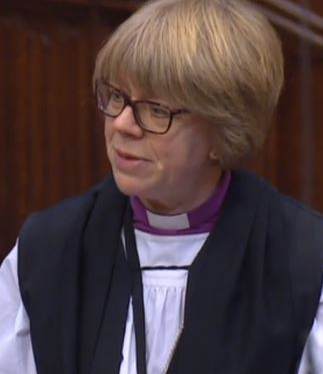
Bishop of Manchester asks about energy generation

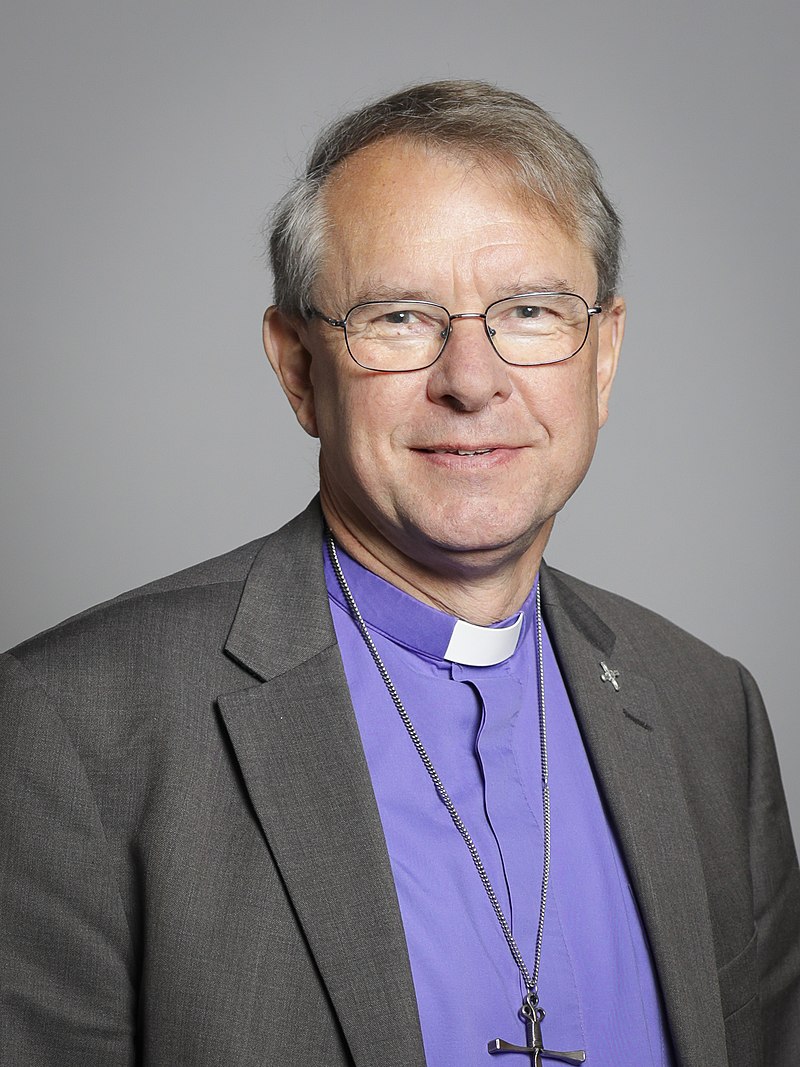
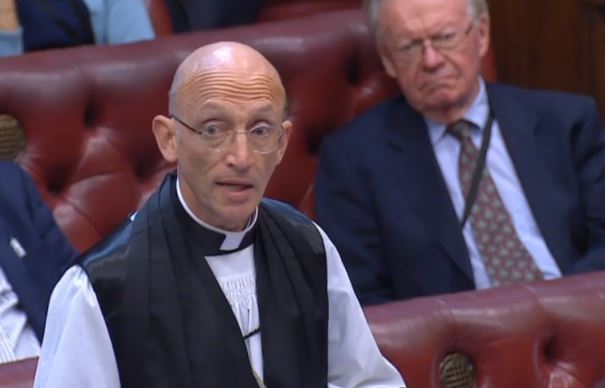
The Bishop of Manchester asked the following question on 27th April 2022, during a debate on energy security:

The Lord Bishop of Manchester: My Lords, I declare my interest as both a Church Commissioner and a board member of a housing association. As things stand, a community with local renewable generation is not allowed to sell the energy it generates directly to local people. Instead, it has to sell it to a utility, which sells it on to customers, creating disproportionate costs. Moreover, community-level generation could be further promoted by ensuring that new housing developments include green energy or even a requirement that they place no increased demand on the grid by generating more of their energy needs. The Bible assures us that the sun shines on both the righteous and the unrighteous. Indeed, I can assure the Minister that it does so even in my notoriously rainy city of Manchester. Can he outline what will be done to promote greater take-up of community energy generation programmes?

Continue reading “Bishop of Manchester asks about energy generation”

Bishop of Chichester asks about health outcomes in coastal communities

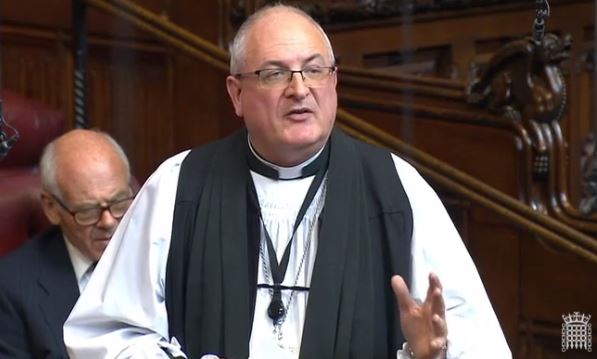
The Bishop of Chichester asked a question on government plans to tackle higher levels of disability and poor health in coastal communities on 10th February 2022, during a debate on the National Disability Strategy:

The Lord Bishop of Chichester: My Lords, last year, the Chief Medical Officer’s annual report focused on health in coastal communities, noting higher levels of deprivation and disability in these locations. What will the Government do to tackle the levels of multiple need and disability in these communities?

Baroness Scott of Bybrook (Con): My Lords, I cannot say specifically, but I will certainly write with the answer. Across the whole of this country, there are areas where disability is more of an issue than in others. That is why we have this cross-government strategy, and why we will deliver on it.

Hansard

Votes: Dormant Assets Bill

On 16th November 2021, the House of Lords debated the Dormant Assets Bill in the report stage. A vote was held on an amendment to the bill, in which a Bishop took part:

Continue reading “Votes: Dormant Assets Bill”

Dormant Assets Bill: Bishop of Ely supports creation of community wealth funds on behalf of the Bishop of Newcastle

On 16th November 2021, the House of Lords debated the Dormant Assets Bill in the report stage. The Bishop of Ely, on behalf of the Bishop of Newcastle, spoke in support of an amendment to the bill which would support the creation of community wealth funds to assist deprived communities in reducing inequality and improving local infrastructure:

The Lord Bishop of Ely: My Lords, the noble Lord, Lord Bassam, is correct that my friend the Bishop of Newcastle has made her valedictory speech, but I have been permitted to speak on her behalf. Noble Lords may have noticed a certain discrepancy in height and volume between me and the Bishop of Newcastle but she is living proof that stature has nothing to do with size. I applaud my friend for her significant role as a Lord Spiritual and a community leader in Newcastle; the city has honoured her with the freedom of the city in recognition of her work.

In support of the amendment, we would like to say that the creation of community wealth funds, as the noble Lord, Lord Bassam, has said, will strengthen community life in left-behind communities, including many in the diocese of Newcastle. Levelling-up investment, while welcome, has been largely about hard infrastructure but we want to see more investment in social infrastructure so that our communities can flourish. It is precisely that social infrastructure which could be provided by the community wealth funds, so they are already creating confidence in communities even if the consultation is yet to happen.

Continue reading “Dormant Assets Bill: Bishop of Ely supports creation of community wealth funds on behalf of the Bishop of Newcastle”

Bishop of Durham asks about impact of decision to use Napier Barracks as a facility for housing people seeking asylum

The Bishop of Durham received the following written answers on 16th November 2021:

The Lord Bishop of Durham asked Her Majesty’s Government what assessment they have made of the potential impact on integration of housing people seeking asylum in Napier Barracks.

Baroness Williams of Trafford (Con, Home Office): The ongoing use of Napier Barracks is necessary to meet the demand to accommodate asylum seekers who would otherwise be destitute. The support and integration of asylum seekers accommodated in Napier is the same as those accommodated in other types of accommodation.

Continue reading “Bishop of Durham asks about impact of decision to use Napier Barracks as a facility for housing people seeking asylum”

Bishop of Oxford speaks on community care and gaps in the social care sector

The Bishop of Oxford spoke in a debate on social care on 14th October 2021, raising issues of the need for community care and the risks posed by high vacancies in the care sector:

The Lord Bishop of Oxford: My Lords, it is an honour to contribute to this key debate. Like others, I am grateful to the noble Baroness, Lady Pitkeathley, for her excellent introduction. I welcome the Minister to his new responsibilities. It is a privilege to follow the noble Baroness, Lady Finlay.

One of the key texts on which so much of our human civilisation is based contains these lines:

“Honour your father and mother, so that your days may be long in the land that the Lord your God is giving you.”

The care offered by one generation to another is fundamental to human flourishing and a good society. As we have heard, that care is offered in families generously and unstintingly, but it needs to be supported by the wider community, through creative partnerships with the third sector, and by the state. These principles have led to our current system of social care, which now stands in urgent need of fresh vision and reform.

Continue reading “Bishop of Oxford speaks on community care and gaps in the social care sector”

Bishop of London asks about development of community kitchens to combat obesity

The Bishop of London asked a question on the potential for school kitchens to be used as community kitchens to tackle obesity in underserved areas on 21st April 2021, during a debate on reported correlations between obesity rates and COVID-19 deaths:

The Lord Bishop of London: My Lords, the reduced use of school space during lockdown highlighted an opportunity for us to make use of school kitchens as community kitchens. This holds real potential for addressing multiple issues such as poverty, obesity, lack of food or loneliness, all at one time. Will the Government consider supporting school kitchens to become community kitchens when not in use by students in order to tackle obesity in underserved neighbourhoods where people often have limited choices in their nutritional options?

Continue reading “Bishop of London asks about development of community kitchens to combat obesity”

Archbishop of Canterbury holds debate on Coming Home Report on Housing, Church, and Community

The Archbishop of Canterbury led a debate on the report Coming Home by the Archbishops’ Commission on Housing, Church, and Community on 24th March 2021:

The Lord Archbishop of Canterbury: That the Grand Committee takes note of the report Coming Home by the Archbishops’ Commission on Housing, Church and Community, and the case for setting out a long-term housing strategy.

My Lords, I am very grateful to the usual channels for permitting this debate and to all noble Lords who are taking part. I express my sadness at the beginning at the sudden death of Lord Greaves, whose voice in this area, as in so many others, especially those involving the day-to-day concerns of people, will be deeply missed.

The Archbishop’s annual debate is normally held every year, just before Christmas—although I am not sure that it counts as a Christmas present. Due to the pandemic and other issues, it has not happened for a couple of years. You may have thought you were spared but that is not so, for, like Jairus’s daughter, the debate is not dead but was only sleeping. And when better to resurrect it than just before Easter?

Continue reading “Archbishop of Canterbury holds debate on Coming Home Report on Housing, Church, and Community”

Bishop of Winchester asks about support for community efforts to cut carbon emissions

The Bishop of Winchester asked a question on support for communities to reduce carbon emissions on 16th March 2021, during a discussion on the Climate Change Committee’s Carbon Budget Report.

The Lord Bishop of Winchester [V]: My Lords, at local and national levels, in communities across the country, the Church of England is committed to reducing net carbon emissions to zero by 2030. Can the Minister say a bit more about the plans Her Majesty’s Government have to offer practical support for local communities already committed to transformation, using new, low-carbon technologies to achieve net-zero emissions?

Continue reading “Bishop of Winchester asks about support for community efforts to cut carbon emissions”

Bishop of St Albans raises issue of housing in debate on intergenerational unfairness

The Bishop of St Albans took part in a debate on a report from the Select Committee on Intergenerational Unfairness on 25th January 2021, focusing on access to and provision of housing:

The Lord Bishop of St Albans [V]: My Lords, the decrease in the rates of home ownership for the younger generation is a major issue and not one of their own making. As this excellent report demonstrates, it is an important factor in addressing issues of intergenerational fairness. For many years, there has been a failure to supply housing adequately—an issue exacerbated by a cycle of stagnation fuelled by low market absorption rates and stalled developments.

The Letwin report suggests that one of the most important reasons for this is that developers will build new homes only at a rate that the market can absorb and that, by diversifying housing products, rates of absorption will increase. However, when I put down Written Questions to Her Majesty’s Government on this topic, never once has it been acknowledged that it might be in the interest of developers to land bank, as increased supply is likely to reduce house prices. While I believe that this has contributed to the lack of supply, I agree that low absorption remains a real issue. However, I do not think that diversification alone will solve it.

Continue reading “Bishop of St Albans raises issue of housing in debate on intergenerational unfairness”