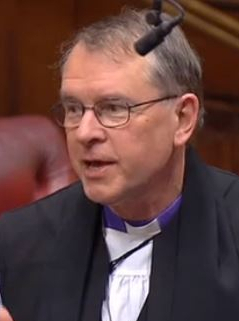
Bishop of Durham asks about impact of decision to use Napier Barracks as a facility for housing people seeking asylum

The Bishop of Durham received the following written answers on 16th November 2021:

The Lord Bishop of Durham asked Her Majesty’s Government what assessment they have made of the potential impact on integration of housing people seeking asylum in Napier Barracks.

Baroness Williams of Trafford (Con, Home Office): The ongoing use of Napier Barracks is necessary to meet the demand to accommodate asylum seekers who would otherwise be destitute. The support and integration of asylum seekers accommodated in Napier is the same as those accommodated in other types of accommodation.

Continue reading “Bishop of Durham asks about impact of decision to use Napier Barracks as a facility for housing people seeking asylum”

Bishop of Oxford speaks on community care and gaps in the social care sector

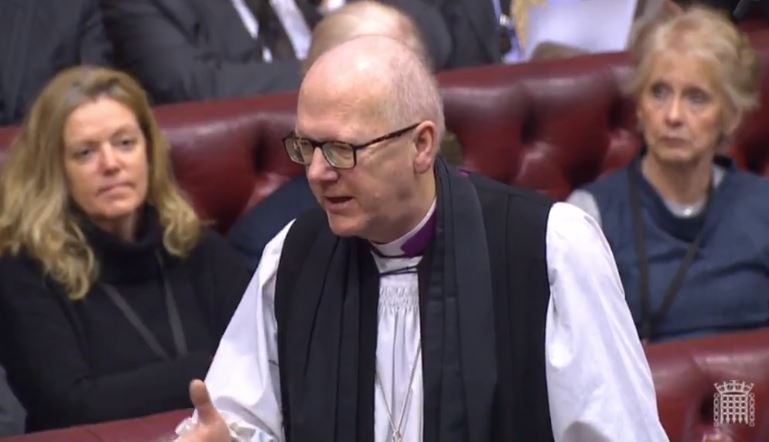
The Bishop of Oxford spoke in a debate on social care on 14th October 2021, raising issues of the need for community care and the risks posed by high vacancies in the care sector:

The Lord Bishop of Oxford: My Lords, it is an honour to contribute to this key debate. Like others, I am grateful to the noble Baroness, Lady Pitkeathley, for her excellent introduction. I welcome the Minister to his new responsibilities. It is a privilege to follow the noble Baroness, Lady Finlay.

One of the key texts on which so much of our human civilisation is based contains these lines:

“Honour your father and mother, so that your days may be long in the land that the Lord your God is giving you.”

The care offered by one generation to another is fundamental to human flourishing and a good society. As we have heard, that care is offered in families generously and unstintingly, but it needs to be supported by the wider community, through creative partnerships with the third sector, and by the state. These principles have led to our current system of social care, which now stands in urgent need of fresh vision and reform.

Continue reading “Bishop of Oxford speaks on community care and gaps in the social care sector”

Bishop of London asks about development of community kitchens to combat obesity

The Bishop of London asked a question on the potential for school kitchens to be used as community kitchens to tackle obesity in underserved areas on 21st April 2021, during a debate on reported correlations between obesity rates and COVID-19 deaths:

The Lord Bishop of London: My Lords, the reduced use of school space during lockdown highlighted an opportunity for us to make use of school kitchens as community kitchens. This holds real potential for addressing multiple issues such as poverty, obesity, lack of food or loneliness, all at one time. Will the Government consider supporting school kitchens to become community kitchens when not in use by students in order to tackle obesity in underserved neighbourhoods where people often have limited choices in their nutritional options?

Continue reading “Bishop of London asks about development of community kitchens to combat obesity”

Archbishop of Canterbury holds debate on Coming Home Report on Housing, Church, and Community

The Archbishop of Canterbury led a debate on the report Coming Home by the Archbishops’ Commission on Housing, Church, and Community on 24th March 2021:

The Lord Archbishop of Canterbury: That the Grand Committee takes note of the report Coming Home by the Archbishops’ Commission on Housing, Church and Community, and the case for setting out a long-term housing strategy.

My Lords, I am very grateful to the usual channels for permitting this debate and to all noble Lords who are taking part. I express my sadness at the beginning at the sudden death of Lord Greaves, whose voice in this area, as in so many others, especially those involving the day-to-day concerns of people, will be deeply missed.

The Archbishop’s annual debate is normally held every year, just before Christmas—although I am not sure that it counts as a Christmas present. Due to the pandemic and other issues, it has not happened for a couple of years. You may have thought you were spared but that is not so, for, like Jairus’s daughter, the debate is not dead but was only sleeping. And when better to resurrect it than just before Easter?

Continue reading “Archbishop of Canterbury holds debate on Coming Home Report on Housing, Church, and Community”

Bishop of Winchester asks about support for community efforts to cut carbon emissions

The Bishop of Winchester asked a question on support for communities to reduce carbon emissions on 16th March 2021, during a discussion on the Climate Change Committee’s Carbon Budget Report.

The Lord Bishop of Winchester [V]: My Lords, at local and national levels, in communities across the country, the Church of England is committed to reducing net carbon emissions to zero by 2030. Can the Minister say a bit more about the plans Her Majesty’s Government have to offer practical support for local communities already committed to transformation, using new, low-carbon technologies to achieve net-zero emissions?

Continue reading “Bishop of Winchester asks about support for community efforts to cut carbon emissions”

Bishop of St Albans raises issue of housing in debate on intergenerational unfairness

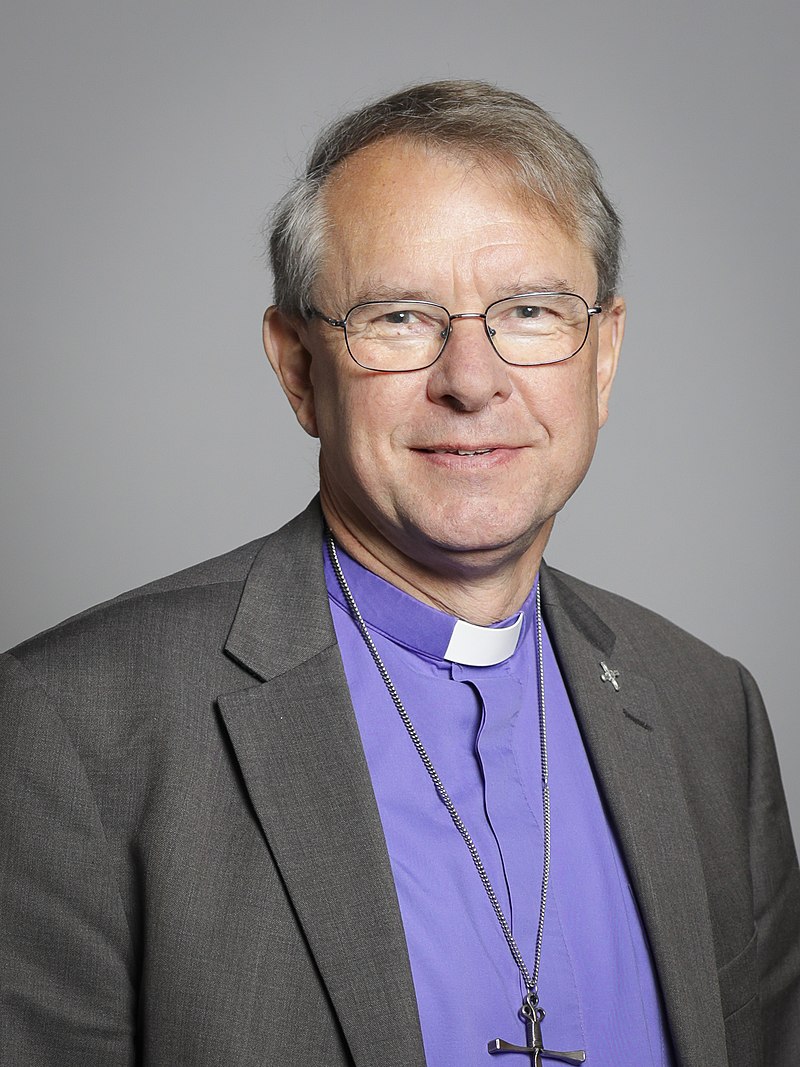
The Bishop of St Albans took part in a debate on a report from the Select Committee on Intergenerational Unfairness on 25th January 2021, focusing on access to and provision of housing:

The Lord Bishop of St Albans [V]: My Lords, the decrease in the rates of home ownership for the younger generation is a major issue and not one of their own making. As this excellent report demonstrates, it is an important factor in addressing issues of intergenerational fairness. For many years, there has been a failure to supply housing adequately—an issue exacerbated by a cycle of stagnation fuelled by low market absorption rates and stalled developments.

The Letwin report suggests that one of the most important reasons for this is that developers will build new homes only at a rate that the market can absorb and that, by diversifying housing products, rates of absorption will increase. However, when I put down Written Questions to Her Majesty’s Government on this topic, never once has it been acknowledged that it might be in the interest of developers to land bank, as increased supply is likely to reduce house prices. While I believe that this has contributed to the lack of supply, I agree that low absorption remains a real issue. However, I do not think that diversification alone will solve it.

Continue reading “Bishop of St Albans raises issue of housing in debate on intergenerational unfairness”

Bishop of Oxford takes part in debate on report on tackling intergenerational unfairness

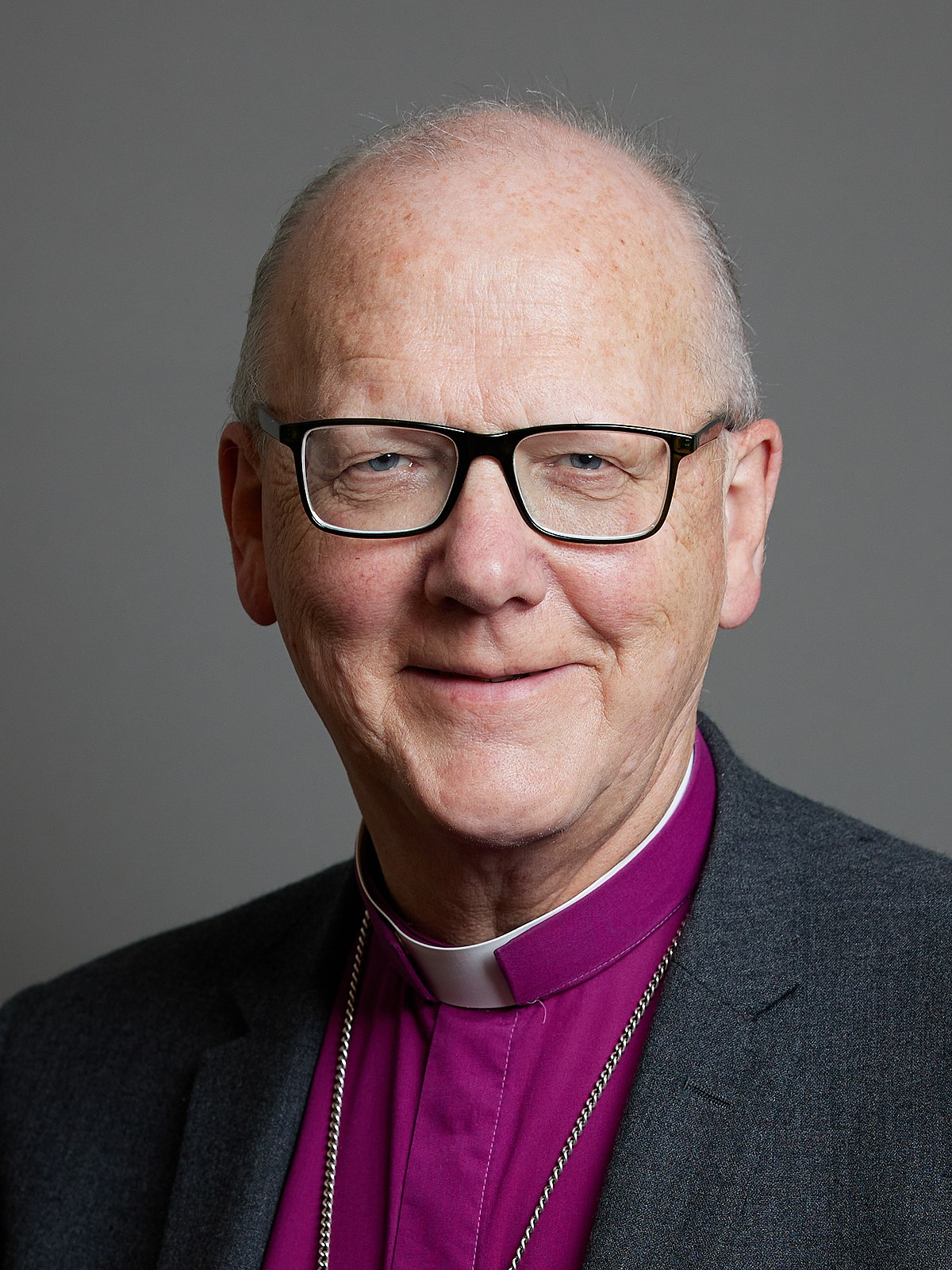
The Bishop of Oxford spoke in a debate on a report from the Select Committee on Tackling Intergenerational Unfairness on 25th January 2021, raising the issues of education, the gig economy, and all-age communities:

The Lord Bishop of Oxford [V]: My Lords, I welcome this key report on intergenerational unfairness and this debate. It is a privilege to take part. I want to focus my contribution on three issues.

The first concerns education and training. I welcome the report’s perspective and recommendations; as others have said, they are even more relevant now. However, as we know, the landscape is shifting significantly beneath our feet because of the immediate demands of the pandemic and the likely longer-term shifts in working patterns created by the fourth industrial revolution. We are sorely in need of creative, imaginative, cross-party and cross-society intergenerational thinking on education for life, not simply for work.

Continue reading “Bishop of Oxford takes part in debate on report on tackling intergenerational unfairness”

Bishop of Gloucester asks about role of churches and faith communities in rebuilding social capital post-pandemic

On 25th January 2021, the Bishop of Gloucester asked a question on the role of faith communities and churches in helping to rebuild social and spiritual capital in the aftermath of the COVID-19 pandemic:

The Lord Bishop of Gloucester: Churches and other faith communities bring together a diversity of people across all ages and backgrounds, and thus are often a strong source of social capital, as well as spiritual capital, as we have seen during the pandemic. Will the Minister say what Her Majesty’s Government are doing, both financially and in other ways, to enable local and faith communities to invest in and rebuild their social capital, as we emerge from this pandemic?

Continue reading “Bishop of Gloucester asks about role of churches and faith communities in rebuilding social capital post-pandemic”

Church Commissioner Questions: public worship, tree planting, Christmas services, gender-based violence, Living in Love and Faith, cathedral services, Christian persecution, community support, consistory court appeals

On 26th November MPs put questions to the Second Church Estates Commissioner, Andrew Selous MP, on public worship, tree planting, Christmas services, gender-based violence, Living in Love and Faith, cathedral services, Christian persecution, community support and consistory court appeals. A transcript is below:

Church Commissioners

The hon. Member for South West Bedfordshire, representing the Church Commissioners was asked—

Covid-19 Lockdown: Public Worship

Sir Edward Leigh (Gainsborough) (Con): What representations the Church of England has made to the Government on the importance of public worship during periods of covid-19 lockdown. [909344] Continue reading “Church Commissioner Questions: public worship, tree planting, Christmas services, gender-based violence, Living in Love and Faith, cathedral services, Christian persecution, community support, consistory court appeals”

Church Commissioner Questions: Tributes, climate change, archbishops, reconciliation, telecommunications, thefts, women in prison, marriage, digital evangelism

On 31st October 2019 Rt Hon Dame Caroline Spelman answered questions from MPs for the last time as Second Church Estates Commissioner. Tributes were paid to her, and questions were answered on climate change, archbishops, reconciliation, telecommunications, thefts, women in prison, marriage, and digital evangelism. This was also the same day that the Speaker and his Chaplain were due to retire. A full transcript follows:

Church Commissioners

The right hon. Member for Meriden, representing the Church Commissioners, was asked—

Climate Change: Investment in Companies

Michael Tomlinson (Mid Dorset and North Poole) (Con): What progress the Church of England has made on holding the companies in which it invests to account on climate change. [900272]

The Second Church Estates Commissioner (Dame Caroline Spelman): Since this is my last set of oral questions, I would like to record my heartfelt thanks to my small team of staff, and especially my constituency secretary, who has faithfully served me for 20 out of 22 years. We often forget that our staff are on the frontline of much of the abuse that we receive, and I want to record my admiration for their fortitude. I also thank the amazing staff I have had to support me in this role, particularly Simon Stanley at Church House.

In tribute, Mr Speaker, I thank you for your kindness and courtesy—unfailingly so, and especially at times of personal duress. I single out your inspired choice of Speaker’s Chaplain, who has enriched the spiritual life of this place—but more of that later.

The Church of England Pensions Board has tabled a shareholder resolution ahead of the annual general meeting of BHP Billiton, the world’s largest mining company, on 7 November this month. It asks BHP to suspend its membership of trade associations that are not lobbying in line with the climate change agreement. This is just the latest example of the Church Commissioners using their shareholder position to change company policy in line with the climate change agreement.

Continue reading “Church Commissioner Questions: Tributes, climate change, archbishops, reconciliation, telecommunications, thefts, women in prison, marriage, digital evangelism”