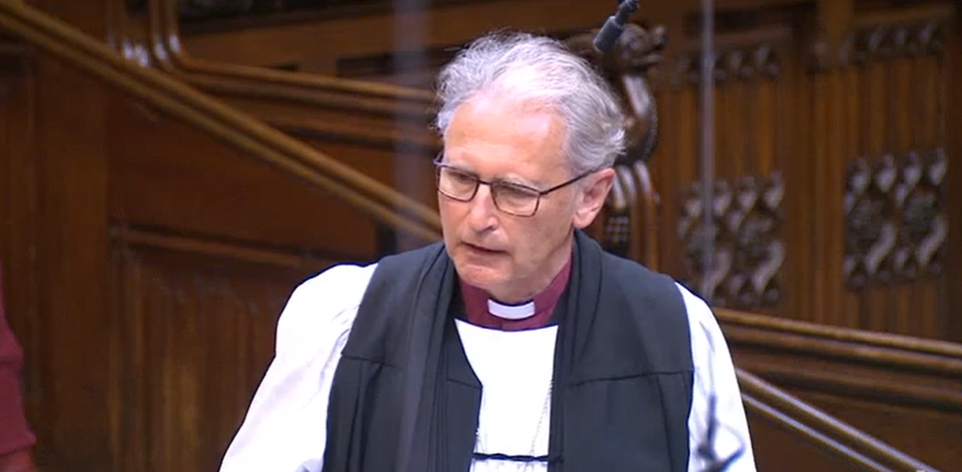
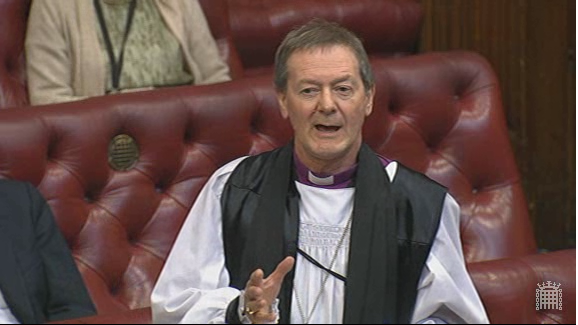
The Lord Bishop of Wakefield: My Lords, perhaps I may focus my question on Ukraine. It seems to me that there are some senses—not exactly repetitions—in which we are seeing replayed some of the things that were not resolved in the early 1990s with the collapse of the Soviet Union. I remember that at that time I was working at Lambeth as the archbishop’s foreign secretary, as it were, and on one occasion the telephone was brought to me in the bath. There was a call from the gatekeeper telling me that Mr Gorbachev was in captivity in the Crimea and he thought that I ought to know so that I could do something about it. Some very good and quite low-key, and low-cost, initiatives were taken by Her Majesty’s Government at that time to support the development of democracy in the various republics that resulted from the collapse of the Soviet Union, including Ukraine. Can we be reassured that, once things become a little more stable, those sorts of initiatives might be looked at again? I am suggesting not carbon copies but that sort of thing.
My other point is that only the churches never recognised the division of Europe. The Conference of European Churches always worked across Europe. There are very serious divisions in the churches in the Ukraine, often reflecting some of the fragmentations that exist in the country as a whole. Again, that is another area where Her Majesty’s Government might work with others to see how one moves towards a more democratic situation.
Lord Wallace of Saltaire: My Lords, I continue to learn how close church links can be across national boundaries. I was in Armenia some months ago and was met by a very chatty archbishop, who seemed to know almost every bishop I had ever met in this country. However, we all know that the Orthodox Church in and across the former Soviet Union is a very complex and divided entity, and not all its branches are committed to anything that we would recognise as a liberal approach to organised religion. Sadly, the different branches of the church in Ukraine represent that rather well.
(via parliament.uk)



 The Lord Bishop of St Albans: To ask Her Majesty’s Government what representations they have made to African members of the Commonwealth to encourage them to ensure a peaceful solution to the conflict in Tigray. [HL10708]
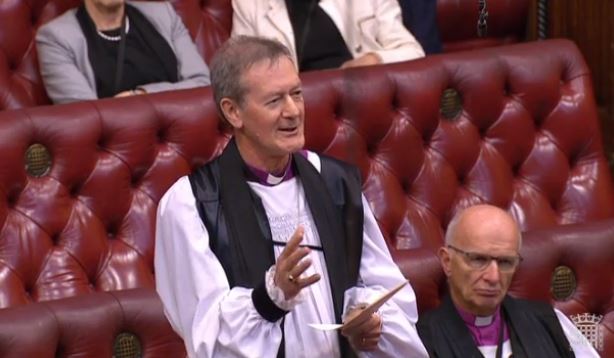 On 10th October 2016, Baroness Nicholson of Winterbourne moved the motion “that this House takes note of the Report from the Sexual Violence in Conflict Committee (Session 2015–16, HL Paper 123).” The Bishop of Derby, the Rt. Revd. Alastair Redfern, who was a member of the Committee, spoke in the debate.
 The Church of England in Parliament
You must be logged in to post a comment.