Policing and Crime Bill: Bishops propose tougher regulations on fixed-odds betting terminals


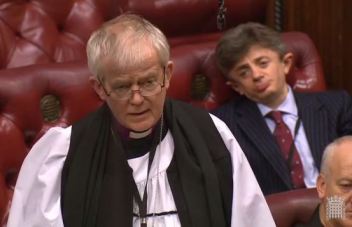
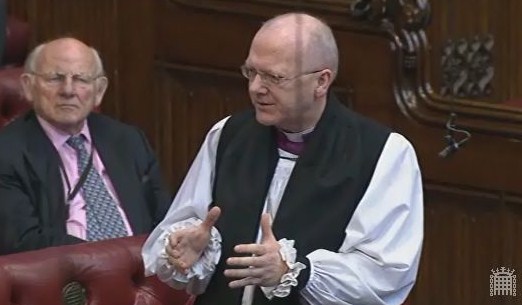
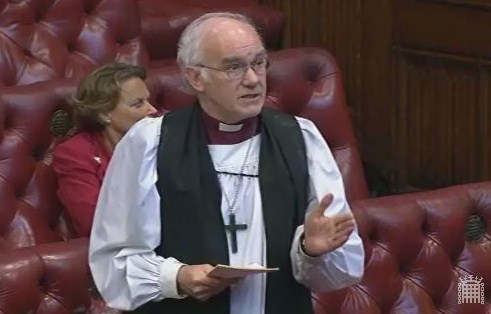
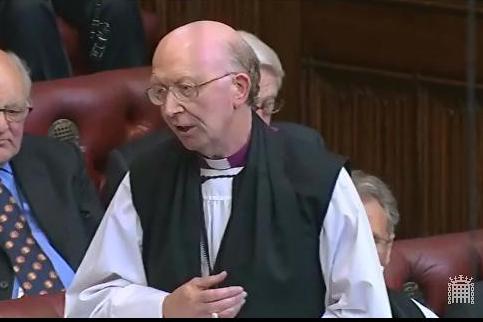
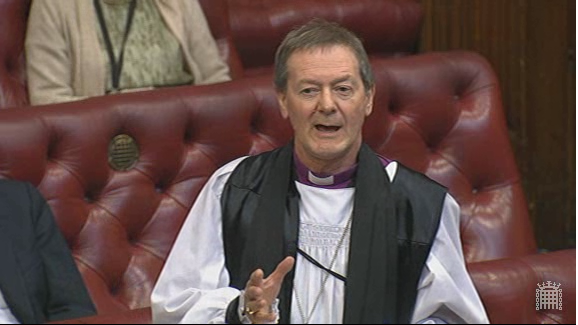
Bp Salisbury 2On 9th November 2016, the House of Lords considered the Government’s Policing and Crime Bill at its Committee Stage. An amendment tabled by the Bishop of St Albans was debated that would allow local authorities to regulate the number of fixed-odds betting terminals in their areas. In the absence of the Bishop, Lord Beecham moved the amendment and the Bishop of Salisbury, Rt Revd Nicholas Holtam, spoke in support:

The Lord Bishop of Salisbury My Lords, I thank the noble Lord, Lord Beecham, for moving the amendment. I stand in place of my colleague the right reverend Prelate the Bishop of St Albans, who is unable to be here today, in support of Amendment 214, which would grant new powers to local licensing authorities in regulating gaming machines on gambling premises. As the noble Lord, Lord Beecham, has already made clear, there is a strong case for measures that will help local authorities tackle gambling-related crime to be included in the Policing and Crime Bill. Continue reading “Policing and Crime Bill: Bishops propose tougher regulations on fixed-odds betting terminals”

St Albans- Support for Vulnerable Defendants (Written Answer)

On 10th February 2015, the Bishop of St Albans, the Rt Revd Alan Smith, received an answer to a written question on the subject of support for vulnerable defendants in the criminal justice system.

Bishop of St AlbansThe Lord Bishop of St Albans: To ask Her Majesty’s Government what plans they have to ensure that support is made available for vulnerable defendants by registered intermediaries in the criminal justice system, as currently is the case for vulnerable witnesses.

Continue reading “St Albans- Support for Vulnerable Defendants (Written Answer)”

Bishop of St Albans asks Government about criminalising purchase of sex

On 17th December 2014 the Bishop of St Albans, Rt Rev Alan Smith, received a written answer to a question on criminalising the purchase of sex:

Bishop of St AlbansThe Lord Bishop of St Albans: To ask Her Majesty’s Government what consideration they have given to criminalising the purchase of sex in order to protect vulnerable women.[HL3283] Continue reading “Bishop of St Albans asks Government about criminalising purchase of sex”

Bishop of Rochester supports amendments on conditions for secure colleges for young offenders

On Wednesday 22nd October 2014, the House of Lords debated amendments to the Government’s Criminal Justice and Courts Bill during the second day of its Report Stage.

The Rt Reverend James Langstaff, Bishop of Rochester, contributed to the debate on Lord Ramsbotham’s amendment 108 to the bill, which was later withdrawn. The amendment sought to ensure that no secure college for young offenders could be established until clear rules on their operation had first been agreed. The Bishop spoke in favour of the amendment, highlighting the need to provide the highest standards of education for children in young offender institutions, especially when it had often been such a lacking feature of their pasts.

Bishop of RochesterThe Lord Bishop of Rochester:  My Lords, I hope that I am not a flag-waving antagonist but I support the pleas made by the last few noble Lords who have spoken, asking for some thoughtfulness, reflection and time to be taken over this. I am grateful for the consultation about the rules but we need time to take that consultation seriously and reflect upon it. Continue reading “Bishop of Rochester supports amendments on conditions for secure colleges for young offenders”

Bishop of Rochester supports amendment to Criminal Justice and Courts Bill

On 23rd July 2014 the Bishop of Rochester, the Rt Rev James Langstaff, spoke during the Committee Stage of the Criminal Justice and Courts Bill.

Bishop of RochesterBishop James spoke in support of Lord Ramsbotham’s amendment to remove clause 29 relating to the creation of ‘secure colleges and other places for detention of young offenders’  from the Bill. Continue reading “Bishop of Rochester supports amendment to Criminal Justice and Courts Bill”

Bishop of Chester supports amendment to Criminal Justice and Courts Bill

On 21st July 2014, the Bishop of Chester, the Rt Revd Peter Forster, spoke during the Committee Stage of the Criminal Justice and Courts Bill. He spoke in support of an amendment to make assault on workers selling alcohol a specific criminal offence. Following the debate on the amendment, it was withdrawn without being put to a division of the House. 

14.03 Bishop of ChesterThe Lord Bishop of Chester: My Lords, I have considerable sympathy for the amendment, although I wonder how it will interact with the remainder of the law on assault if this is criminalised in a specific way. I declare an interest in that I used to be a publican. When I was employed in a university, one of the members of staff had to go down to the magistrates’ court and swear that they were a fit person to keep order. That is the only time when I have been into a court of law in my life, and the magistrates were not quite sure that this young clergyman would be able to do so. My main task was to prevent the students drinking the profits rather than sorting out any brawls. Continue reading “Bishop of Chester supports amendment to Criminal Justice and Courts Bill”

Bishop of Oxford raises concerns about access to justice and care of troubled children during debate on Criminal Justice and Courts Bill

“It is disturbing when the Bar Council says that when combined with other recent government measures for changing the law of judicial review, these changes, if enacted in their current form, will immunise government and other public authorities from effective legal challenge” – Bishop of Oxford, 30/6/14

On 30th June 2014, the Bishop of Oxford, the Rt Revd John Pritchard, took part in the Second Reading debate on the Government’s Criminal Justice and Courts Bill. During his speech, he focused on two particular areas of concern – the proper care of troubled children and the role of ‘secure colleges’ and the need for a fair and effective system of judicial review and legal aid to be available to all, regardless of their material situation.

Bishop of OxfordThe Lord Bishop of Oxford: My Lords, I am not among those who decry the frequency with which criminal justice Bills come along. The world is changing fast and the shapes assumed by criminality change no less quickly. It is important to respond to change and to take care that the unchanging core of justice—a British value if ever there was one, as well as a Biblical value—is honoured both in the detail and in the overall direction of policy on the criminal law and its enforcement. Continue reading “Bishop of Oxford raises concerns about access to justice and care of troubled children during debate on Criminal Justice and Courts Bill”

Bishop of Rochester speaks in debate on reducing levels of custodial sentences for women

“It is undoubtedly the case that the female prison population disproportionately includes those who face huge challenges in their lives. It is also clear that prison is not the best place to address many of the issues that these people face” – Bishop of Rochester, 26.6.14

On 26th June 2014, the Bishop of Rochester and Bishop to HM Prisons, the Rt Revd James Langstaff, took part in Baroness Healy of Primrose Hill’s short debate on the measures being taken to reduce the number of women given custodial sentences. He focused his remarks on the role of community-based schemes to reduce rates of re-offending and called on the Government to look at how such projects can have a positive impact on the public purse, society and families affected by such sentences.

Bishop of RochesterThe Lord Bishop of Rochester: My Lords, I, too, am grateful to the noble Baroness, Lady Healy, for initiating this debate. Your Lordships will be pleased to know that a number of the points that I was going to make have already been made, so I will resist the temptation to make them all over again. Indeed, many of your Lordships will have had the briefings from various organisations that give the statistics, and so forth. Continue reading “Bishop of Rochester speaks in debate on reducing levels of custodial sentences for women”

Bishop of Derby calls for strong partnerships between government and society to tackle serious crime

“This modern crime is not just about technical ingenuity; it is about people choosing the freedom to abuse others and society” – Bishop of Derby, 16/6/14

On 16th June 2014, the Bishop of Derby, the Rt Revd Alastair Redfern, took part in the Second Reading debate on the Government’s Serious Crime Bill. In his speech, he addressed the Bill’s provisions to tackle modern slavery and human trafficking – having served on the Joint Committee which provided the pre-legislative scrutiny to the Modern Slavery Bill – and also the need for joined-up work across government and civil society to challenge the sub-culture of exploitation and greed that drives organised crime and criminality.

DerbyThe Lord Bishop of Derby: My Lords, I very much welcome this Bill and think it is timely and appropriate. I congratulate the noble Lord, Lord Taylor, and his colleagues at the Home Office on pointing us in this direction. Noble Lords will have seen in the briefing that it is based on a strategy described as the four Ps: Pursue, Prevent, Protect and Prepare. For somebody like me, such laboured alliteration might indicate an overambitious sermon and I want to check the level of the ambition and what might be appropriate.

Continue reading “Bishop of Derby calls for strong partnerships between government and society to tackle serious crime”

Prisons and the problem of indeterminate sentences – speech by Bishop of Lichfield

“I spent some time recently with an intelligent and engaging Somali prisoner …This man was given an 18-month tariff, but last Christmas was his ninth in prison. What an injustice, and what a huge expense.” – Bishop of Lichfield

On 27th March 2014 the Bishop of Lichfield took part in a debate tabled by Lord Wigley, ‘to ask Her Majesty’s Government what steps they are taking to address the position of individuals serving indeterminate sentences on public protection grounds who have already passed their tariff’.

The Lord Bishop of Lichfield: My Lords, I am most grateful to the noble Lord, Lord Wigley, for his initiative and to the noble Lord, Lord Dholakia, and the noble and learned Lord, Lord Phillips, for their very helpful introductions.14.03.27 Bishop of Lichfield

As a general principle, it is accepted in this country that people should be sent to prison because they have been convicted of an offence rather than because of the risk that they will offend. Indeterminate tariffs are even now available for the most serious offences, in the form of life sentences, and extended sentences now provide a way to manage and contain risk in relation to those convicted of serious violent and sexual offences which do not call for a life sentence. Continue reading “Prisons and the problem of indeterminate sentences – speech by Bishop of Lichfield”