
 On 19th June 2019 the Economic Secretary to the Treasury (John Glen) made a statement on supporting people in problem debt. The Second Church Estates Commissioner, Rt Hon Dame Caroline Spelman MP, asked a follow-up question:
Dame Caroline Spelman: I welcome this statement and the Government going beyond their original manifesto commitment. It gives me a chance to thank my citizens advice bureau, which has done fantastic work on debt rescheduling during my 22 years as an MP.
Does the Minister welcome the Church of England’s initiative to teach financial literacy in its primary schools, and would he encourage rolling out such an approach to prevention more widely?
Continue reading “Caroline Spelman highlights Church schools works in teaching financial literacy”
 The Archbishop of York: My Lords, I want to support the main thrust of the speech from the noble Lord, Lord Stevenson, about debt. Julia Unwin, who was chief executive of the Joseph Rowntree Foundation, did a big research project on why people were going to Wonga. They went to Wonga because it asked no questions; people knew they could get their payday loan. Other lenders asked more questions and were far more intrusive and credit was not readily available. Noble Lords know that my archiepiscopal colleague, the most reverend Primate the Archbishop of Canterbury, said that he intended not only to reform Wonga but to do away with it, and we know what has happened to Wonga.
 On 12th December 2018 the Bishop of Newcastle, Rt Revd Christine Hardman, received a written answer to a question on hardship and the impact on debt & health in Universal Credit pilot areas:
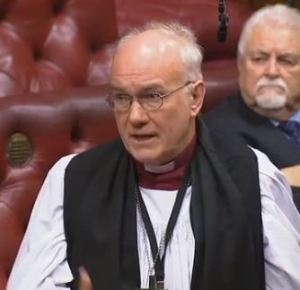 On 12th July 2018 Lord Leigh of Hurley led a debate in the House of Lords on the motion, “That this House takes note of the measures being taken to promote personal savings and the role they can play in building a stronger and fairer economy.” The Bishop of Chester, Rt Revd Peter Forster, spoke in the debate:
 On the 18 December 2017 Baroness Tyler of Enfield led a debate on the report of the Select Committee on Financial Exclusion – Tackling Financial Exclusion: A country that works for everyone? (
 On 14th December 2017 the Bishop of St Albans, Rt Revd Alan Smith, received a written answer to a question on credit:
 The Lord Bishop of St Albans: My Lords, I am deeply concerned—as I know are many other Members of this Chamber—about rising levels of household debt in this country. Households in the UK are taking on far more debt than they used to and overall are taking on more debt than they bring home in income. While the ratio of household debt to income has not yet eclipsed the 160% peak hit in early 2008, it currently hovers around 140%, a dramatic shift from the ratio of 95% in 1997.
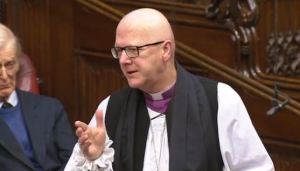 The Lord Bishop of St Albans: My Lords, a poll commissioned by Citizens Advice in June found that 18% of people with credit cards who had debt problems had had their credit limits increased automatically without them even asking for it, thereby enabling them to take on even greater debt when they were already facing problems. I understand that the FCA is looking into this, but will the Minister ensure that it is asked to bring in much stronger guidelines on this situation to prevent it getting worse?
  The Church of England in Parliament
You must be logged in to post a comment.