Skills and Post-16 Education Bill: Bishop of Durham moves amendment on universal credit conditions for students

On 21st October 2021, the House of Lords debated the Skills and Post 16 Education Bill in the second day of the report stage. The Bishop of Durham spoke in the debate, supporting amendments on special educational needs, and moving his amendment on providing flexibility for universal credit recipients seeking further education:
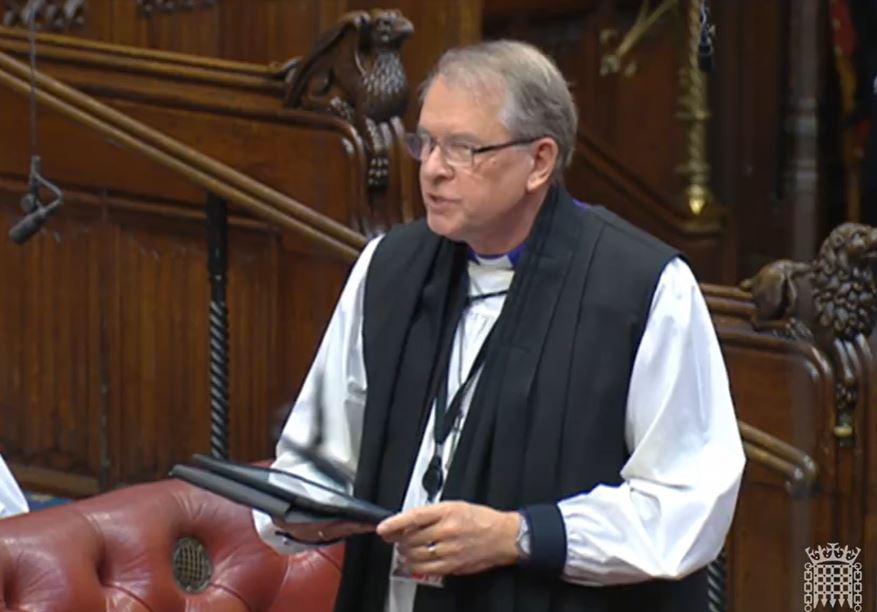
The Lord Bishop of Durham: My Lords, this is my first opportunity to welcome the Minister to her new role, and, indeed, the noble Baroness, Lady Chisholm, to hers. In my own role as chair of the National Society—which I declare as an interest—I look forward to working with them both on many matters relating to education and the Church of England’s place as a major provider.

Turning to Amendments 44 and 46, which I was pleased to add my name to, I thank both noble Baronesses for the time they gave us recently to discuss them. The need for specific provision to be made to better meet the needs of students with specific learning needs and disabilities at all levels has been made—not for the first time—with great expertise by the noble Lord, Lord Addington, and I wholeheartedly support these amendments. Given the range and varied nature of the learning needs among FE students, their lecturers, tutors, assessors and other staff must have the skills to recognise those needs to be able to adapt their own approach to teaching, learning and assessment, and to be able to promptly and appropriately refer students for more specialised or intensive support.

Continue reading “Skills and Post-16 Education Bill: Bishop of Durham moves amendment on universal credit conditions for students”
Police, Crime, Sentencing and Courts Bill: Bishop of Durham backs amendments to safeguard children involved in serious violence on behalf of the Bishop of Manchester

On 20th October 2021, during a debate on the Police, Crime, Sentencing and Courts Bill, the Bishop of Durham spoke in support of amendments intended to increase safeguarding efforts relating to children involved in serious violence, on behalf of the Bishop of Manchester:

The Lord Bishop of Durham: My Lords, the right reverend Prelate the Bishop of Manchester was in his place earlier but has had to go elsewhere for the evening. He has asked me to speak on his behalf on the amendments in this group tabled in his name alongside those of the noble Lord, Lord Rosser, and the noble Baroness, Lady Jones. I thank the Children’s Society and Barnardo’s for their support and helpful briefings.

The Church has a particular concern for vulnerable children. As far as the Church of England is concerned, there are 4,644 schools in which we educate around 1 million students. This educational commitment is combined with parish and youth worker activities that bring the Church into contact with thousands of families each year. Through the Clewer Initiative, many parishes and dioceses have worked closely on the issues of county lines and confronting the blight of modern slavery. Accordingly, we have seen at first hand and, sadly, all too frequently the terrible damage caused by serious youth violence and by the criminal exploitation of children. The latter is an especially insidious form of abuse, which one victim has described as “when someone you trusted makes you commit crime for their benefit”.

Continue reading “Police, Crime, Sentencing and Courts Bill: Bishop of Durham backs amendments to safeguard children involved in serious violence on behalf of the Bishop of Manchester”

Bishop of Durham asks about movement towards net-zero

The Bishop of Durham asked two questions on delays in moving towards net-zero on 2oth October 2021, during a debate on the government’s net-zero and buildings strategy:

The Lord Bishop of Durham: The Minister and I live in the same region, where masses of new building is going up. I have had only a quick read of the document —we have not had time for anything other than that—and there is a lot about retrofitting in it. Given that we have all the technology and knowledge now, can the Minister explain why new builds are not being built to a net-zero target from this year or perhaps next? Everything is in place to be able to do this. We are delaying too long.

Continue reading “Bishop of Durham asks about movement towards net-zero”

Police Crime Sentencing and Courts Bill: Bishop of Durham supports amendment on prison workers’ safety on behalf of the Bishop of Gloucester

On 2oth October 2021, the House of Lords debated amendments to the Police, Crime, Sentencing & Courts Bill. The Bishop of Durham, on behalf of the Bishop of Gloucester, spoke in favour of an amendment which would aim to expand the definition of emergency worker to include prison workers:

The Lord Bishop of Durham: My Lords, I will speak to Amendment 11, in the name of my right reverend friend the Bishop of Gloucester, with her permission, as she is sadly unable to be here today. I declare her interest as Anglican bishop of prisons in England and Wales.

This amendment seeks to improve Section 3 of the Assaults on Emergency Workers (Offences) Act 2018 by expanding the definition of “emergency worker” to include all staff working in prisons. All those who work in prisons play a valuable role. However, currently, only officers and some healthcare staff are covered by this legislation and, as such, the risk for others working in prisons is increased, because prisoners are well aware of the more severe consequences of assaulting an officer compared with others working in prisons. Someone described this as effectively painting a target on their backs. This is an unintended consequence of the current legislation, which is unfair to many prison workers, undermines their safety and can be easily dealt with through this amendment.

Continue reading “Police Crime Sentencing and Courts Bill: Bishop of Durham supports amendment on prison workers’ safety on behalf of the Bishop of Gloucester”

Bishop of Durham urges government action on rising cases of COVID-19

On 20th October 2021, the Bishop of Durham urged that the government put their “Plan B” into action to combat rising cases of COVID-19, citing the increased strain on emergency services:

The Lord Bishop of Durham: My Lords, I have a daughter who works in A&E in a London hospital who simply says, “Please will you make people act responsibly once again?” It costs us absolutely nothing. We acted too slowly previously. We have seen 10% increases in the last week; please just get on with plan B.

Lord Kamall (Con): I thank the right reverend Prelate for his question. It is important. Personally, I do believe that many people should be wearing masks and that there is evidence for this. But the fact is, we have to look at a number of indicators and balance those up.

Hansard

Bishop of Durham asks about food waste

The Bishop of Durham asked a question on food waste on 20th October 2021, during a debate on government plans for protection of the most vulnerable in the event of energy or necessity shortages:

The Lord Bishop of Durham: My Lords, one of the other necessities mentioned by the noble Lord, Lord Brooke of Alverthorpe, is food. Nationally and globally, we waste a third of all food. When 1.7 million children, between September 2020 and February 2021, were living in food poverty along with their families, surely there must be a better way. This week, the Earthshot Prize celebrated Milan’s citywide food-waste policy, which saves 260,000 meals-worth a year. What steps are Her Majesty’s Government taking to encourage and support the better local collection and distribution of food waste in the UK more effectively?

Continue reading “Bishop of Durham asks about food waste”

Bishop of Durham tables question on child poverty and the two-child benefit cap

On 19th October 2021, the Bishop of Durham asked a question on the findings of the Nuffield Foundation Review on Child Poverty, and links between child poverty and the government’s two-child limit on welfare benefits:

The Lord Bishop of Durham: To ask Her Majesty’s Government what assessment they have made of the Nuffield Foundation’s review Changing patterns of poverty in early childhood, published on 14 September; and what steps they intend to take as a result, including in relation to the two-child limit for welfare benefits.

Continue reading “Bishop of Durham tables question on child poverty and the two-child benefit cap”

Bishop of Durham asks about remediation strategies for building safety

The Bishop of Durham asked a question about strategies for payment of remediation in issues of building safety on 18th October 2021, during a debate on the costs associated with remedying safety defects:

The Lord Bishop of Durham: My Lords, have the Government looked closely at the “polluter pays” principle as a way of recouping funds for remediation of building safety defects from those who were initially responsible? Will this, or something equivalent, form part of the Building Safety Bill?

Continue reading “Bishop of Durham asks about remediation strategies for building safety”

Bishop of Durham speaks about tackling child poverty and health inequality

The Bishop of Durham spoke in a debate on regional inequalities on 14th October 2021, discussing issues relating to child poverty and health inequality:

The Lord Bishop of Durham: My Lords, I thank the noble Lord, Lord Liddle, for securing this debate, and am pleased to follow on from the noble Lord, Lord Young of Cookham. I, too, look forward to the maiden speech of the noble Viscount, Lord Stansgate.

Jubilee is a strong theme of our Judaeo-Christian tradition. Jubilee includes setting people free from the impacts of inequality. If levelling up is going to mean anything significant, it must tackle the inequalities that exist in our nation. It needs to be a kind of jubilee.

This week is Challenge Poverty Week. Child poverty is a very good measure of regional inequalities within England, as it is both an indicator of poverty and a perpetuator of it. Child poverty highlights the complexity of issues that cause it, including education and employment. It has lifelong impacts on children as they grow into adults and shape their communities. The recent report by Donald Hirsch for Loughborough University estimates that the cost of child poverty is £38 billion a year, a significant increase in the past five years.

We see far higher levels of child poverty in some places than others. It is not a simple divide of a wealthy London and an impoverished north. The Institute for Fiscal Studies reported in its Green Budget for 2020 that

“inequalities within regions are larger than the inequalities between regions.”

Continue reading “Bishop of Durham speaks about tackling child poverty and health inequality”

Social Security (Up-rating of Benefits) Bill: Bishop of Durham calls for further action on benefits issues

On 13th October 2021, the House of Lords debated the Social Security (Up-rating of Benefits) Bill in its second reading. The Bishop of Durham spoke in the debate, urging the government to do more to support those in poverty:

The Lord Bishop of Durham: My Lords, when I read the title of the Bill I thought, “Good: we will have before us a measure that covers the wide issues of the uprating of the wide range of social security benefits we have, most notably pensions, universal credit and perhaps the question of legacy benefits.” So I was very disappointed to discover that, actually, the scope of the content was purely to do with pensions.

In relation to pensions, I have sympathy with the proposals tackling a specific issue that appears to have emerged as something of an anomaly, given our recent experience of the pandemic. I think the triple lock was probably the right move when it was introduced and it has served pensioners well. However, I now have questions as to whether having such a lock in one part of the social security system actually prevents both the Treasury and the Department for Work and Pensions from truly looking at the system and its funding as a rounded whole—although I note with care the comprehensive and careful input of the noble Baroness, Lady Drake, and that of the noble Baroness, Lady Greengross, just now on the double lock. But this is an uprating Bill for the system, it is not about changing the system, so with some reluctance I accept the proposals in the Bill.

However, I now turn to my deep disappointment with the Bill. I join many noble Lords in raising a concern that the Bill does not address the universal credit uplift cut. I recall the debate in this Chamber back in February, in which many Peers expressed their concern that a Bill would not address what is historically one of the most significant cuts to social security benefits. The letter sent by the Minister outlining the content of this Bill began by stating:

Continue reading “Social Security (Up-rating of Benefits) Bill: Bishop of Durham calls for further action on benefits issues”