On 13th May 2020 Lord Agnew of Oulton repeated a statement given by the Chancellor of the Exchequer on the COVID-19 economic support package. The Bishop of Durham, Rt Revd Paul Butler, asked a follow up question:
Lord Bishop of Durham: The extension of the JRS is extremely welcome. Here in the north-east, we have a worryingly high infection rate and among the highest average death rates per capita. Will Her Majesty’s Government consider taking a regional approach to phasing out the JRS, ensuring that the economic and social needs of each region are reflected adequately in the Government’s ongoing support?
On 13th May 2020 Baroness Lister of Burtersett asked the Government “what assessment they have made of the impact of the benefit cap on the incomes of Universal Credit claimants following the increase in the Universal Credit standard allowance announced by the Chancellor of the Exchequer on 20 March”. The Bishop of Durham, Rt Revd Paul Butler, asked a follow up question:
Lord Bishop of Durham: I thank the noble Baroness for again highlighting how the benefit cap is trapping families in poverty. In light of the report published last week by the Church of England and CPAG which estimates that around 60,000 more families will be affected by the two-child limit due to Covid-19, what assessment have Her Majesty’s Government made of the impact of this limit on families who have made a new universal credit claim since the lockdown?
On 12th May the House of Lords debated a motion from Lord Boswell of Aynho “That the Virtual Proceedings do consider the Report from the European Union Committee Beyond Brexit: How to Win Friends and Influence People”. The Rt Revd Paul Butler, Bishop of Durham, spoke in the debate, and highlighted concerns about how the Dublin Regulation will impact refugee children after Brexit.
Lord Bishop of Durham: My Lords, we must consider this report in light of the global pandemic. Decisions about our future relationship with the EU must be informed by Covid-19, recognising our international interdependence rather than being driven by ideology. Our European neighbours remain our friends and allies. This must continue for the sake of all, and especially for vulnerable children. Continue reading “Bishop of Durham raises treatment of refugee and migrant children after Brexit”
On 12th May 2020 Baroness Massey of Darwen asked the Government “what assessment they have made of the ability of schools to deliver the new compulsory elements of relationships and sex education curriculum from September 2020”. The Bishop of Durham, Rt Revd Paul Butler, asked a follow up question:
The Lord Bishop of Durham: My Lords, I declare my interests as stated in the register as chair of the National Society. In November, the Church of England produced a charter to support schools in preparing for the new compulsory elements of RSHE. It is important to us and our schools that we consult parents on how best to deliver this new material, to ensure that we provide a sensitive education enabling all pupils to flourish. Will Her Majesty’s Government reassess the delivery date of the new elements of RSHE to accommodate the current constraints on schools’ time and energy due to Covid-19?
On 6th May 2020 the Archbishop of York, Most Revd John Sentamu, led a debate in the House of Lords on the motion that the Lords “do consider the case for increasing income equality and sustainability in the light of the recent health emergency.” The Bishop of Durham, Rt Revd Paul Butler, also spoke in the debate:
The Lord Bishop of Durham: My Lords, I congratulate the right reverend Prelate the Bishop of Derby on her moving maiden speech. I am grateful for all she does to champion the voices of children.
I want to thank Archbishop Sentamu for his leadership in consistently speaking up for racial and social justice. He champions work among young people, notably through the Archbishop of York Youth Trust. He inspires others to do the same.
The Covid-19 pandemic is a dividing experience through its unequal financial impact. The lowest-earning 10% are seven times more likely than high earners to work in a sector which has shut down. Archbishop Sentamu champions the real living wage. In-work poverty is compounded by irregular working hours. Such unpredictability means that families cannot easily save to safeguard themselves from unexpected life events. Eighteen per cent of the north-east’s working population experience insecure work. Turn2us found that people on zero-hours contracts expect a £193 drop in monthly income. These workers often provide essential services such as cleaning and delivery, yet face great financial instability. Will Her Majesty’s Government promote Living Hours accreditation? Continue reading “Bishop of Durham asks Government about low earners, in work poverty and universal basic income”
On 5th May 2020 the virtual House of Lords heard the repeat of a Government statement on welfare benefit claims during the pandemic. The Bishop of Durham, Rt Revd Paul Butler, asked a follow up question:
The Lord Bishop of Durham: My Lords, I thank the Minister for repeating the Statement. I add my thanks to all those in DWP for the incredible amount of work that they are doing.
I want to return to the two-child limit. I am sorry but it simply will not do to keep parroting back the same answer every time we raise this issue. Today, the Church of England and the Child Poverty Action Group published our latest information and a report on the impact of the limit. It includes evidence from the early days of the Covid crisis. Sixty thousand more families will be impacted. The policy is utterly flawed. I have been assured by Minister after Minister that if we give them the evidence, they will re-examine the limit. It is time that it be re-examined. Please agree at least to look at our report and re-explore the arguments around this issue. Continue reading “Bishop of Durham asks Government to revisit two-child limit benefit policy in light of new report”
On 30th April 2020 in a virtual sitting the House of Lords debated a Motion in the name of Baroness Bennett of Manor Castle, “To ask Her Majesty’s Government what assessment they have made of the number of people who will be (1) living in poverty, or (2) unable to meet their basic needs, as a result of COVID-19; and what steps they are taking to support such people.” The Bishop of Durham, Rt Revd Paul Butler, spoke in the debate:
The Lord Bishop of Durham: My Lords, the Covid-19 crisis has amplified child poverty. The welcome measures that raised UC and increased LHA show that radical government action is possible, but they have highlighted two policies as unfair. The first is the two-child limit. Recent events demonstrate life’s unpredictability. It exposes the flawed view of how the two-child limit policy was set up. Children should not be penalised for changing circumstances. Up to 60,000 families may find themselves affected in the coming weeks. Next week, the Church of England and CPAG will publish a report exploring the policy’s impact on these families. Continue reading “Bishop of Durham: Covid-19 crisis has amplified child poverty, we should suspend benefit cap and two-child limit”
On 28th April 2020 the Bishop of Durham, Rt Revd Paul Butler, received a written answer to a question on early years childcare and coronavirus:
The Lord Bishop of Durham:HL3310 To ask Her Majesty’s Government what assessment they have made of the (1) short-, and (2) long-term, financial impact of the COVID-19 pandemic on early years childcare providers in receipt of local authority funding who have restricted access to the Job Retention Scheme. [T]
On 30th March 2020 the Bishop of Durham, Rt Revd Paul Butler, received a written answer to a question on visa requirements for religious workers under the new points-based immigration system:

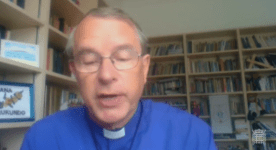 Lord Bishop of Durham: The extension of the JRS is extremely welcome. Here in the north-east, we have a worryingly high infection rate and among the highest average death rates per capita. Will Her Majesty’s Government consider taking a regional approach to phasing out the JRS, ensuring that the economic and social needs of each region are reflected adequately in the Government’s ongoing support?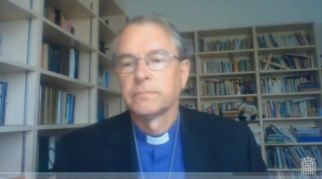
 Lord Bishop of Durham: My Lords, we must consider this report in light of the global pandemic. Decisions about our future relationship with the EU must be informed by Covid-19, recognising our international interdependence rather than being driven by ideology. Our European neighbours remain our friends and allies. This must continue for the sake of all, and especially for vulnerable children.
  The Lord Bishop of Durham: My Lords, I declare my interests as stated in the register as chair of the National Society. In November, the Church of England produced a charter to support schools in preparing for the new compulsory elements of RSHE. It is important to us and our schools that we consult parents on how best to deliver this new material, to ensure that we provide a sensitive education enabling all pupils to flourish. Will Her Majesty’s Government reassess the delivery date of the new elements of RSHE to accommodate the current constraints on schools’ time and energy due to Covid-19?
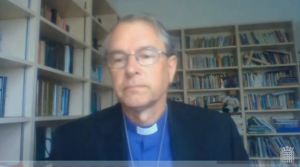 I want to return to the two-child limit. I am sorry but it simply will not do to keep parroting back the same answer every time we raise this issue. Today, the Church of England and the Child Poverty Action Group published our latest information and a report on the impact of the limit. It includes evidence from the early days of the Covid crisis. Sixty thousand more families will be impacted. The policy is utterly flawed. I have been assured by Minister after Minister that if we give them the evidence, they will re-examine the limit. It is time that it be re-examined. Please agree at least to look at our report and re-explore the arguments around this issue.
 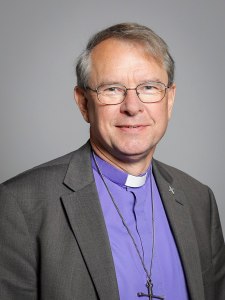 The Lord Bishop of Durham:
  On 1st & 20th April 2020 the Bishop of Durham, Rt Revd Paul Butler, received answers to written questions on the immigration health surcharge:
 On 30th March 2020 the Bishop of Durham, Rt Revd Paul Butler, received a written answer to a question on visa requirements for religious workers under the new points-based immigration system:
 The Church of England in Parliament
You must be logged in to post a comment.