
On 25th April 2019 the House of Lords debated a Motion from Lord Gilbert of Panteg, “That this House takes note of the Report from the Communications Committee UK advertising in a digital age (1st Report, HL Paper 116).” The Bishop of Durham, Rt Revd Paul Butler, spoke in the debate:
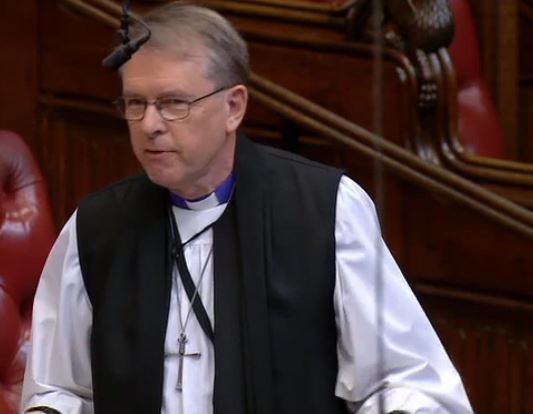 The Lord Bishop of Durham: My Lords, I also thank the noble Lord, Lord Gilbert of Panteg, and the committee for the report, which made for fascinating reading. My friend the right reverend Prelate the Bishop of Chelmsford sends his apologies for not being in his place today; he is elsewhere in the world with the most reverend Primate the Archbishop of Canterbury, and so asked me to address one or two matters. I take complete responsibility for what I say, although he said that I must talk about self-regulation.
We all love digital; at least, most of us do. We love its possibilities. I do not go anywhere without my phone, frankly: I keep looking at it and I get bombarded with adverts through it. It was not planned but, yesterday evening, as it happens, I watched a lecture from a two-day conference for theologians being held in Durham this week, entitled “Missio Dei in a digital age”. Maggi Dawn, a British theologian based at Yale University, tracked the history of the impact of digital on Christian mission. She said this about how we handle digital:
“We need to recognise both the glorious possibilities of digital and its profound brokenness”.
Her point was that although digital is wonderful, with glorious possibilities we must use to the full, we must not fail to recognise its profound brokenness because it is infected by human beings, who make all kinds of mistakes in their use of things. Continue reading “Bishop of Durham raises impact on children of digital advertising”
 The Lord Bishop of Durham: My Lords, I declare an interest as a trustee of
  The Lord Bishop of Durham: My Lords, it is my pleasure to follow the noble Baroness, Lady Tyler, and I fully endorse everything she said about the context of relationships being at the heart of all this. I welcome the discussion and the framework. The Church of England, as the biggest single education provider in the country, has been among the parties engaged in the consultation, for which we are deeply grateful.
 The Lord Bishop of Durham: To ask Her Majesty’s Government what analysis they have made of the impact of the two-child limit on the per-child element of Universal Credit and Child Tax Credit payments on (1) child poverty, and (2) child development, for children under five years old affected by the policy.
 On 3rd April 2019 the Minister for Equalities, Baroness Williams of Trafford, repeated a statement made in the House of Commons by the Home Secretary, Sajid Javid, about the Windrush Compensation Scheme. The Bishop of Peterborough, Rt Revd Donald Allister, responded with a follow up question about religious literacy in determining asylum applications:
 On 3rd April 2019 Baroness Whitaker asked the Government “whether they intend to implement the recommendations of the report of the Joint Committee on Human Rights, Immigration Detention (HL Paper 279), published on 7 February, in particular those related to indefinite detention.” The Bishop of Durham, Rt Revd Paul Butler, asked a follow-up question:
  On 2nd, 3rd & 4th April 2019 the Bishop of Durham, Rt Revd Paul Butler, received answers to three written questions on the benefit cap policy.
 The Lord Bishop of Durham: To ask Her Majesty’s Government what assessment they have made of the rising tensions between Rwanda and Uganda; and what steps they have taken to reduce tensions.
 The Lord Bishop of Durham:
 The Church of England in Parliament
You must be logged in to post a comment.