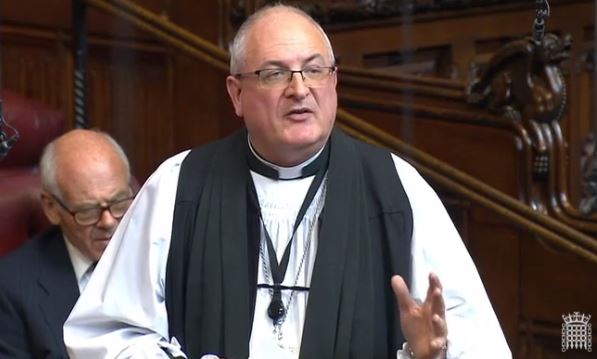
Bishop of Worcester – lifelong learning should be as much about virtue and character as the acquisition of skills

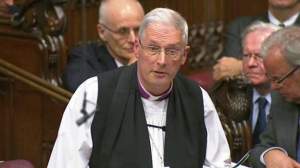
On November 27th 2017  Lord Watson of Invergowrie led a debate in the House of Lords “To move that this House takes note of the case for a comprehensive strategy for life-long learning and adult re-skilling in response to the challenges of technology, productivity, and the changing nature of work.” The Bishop of Worcester, Rt Revd John Inge, spoke in the debate:
The Lord Bishop of Worcester: My Lords, I echo the thanks expressed to the noble Lord, Lord Watson, for securing this debate. It is clearly essential for the prosperity of our nation that lifelong learning is made a priority. Following cuts in the recent past, the Budget offered some welcome additional funding, including new funding for training in digital skills and construction, and the announcement of a retraining scheme for adults. The industrial strategy published today is a welcome step forward. Continue reading “Bishop of Worcester – lifelong learning should be as much about virtue and character as the acquisition of skills”

Bishop of Coventry asks about role of schools in helping disadvantaged families

On 22nd November 2017 Lord Lennie asked Her Majesty’s Government “what action they have taken to address the concerns raised in the Social Mobility Commission’s State of the Nation report published in November 2016.” The Bishop of Coventry, Rt Revd Christopher Cocksworth, asked a follow up question:
The Lord Bishop of Coventry: My Lords, on my visits to primary schools in Coventry in Warwickshire, I am often struck by head teachers in poorer areas telling me that they cannot help their children without also helping the families, who often face very complex issues. The Minister referred to the opportunity areas. Can he confirm that there is a plan to involve parents and guardians in that work of uplift and that there will be help for head teachers in that task? Continue reading “Bishop of Coventry asks about role of schools in helping disadvantaged families”

Bishop of Ely on the need for schools to tackle deprivation and disadvantage

On Thursday 16th November 2017 Lord Bird led a debate in the House of Lords, “to ask Her Majesty’s Government what new resources and strategies they will implement to ensure that every child has the opportunity to attend a good school and that all schools are fairly funded, as announced in the Queen’s Speech.” The Bishop of Ely, Rt Revd Stephen Conway, spoke in the debate, focusing on church schools:

The Lord Bishop of Ely: Follow that! My Lords, I am very grateful to the noble Lord, Lord Bird, for having made this debate possible and for providing the opportunity for us to focus not only on a fair distribution of funding for our schools and the children in their care but on fair access to good teaching in good and imaginative schools.

The Church has, down the centuries, provided a constant yet adaptable force in education. The Church of England recently produced a new vision for education, two pillars of which are dignity and hope. As the ultimate aim of our schools is to promote human flourishing, we are particularly concerned—particularly in our emphasis on supporting schools in areas of disadvantage—to enable every child to fulfil his or her aspirations, and indeed to be given the opportunity to have any aspirations in the first place. Continue reading “Bishop of Ely on the need for schools to tackle deprivation and disadvantage”

Bishop of Durham asks about reforms to technical education in the North East

On 8th November 2017 the Bishop of Durham, Rt Revd Paul Butler, received a written answer to a question about technical education in the north east:
The Lord Bishop of Durham: To ask Her Majesty’s Government what is the current status of the proposed reform of technical education in the North East. Continue reading “Bishop of Durham asks about reforms to technical education in the North East”

Dame Caroline Spelman MP hosts debate about the importance of English Language Teaching for Refugees

Spelman CCQs June 2015 1
On the 24th October the Second Church Estates Commissioner, Dame Caroline Spelman MP hosted a debate about the importance of English teaching for refugees.

Continue reading “Dame Caroline Spelman MP hosts debate about the importance of English Language Teaching for Refugees”

Bishop of Southwark asks Government about school admissions and clergy families

On the 7th September Lord Lexden asked the Government “whether they have plans to enable more children in care to obtain places in state and independent boarding schools”. The Bishop of Southwark asked a follow up question about clergy families:

southwark-20feb17

The Lord Bishop of Southwark: My Lords, as the Minister is aware, those who live in tied accommodation as part of their employment or the holding of an office have an unintentional structural disadvantage when it comes to their children’s schooling. This is ameliorated in the case of military families but not in the case of others, such as clergy and their children. Will Her Majesty’s Government now act to address this disadvantage by amending the code?

Continue reading “Bishop of Southwark asks Government about school admissions and clergy families”

Bishop of Gloucester highlights needs of vulnerable young people moving into adulthood

On 29th June 2017 the Bishop of Gloucester, Rt Revd Rachel Treweek, spoke during the final day’s debate on the Queen’s Speech. She highlighted the situation of vulnerable young people moving into adulthood, as care leavers, carers, refugees, those with disabilities and those in prison.

The Lord Bishop of Gloucester: My Lords, I will highlight something that I believe needs careful consideration as we think about education, health and welfare. It is the matter of vulnerable young people making the transition to adulthood. I am grateful for the aspirations I have heard to support families and give children the best start in life. As we strive for the fairness and flourishing of all, I am concerned that we have yet to see any emphasis on our most vulnerable young people as they move into adulthood. I would particularly like to draw the Government’s attention to five specific groups who need help as they transition to adult life: young people leaving care; young people who are carers themselves; young people with severe disability; young people who are refugees and asylum seekers; and young women at risk of offending and being imprisoned. Continue reading “Bishop of Gloucester highlights needs of vulnerable young people moving into adulthood”

Bishop of Ely on importance of life skills and character education

On 29th June 2017 the House of Lords held the final day of debate on the Queen’s Speech. The Bishop of Ely, Rt Revd Stephen Conway, spoke in the debate about countering extremism and the importance of character education.

The Lord Bishop of Ely: My Lords, like many in this House, I am sure, the events of the past few weeks have been very much on my heart and in my prayers, and in the aftermath of the terror attacks in London and Manchester, it is unsurprising that the Government have placed such an emphasis on counterterrorism and counterextremism measures in the gracious Speech. The Government are right to look at reviewing specific measures to tackle extremism and the places where extremist ideology is able to spread, but stopping extremist ideology where it already exists cannot be all that we do. Although we in this House may divide debates into topics and the Government into departments, as we know, in reality society is not just a series of policy areas, it is a rich fabric of connected life experiences of which education is formative for all. Its value in developing and defining the kind of society we want to become should never be underestimated. Continue reading “Bishop of Ely on importance of life skills and character education”

Votes: Higher Education Regulations 2016

On 5th April, a vote took place on a Regret Motion tabled by Labour’s Lord Stevenson of Balmacara to two Regulations changing student loan terms and amounts. The Bishop of Peterborough took part. Continue reading “Votes: Higher Education Regulations 2016”

Children and Social Work Bill: Bishop of Peterborough supports amendments on relationships and sex education

14.02 PeterboroughOn 4th April 2017 the House of Lords considered amendments made by MPs to the Government’s Children and Social Work Bill. Government Minister Lord Nash proposed that the Lords accept an amendment to provide compulsory relationships education at primary schools. The Bishop of Peterborough, the Rt Rev Donald Allister, spoke in favour of the amendment, which was accepted by the House.

The Lord Bishop of Peterborough: My Lords, I am very happy indeed to support government Amendments 12 and 13 on relationships and sex education and on PSHE. Compulsory provision and statutory guidance are necessary in these areas. The Church of England welcomes this and we very much look forward to the consultation.

We particularly welcome the decision to reverse the name and put “relationships” rather than “sex” at the heart of this policy. This is not about just sex or sex education. It puts sex in its proper context of committed and consensual relationships. But it is also about friendships, resilience, good disagreement and living with difference. It is about tackling bullying, self-image, social media, advertising and so much else. It is about supporting children and preparing them for adult life.

Continue reading “Children and Social Work Bill: Bishop of Peterborough supports amendments on relationships and sex education”