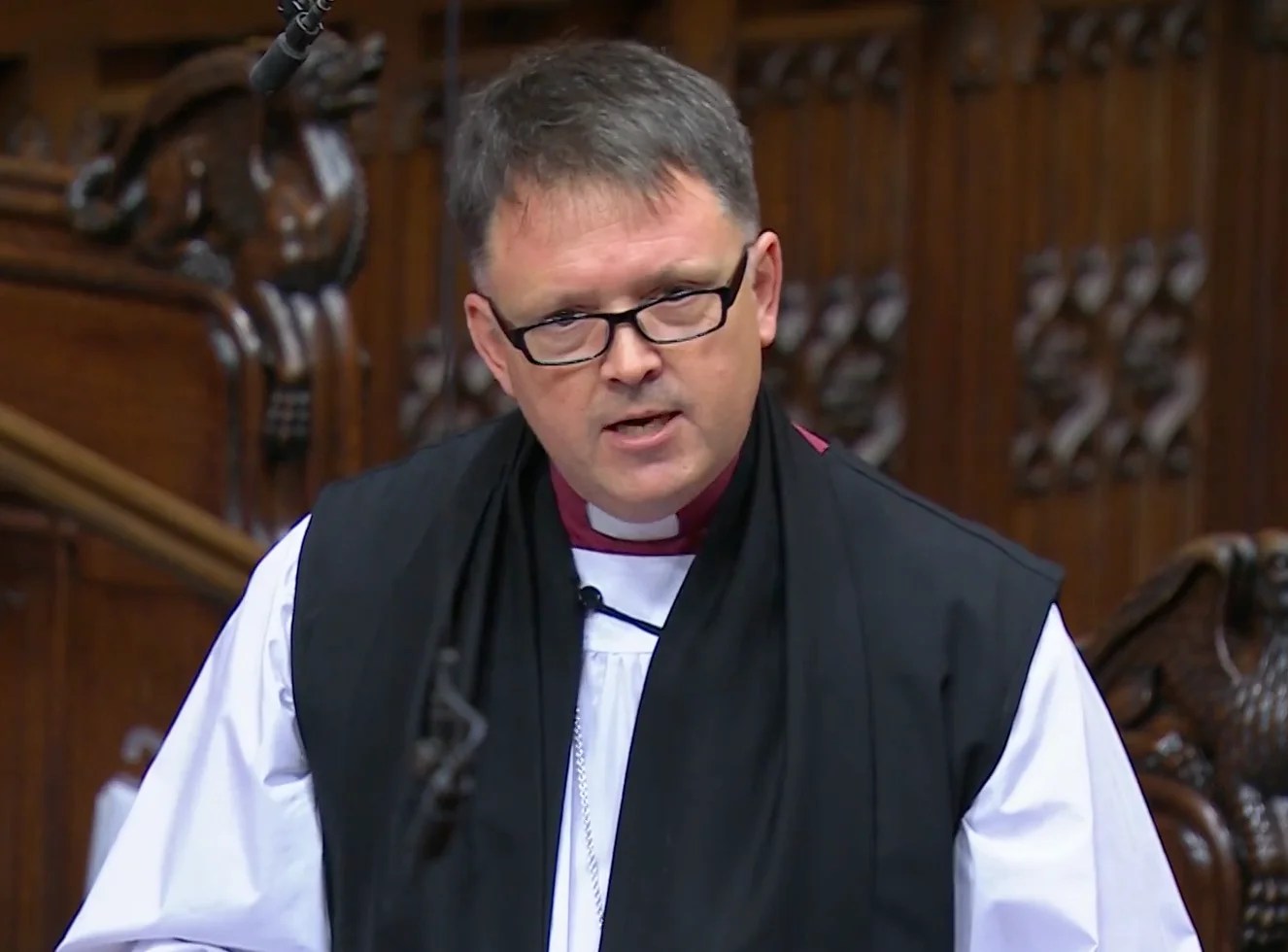
Bishop of St Albans asks about situation of Rohingya children in India

The Bishop of St Albans received the following written answers on 11th March 2025:

The Lord Bishop of St Albans asked  His Majesty’s Government what representations they have made to the government of India regarding the admission of stateless Rohingya children to schools.

Continue reading “Bishop of St Albans asks about situation of Rohingya children in India”

Bishop of Norwich asks about study-abroad opportunities for UK students

The Bishop of Norwich asked a question on ensuring study-abroad opportunities, particularly for students from socioeconomically disadvantaged backgrounds, on 5th March 2025:

The Lord Bishop of Norwich: My Lords, universities in the Cathedrals Group—the 14 higher education institutions founded by the churches—have a higher proportion of students who progress to university when they are older, and/or who are the first in their family to progress to university. How will His Majesty’s Government ensure that all students who wish to, and particularly those experiencing socioeconomic disadvantage, are able to access the life-changing opportunities afforded by studying abroad, given the loss to students of Erasmus funding?

Continue reading “Bishop of Norwich asks about study-abroad opportunities for UK students”

Bishop of Norwich asks about addressing causes of violence against women and girls

The Bishop of Norwich asked a question on addressing the root causes of violence against women and girls on 4th March 2025, during a discussion on relationship, sex, and health education:

The Lord Bishop of Norwich: My Lords, the Church of England’s National Society for Education is proud to be part of the White Ribbon project, whose aim is to prevent men’s violence against women and girls by addressing its root causes. In our Church schools, we support the ability to explore these themes in collective worship, RSHE curricula and class time. What plans do His Majesty’s Government have to address the root causes of violence against women and girls in their revised guidance?

Continue reading “Bishop of Norwich asks about addressing causes of violence against women and girls”

Bishop of Norwich speaks in debate on lifelong learning

The Bishop of Norwich spoke in a debate on lifelong learning on 6th February 2025, highlighting the role of faith communities in the sector:

The Lord Bishop of Norwich: My Lords, I am grateful to the noble Lord, Lord Knight, for bringing this debate and look forward in the spirit of lifelong learning to hearing other contributions this evening.

Lifelong learning is about social value, although we do not live to store up treasure just for ourselves. It is about economic value, although we do not live by bread alone. It is about personal value, although we do not live just for me but for the flourishing of others who are our neighbours. Faith communities play an important part in all these aspects of lifelong learning, through catechesis, engagement with social issues, basic skills training, youth work, volunteering and engagement with schools, FE colleges and universities. They are also crucially involved in spiritual value by fostering vocation and character.

Continue reading “Bishop of Norwich speaks in debate on lifelong learning”

Bishop of Lincoln asks about children’s rights in the education sector

The Bishop of Lincoln asked a question on children’s rights in education on 27th January 2025, during a discussion on government plans to improve children’s wellbeing and opportunities:

The Lord Bishop of Lincoln: My Lords, Article 28 of the UN Convention on the Rights of the Child recognises the fundamental right of all children to a free primary education and access to different forms of secondary education. Noble Lords may know that 1 million children are educated in Church of England schools at the moment, and the Church of England’s vision for education is rooted in a Christian ethos for the common good and the holistic well-being of every child, including those of all faiths and none. The Statutory Inspection of Anglican and Methodist Schools framework, which informs best practice in church schools, has a strong and effective focus on children’s rights in accordance with Article 28 in the UN convention. Will the Minister ensure that the substantial and compelling learnings from church schools can be highlighted and shared within her department’s ongoing review of potential reforms to current accountability measures?

Continue reading “Bishop of Lincoln asks about children’s rights in the education sector”

Bishop of Leeds asks about teaching levels in arts and creative education

The Bishop of Leeds asked a question on low numbers of teachers in the arts and humanities on 15th January 2025, during a discussion on the value of a creative education in state schools:

The Lord Bishop of Leeds: My Lords, schools feed in to universities, and the number of arts and humanities departments in universities has been in decline. I learned recently—and I speak as a linguist—that if all the students currently training in modern languages at university were to go into teaching, we would still only fund 70% of the language-teaching posts. This is a systemic problem in the arts and humanities. Trying to get PhD funding for arts and humanities is increasingly difficult. Will the Government commit to looking at the whole stream of the educational system in this respect, and not just schools?

Continue reading “Bishop of Leeds asks about teaching levels in arts and creative education”

Bishop of Norwich asks about services for children with special educational needs

The Bishop of Norwich received the following written answer on 6th January 2025:

The Lord Bishop of Norwich asked His Majesty’s Government:

  • what assessment they have made of the safety valve agreement, and of its impact in the local authorities where such agreements have been made.
  • what assessment they have made of the impact on the most vulnerable pupils with special educational needs in local authorities where a safety valve agreement has been made; and how they propose to minimise this impact.
Continue reading “Bishop of Norwich asks about services for children with special educational needs”

Bishop of Sheffield speaks on need for full funding for SEND education

The Bishop of Sheffield spoke in a debate on support for children with special educational needs and disabilities on 9th December 2024, emphasising the need for proper funding for SEND students and for a multifaceted approach to SEND education:

The Lord Bishop of Sheffield: My Lords, I thank the noble Baroness for securing this debate. One of the most rewarding pieces of work in which I was involved when I was on the staff of Lichfield Cathedral about 15 years ago was a partnership with a local school for pupils with SEND to create a bespoke multisensory tour involving water, incense, bells, holding crosses and even, judiciously, fire. At first, the cathedral guides were dubious, having been used to providing school visitors simply with a verbal commentary on the history and architecture of the building, but before long they were the ones advocating that the multisensory interactive components be incorporated into all our school visits. The result was a definite uplift in our overall educational offer—and I shall come back to that at the end, if I may.

Continue reading “Bishop of Sheffield speaks on need for full funding for SEND education”

Bishop of Lincoln asks about rate of teaching turnover in special needs education

The Bishop of Lincoln received the following written answer on 4th December 2024:

The Lord Bishop of Lincoln asked His Majesty’s Government what steps they are taking to address teacher burnout and turnover in special education schools due to low pay and temporary contracts.

Continue reading “Bishop of Lincoln asks about rate of teaching turnover in special needs education”

Bishop of St Albans asks about arts provision

The Bishop of St Albans received the following written answers on 2nd December 2024:

The Lord Bishop of St Albans asked His Majesty’s Government what assessment they have made of introducing an arts premium to allow for schools to pay for arts opportunities such as music lessons, as recommended in the report by the Sutton Trust, A class Act: Social mobility and the creative industries, published on 13 November.

Continue reading “Bishop of St Albans asks about arts provision”