Schools (Mental Health Professionals) Bill: Bishop of Winchester applauds measures to address mental health issues in young people

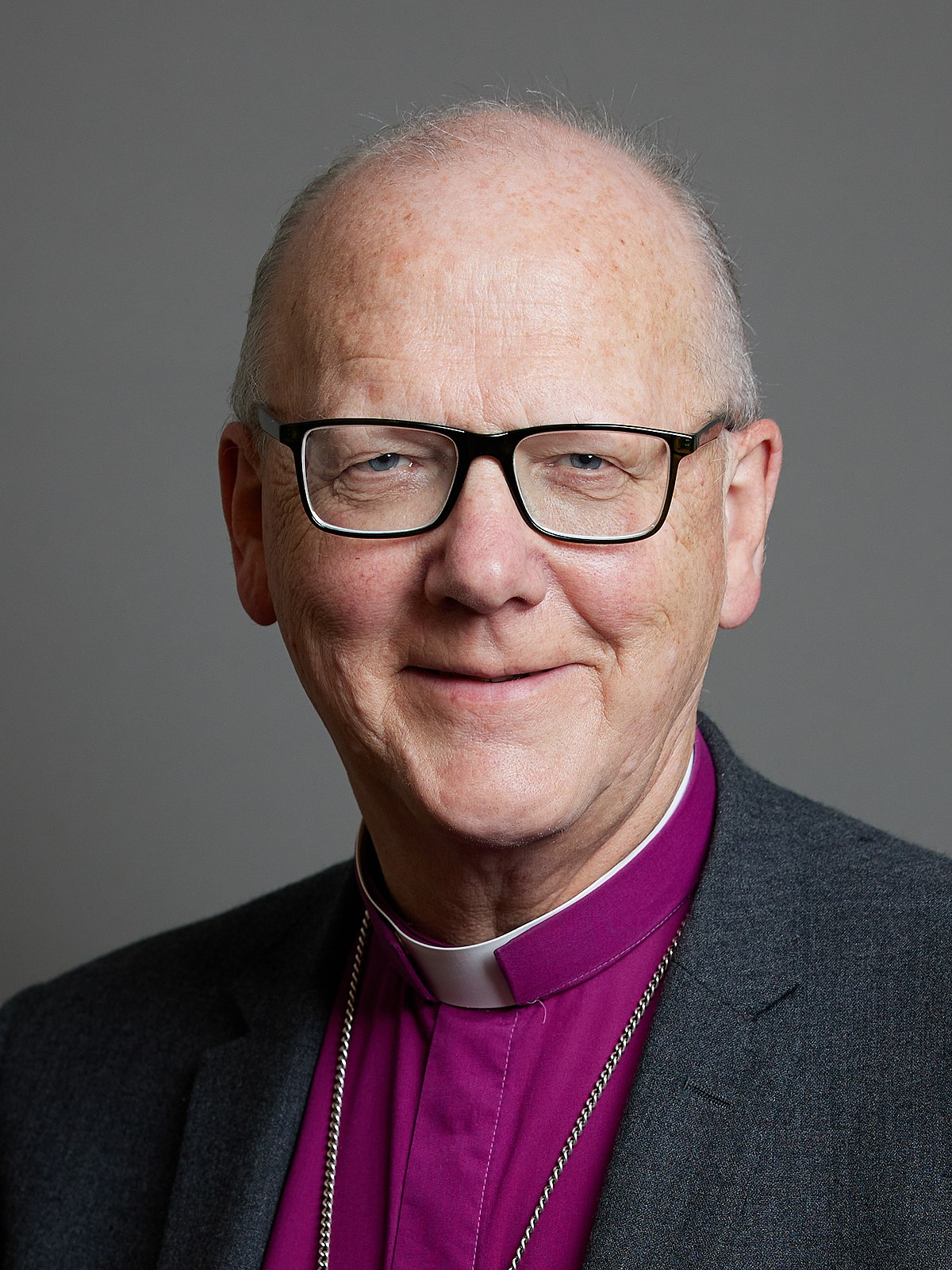
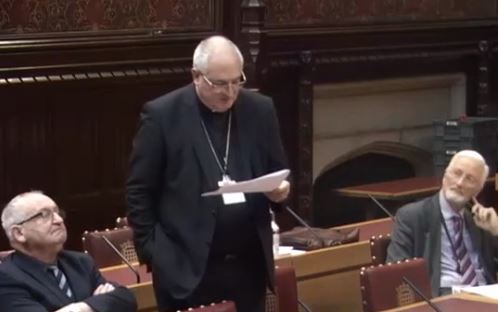
The Bishop of Winchester spoke in a debate on the second reading of the Schools (Mental Health Professionals) Bill on 1st March 2024, pointing out the need for a consistent, universally applied policy to improve student mental health, and the need to address the causes of mental health issues at a root level:

The Lord Bishop of Winchester: My Lords, I am grateful to the noble Baroness for bringing this Bill to us for its Second Reading. We indeed face a crisis in this area and need to be aware of the long-term consequences of not addressing it.

The Bill would pave the way for just the kinds of interventions that are sorely needed. The NSPCC and our own Library briefing state that more than 20% of children and young people are living with poor mental health. CAMHS referrals are provided for only the most severe presenting issues, while early intervention, though widely recognised to be key to good long-term outcomes, is now a thing of distant memory. The sobering fact is that children are taking their own lives while they wait to be seen, and that is deeply shameful.

Last summer, the Church of England published the document Our Hope for a Flourishing Schools System, which makes specific mention of mental health, it being the issue school leaders most often raise with us. It states:

“Children’s mental health and wellbeing is prioritised and resourced generously by a society that invests in the long-term future of its nation by placing children first in funding and political direction. The fulfilling of a child’s potential should never be hindered, blocked or prevented by the system in which they find themselves”.

However, those words are, sadly, far from being the current reality.

Continue reading “Schools (Mental Health Professionals) Bill: Bishop of Winchester applauds measures to address mental health issues in young people”

Bishop of Lincoln asks about methods of improving school attendance

The Bishop of Lincoln asked a questions about application of data analysis to improve pupil attendance and experience in schools on 13th February 2024, during a discussion on the potential of Ofsted reviewing pupil absence rates as part of their inspections:

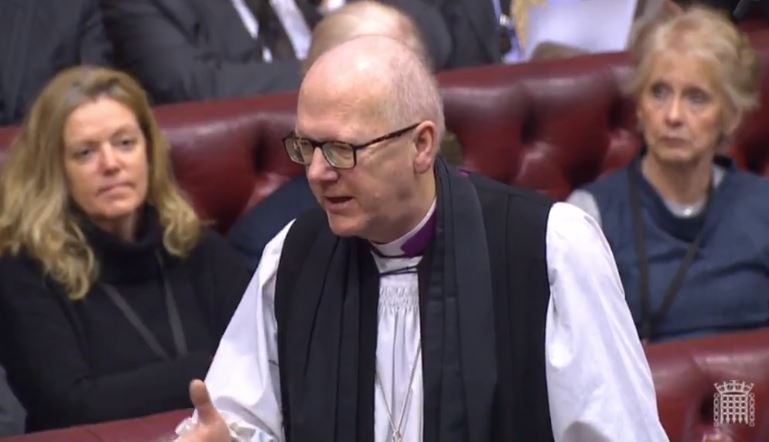
The Lord Bishop of Lincoln: My Lords, I express gratitude to the Minister for the way in which the data has been produced; I understand that more is to come, and that will be examined in great detail. As an unrepentant pedant, though, I am as interested in the adverbs as the nouns—in how the data is to be applied. How do we get more children across the line in terms of the culture of school? Some years ago, the Children’s Society’s Young Commissioners looked deeply into child poverty in school and how children are identified as those, for instance, receiving free school meals or who are not able to purchase the very expensive school uniforms from the agreed seller. How is school culture being encouraged by government further to change in order to get children across the line? How, indeed, do we expect Ofsted to become the “office of encouragement”?

Continue reading “Bishop of Lincoln asks about methods of improving school attendance”

Bishop of Lincoln asks about SEND diagnosis process for children and families

The Bishop of Lincoln asked a question on support for families in the process of receiving special educational needs diagnoses and provision for their children on 12th February 2024:

The Lord Bishop of Lincoln: My Lords, I welcome everything that the Minister has said, but we all know that, even with the initial screening online, a full diagnosis for many children with any of these needs can take years to confirm. I am interested in what the noble Baroness has to say about how families—and the children themselves—are accompanied through several years of negotiation with the NHS and with local authorities, especially when, as has already been said, certainly in Lincolnshire, staffing costs outstrip the need that is expressed within our schools.

Continue reading “Bishop of Lincoln asks about SEND diagnosis process for children and families”

Bishop of St Albans asks about foreign language education

The Bishop of St Albans asked a question during a debate on education standards, 8th February 2024, pointing out a decline in foreign language education on and advocating for more support for language clubs and extracurricular opportunities:

The Lord Bishop of St Albans: My Lords, what is not being mentioned is the massive decline in the teaching of foreign languages, at the very point when we are trying to engage worldwide with new trade deals—and, indeed, with our position in the world. What are His Majesty’s Government doing to address this, and can they also look at some of the very creative language clubs and so on that can be added on after school? These are often ways of exploring languages without loading the main curriculum even further.

Continue reading “Bishop of St Albans asks about foreign language education”

Bishop of Southwell and Nottingham asks about use of a register for home educated children

The Bishop of Southwell and Nottingham received the following written answer on 10th January 2024:

The Lord Bishop of Southwell and Nottingham asked His Majesty’s Government, further to the remarks by Baroness Barran on 19 December 2023, what consideration they have given to expediting the introduction of a statutory register of children schooled at home and online, given the rise in those numbers, in order to identify children (1) who are at risk, or (2) who have unmet needs.

Continue reading “Bishop of Southwell and Nottingham asks about use of a register for home educated children”

Bishop of Durham asks about education funding

The Bishop of Durham received the following written answer on 27th November 2023:

The Lord Bishop of Durham asked His Majesty’s Government what plans they have to allocate additional funding in the period 2025–30 to secondary and post-16 education providers to address the lag before the new National Funding Formula takes effect.

Continue reading “Bishop of Durham asks about education funding”

Bishop of Durham asks about educational attainment for children in the social care system

The Bishop of Durham received the following written answers on 17th October 2023:

The Lord Bishop of Durham asked His Majesty’s Government:

  • further to the Action for Children’s report, The Educational Outcomes of Children Referred to Children’s Social Care: A Revolving Doors Report, published on 22 August, and data from the annual children in need census, what assessment they have made of the gap in educational attainment between children who have interacted with the children’s social care system, and their peers who have not.
  • what steps they are taking to improve the educational attainment and GCSE results of children who interact with the children’s social care system.
  • what steps they are taking, beyond the school gates, to provide support to children who have interacted with the children’s social care system.
Continue reading “Bishop of Durham asks about educational attainment for children in the social care system”

Bishop of St Albans urges government to work to provide financial and citizenship education in schools

The Bishop of St Albans spoke in a debate on life skills and citizenship teaching in primary and secondary schools on 7th September 2023, urging the government to work with organisations to provide financial education in schools, and drawing attention to the Church of England’s Living Well Together project:

The Lord Bishop of St Albans: My Lords, the diocese which I am privileged to serve has 138 church schools in it and another group of independent schools with Christian foundations. I am glad to have the opportunity to visit them regularly—I have been in one already this morning. As I go round, I am heartened by the teaching I see already going on on citizenship and value-based education. I want to comment, though, on just a couple of things and to suggest that, while it is important that the Government are clear what they are doing, there is actually a vital role for families and a vital role in collaborating with other bodies that are seeking to do similar sort of work.

Continue reading “Bishop of St Albans urges government to work to provide financial and citizenship education in schools”

House of Lords debates role of religion in schools

On 17th July 2o23, the House of Lords debated a question asked by Baroness Burt of Solihull on the recommendation by the United Nations Committee on the Rights of the Child that the United Kingdom should prevent the use of religion as a selection criterion for school admissions in England. Church of England schools were discussed during the debate:

Baroness Burt of Solihull (LD): To ask His Majesty’s Government what assessment they have made of the United Nations Committee on the Rights of the Child’s recommendation that the United Kingdom should prevent the use of religion as a selection criterion for school admissions in England.

Baroness Barran (Con): My Lords, the UK is a proud signatory of the UN Convention on the Rights of the Child. However, the Government support faith schools’ ability to set faith-based oversubscription criteria. This allows parents to have their children educated in line with their religious beliefs. Faith schools can give priority to applicants on the basis of faith only when they are oversubscribed. Where places are available, they must admit all children who apply.

Continue reading “House of Lords debates role of religion in schools”

Church Commissioners Written Questions: Church Finance, Repairs and Maintenance, Technology, Religious Freedom, Diocesan Vacancies, and Education

On 14th July 2023, Andrew Selous MP, representing the Church Commissioners, gave the following written answers to questions from MPs:

Church of England: Finance

Julian Knight MP (Ind, Solihull): To ask the Member for South West Bedfordshire, representing the Church Commissioners, what steps the Church is taking to ensure transparency and accountability in its financial operations.

Continue reading “Church Commissioners Written Questions: Church Finance, Repairs and Maintenance, Technology, Religious Freedom, Diocesan Vacancies, and Education”