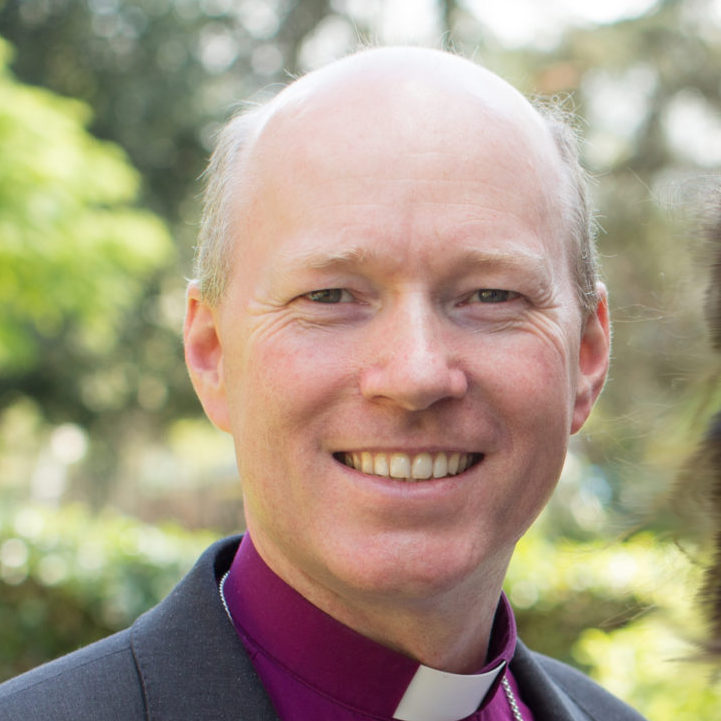
Bishop of St Albans asks about support for farmers affected by Environmental Land Management Schemes

The Bishop of St Albans received the following written answer on 28th February 2024:

The Lord Bishop of St Albans asked His Majesty’s Government what further steps they plan to take to support and protect upland and hill farmers to offset any loss of income they face under the new environmental land management schemes.

Lord Douglas-Miller (Con, DEFRA): Upland farmers play a vital role in managing some of our most important and iconic landscapes, which are valued and recognised by the public. In addition to farming, the management of upland landscapes can provide many environmental benefits and ecosystem services, including clean air and water, carbon sequestration and flood risk management.

Upland farmers are well placed to benefit from our Environmental Land Management (ELM) schemes, which are designed to maintain sustainable, productive land which delivers for both farmers and the environment.

Continue reading “Bishop of St Albans asks about support for farmers affected by Environmental Land Management Schemes”

Bishop of Norwich asks about government plans to withdraw from the Energy Charter Treaty

The Bishop of Norwich received the following written answer on 26th February 2024:

The Lord Bishop of Norwich asked His Majesty’s Government what plans they have to withdraw from the Energy Charter Treaty.

Continue reading “Bishop of Norwich asks about government plans to withdraw from the Energy Charter Treaty”

Bishop of Norwich asks about amount of development aid spent on ecosystem conservation

The Bishop of Norwich received the following written answers on 26th February 2024:

The Lord Bishop of Norwich asked what proportion of Official Development Assistance has been spent on ecosystem conservation, protection and restoration and tree planting internationally in the last five years, and what proportion of Official Development Assistance is forecast to be spent in these areas in the next budget period.

Continue reading “Bishop of Norwich asks about amount of development aid spent on ecosystem conservation”

Bishop of St Albans asks about Ash Dieback Disease

The Bishop of St Albans received the following written answer on 26th February 2024:

The Lord Bishop of St Albans asked His Majesty’s Government what assessment they have made of the number of ash trees infected with the fungus Hymenoscyphus fraxineus in the year 2023.

Lord Douglas-Miller (Con, DEFRA): The Government does not collect data on the number of individual ash trees that have become infected with ash dieback, but the disease is now present in all counties and is predicted to kill over 100 million trees in the UK. Hymenoscyphus fraxineus is spread via spores which can spread for considerable distances in the wind before infecting another ash tree. This means it is not possible to limit the spread of the disease. Some local authorities conduct annual surveys of ash trees to track local spread and decline and inform their management strategies.

Continue reading “Bishop of St Albans asks about Ash Dieback Disease”

Bishop of St Edmundsbury and Ipswich asks about funding for coastal erosion and flood defences

The Bishop of St Edmundsbury and Ipswich asked a question on the disparity in funding between managing flood risks and coastal erosion on during a discussion on the adequacy of Environment Agency expenditure on flood defences on 20th February 2024:

The Lord Bishop of St Edmundsbury and Ipswich: My Lords, I thought my question was going to be off the point. One of the issues raised frequently with me by those managing the coastline in Suffolk is the disparity between flooding risks, for which the Environment Agency takes responsibility, and coastal erosion, which is managed by local authorities. What assessment have the Government made of the disparity of funding for these two vital activities?

Continue reading “Bishop of St Edmundsbury and Ipswich asks about funding for coastal erosion and flood defences”

Bishop of Norwich asks about Communion Forest initiative

The Bishop of Norwich received the following written answer on 12th February 2024:

The Lord Bishop of Norwich asked His Majesty’s Government what assessment they have made of the Communion Forest, an initiative comprising local activities of tree growing and ecosystem conservation, protection and restoration undertaken by parishes, dioceses and provinces across the Anglican Communion.

Continue reading “Bishop of Norwich asks about Communion Forest initiative”

Bishop of Bristol asks about de-carbonisation plans

The Bishop of Bristol asked a question on the importance of de-carbonising heating on 6th February 2024, asking whether the government would refute speculation that they were considering a U-turn on this policy:

The Lord Bishop of Bristol: My Lords, as the Minister will know, net zero is impossible without decarbonising heating. The clean heat market mechanism is a crucial part of that. Does he recognise its importance? Will he refute media speculation that the Government are considering a U-turn on it? Will he make representations to boiler manufacturers that are unfairly passing these costs on to consumers?

Lord Douglas Miller (Con): Again, I will write to the right reverend Prelate in due course. I am doing rather a lot of writing today, am I not? This is a broad subject which I am slowly getting my head around.

Hansard

Bishop of St Norwich asks about assistance for faith groups working in conservation and environmental restoration

The Bishop of Norwich received the following written answer on 6th February 2024:

The Lord Bishop of Norwich asked His Majesty’s Government what financial assistance they are providing to support projects undertaken by faith groups and others to support ecosystem conservation, protection and restoration internationally.

Continue reading “Bishop of St Norwich asks about assistance for faith groups working in conservation and environmental restoration”

Bishop of Norwich welcomes sustainable farming incentives

On 25th January 2024, the Bishop of Norwich spoke in a debate on sustainable farming, welcoming the sustainable farming incentive scheme and calling for a new regulatory framework around nature protection:

The Lord Bishop of Norwich: My Lords, it is a pleasure to follow a fellow tree planter, the noble Lord, Lord Robathan. I give a tree to every person I confirm as a sign of the care of God’s creation. I am grateful to the noble Earl, Lord Caithness, for securing this debate. I declare an interest as a member of Peers for the Planet and as a Church Commissioner.

Landowners and conservationists with whom I have spoken have broadly welcomed the changes to the sustainable farming incentive, not only the increased payment rates, which make uptake more attractive, but the new areas of action, the increased flexibility and the promise of a simpler, clearer and faster application service. Let us hope it does what is says on the new, streamlined tin. This better-rounded and more holistic agri-environmental scheme in England will undoubtedly see a greater uptake across all agricultural sectors. The tools are certainly in place to help deliver both sustainable food production and nature recovery.

In particular, I welcome the new emphasis on soil health. Being under our feet, we too often forget it, but soil is perhaps our greatest natural asset and the key to so much nature recovery. I am glad that the noble Baroness, Lady Bennett of Manor Castle, shares my enthusiasm for soil. Healthy soil supports a range of environmental, economic and societal benefits. These include food production, climate change mitigation and increased biodiversity. These vital soil functions are at risk from poor soil management or inappropriate land use, leading to soil degradation, soil compaction and soil erosion from wind and water. Ecological breakdown of our soils together with climate change are perhaps the primary threats to food security.

Continue reading “Bishop of Norwich welcomes sustainable farming incentives”

Bishop of St Albans asks about reduction of food waste

The Bishop of St Albans received the following written answers on 22nd January 2024:

The Lord Bishop of St Albans asked His Majesty’s Government what assessment they have made of the need to invest in infrastructure and technology to support food waste valorisation to reduce (1) greenhouse gas emissions, and (2) the amount of waste sent to landfill.

Lord Douglas-Miller (Con): New provisions in the Environmental Protection Act 1990 (as amended by the Environment Act 2021) will require all local authorities and relevant non-domestic premises in England to arrange for the collection of food waste for recycling. Our preference is for food waste to be separately collected for treatment by anaerobic digestion which produces biogas and significant carbon savings over sending food waste to landfill.

Continue reading “Bishop of St Albans asks about reduction of food waste”