Church Commissioners Written Questions: Same Sex Relationships, Homelessness & Poverty, Young People, Investment, and Rural Areas

On 6th July 2023, Andrew Selous MP, representing the Church Commissioners, gave the following written answers to questions from MPs:

Clergy: Homosexuality

Mr Ben Bradshaw MP (Lab, Exeter): To ask the Member for South West Bedfordshire, representing the Church Commissioners, what recent discussions he has had with the Church of England General Synod on its expected timetable for bringing forward proposals on (a) blessings, (b) marriages and (c) rules for clergy in same-sex relationships.

Andrew Selous MP (Con, South West Bedfordshire): In February 2023 the General Synod agreed proposals that would enable same-sex couples to come to church after a civil marriage or civil partnership to give thanks, dedicate their relationship to God and receive God’s blessing.

Continue reading “Church Commissioners Written Questions: Same Sex Relationships, Homelessness & Poverty, Young People, Investment, and Rural Areas”

Church Commissioners Written Answers: Investment, Clergy Vacancies, Provincial Episcopal Visitors, and Use of Church Monies

Andrew Selous MP, representing the Church Commissioners, gave the following written answerto questions from MPs on 21st November 2022:

Jim Shannon MP (DUP): To ask the Member for South West Bedfordshire, representing the Church Commissioners, what steps the Church is taking to promote environmental, social and governance leadership in its investments.

Andrew Selous MP (Con): The Church Commissioners Responsible Investment Team regularly engages with the companies in which they invest on environmental and social issues, and good governance. The Church Commissioners’ Stewardship report 2021 contains examples of work on impact investment, respect for the planet and respect for people: https://www.frc.org.uk/getattachment/8e8fdb87-6c32-4bf3-b549-e8209db00976/The-Church-Commissioners-for-England_Stewardship-report-2020.pdf(opens in a new tab) The Commissioners are signatory members of the Financial Reporting Council, which has approved the report.

Continue reading “Church Commissioners Written Answers: Investment, Clergy Vacancies, Provincial Episcopal Visitors, and Use of Church Monies”

Bishop of St Albans asks about the UK Infrastructure Bank

The Bishop of St Albans received the following written answer on 5th July 2022:

The Lord Bishop of St Albans asked Her Majesty’s Government whether the UK Infrastructure Bank, as a private company wholly owned by HM Treasury, will be subject to the same rural proofing guidance as government departments.

Baroness Penn (Con): The UK Infrastructure Bank has a dual mandate of supporting local and regional economic growth and tackling climate change, and it will support projects across the country. Its priority sectors include digital and clean energy infrastructure which may benefit rural areas in particular UKIB’s recently published Strategic Plan also notes that there are complex rural-urban disparities, and that infrastructure investment can help to address these.

Continue reading “Bishop of St Albans asks about the UK Infrastructure Bank”

Financial Services Bill: Bishop of St Albans speaks at second reading

The Bishop of St Albans spoke at the second reading of the Financial Services Bill on 28th January 2021, raising issues of ethical investment and tax avoidance:

The Lord Bishop of St Albans: My Lords, it is right to underline the importance of the financial services sector in our country and the huge contribution it makes. There are many laudable things in this Bill: the strengthening of money laundering regulations; encouraging saving; and the creation of parity between white collar crimes, such as market manipulation, and general fraud by extending the maximum sentence.

I was disappointed, however, to hear that the Commons amendment exploring the whole issue of ethical investment with reference to genocide did not make it into the Bill. I understand the Government’s reservation—they do not want to politicise the FCA. Nevertheless, I hope that “global Britain”, as laid out by the intentions of the Bill, will also be very much “ethical Britain” as we place ourselves in the world under the new freedoms that we have. I also note, with other noble Lords, the concern that there seems to be so little clarity on the question of parliamentary scrutiny. I am sure we will return to this as the Bill passes through your Lordships’ House. Of course, fundamental to this whole future is that the FCA is adequately resourced to fulfil its task.

Continue reading “Financial Services Bill: Bishop of St Albans speaks at second reading”

Bishop of Salisbury asks Government to encourage fossil fuel intensive businesses to accelerate move to net zero carbon emissions

On 19th November the Bishop of Salisbury asked a question he had tabled to Government, on fuel intensive businesses  moving to net zero carbon emission. The exchanges are below, along with the follow-up questions from other Members:

Fossil Fuels: Business

The Lord Bishop of Salisbury: To ask Her Majesty’s Government, further to the report by the Transition Pathway Initiative Management Quality and Carbon Performance of Energy Companies: September 2020, published on 7 October, what steps they plan to take to encourage fossil fuel intensive businesses to accelerate their move to net zero carbon emissions.

The Parliamentary Under-Secretary of State, Department for Business, Energy and Industrial Strategy (Lord Callanan) (Con): My Lords, the Government have schemes worth nearly £2 billion operating or in development to support our vital energy-intensive industries to decarbonise. These schemes include the industrial energy transformation fund to help companies to reduce their fuel bills and transition to low-carbon technologies, and the industrial decarbonisation challenge to support industry with the development of low-carbon technologies in industrial clusters.

The Lord Bishop of Salisbury: I thank the Minister for his Answer. There have been some welcome and notable commitments, particularly by European oil and gas companies, but overall, the sector is not moving fast enough to align with the Paris agreement. How does the Minister see the Government supporting companies to move faster and have consistent standards for reporting all emissions from scopes 1, 2 and 3 so companies demonstrate alignment clearly in their reporting?

I commend to the Minister the work of the Institutional Investors Group on Climate Change working with TPI to establish a net-zero standard. It would be marvellous if the Government supported these endeavours in the context of their presidency of COP. Continue reading “Bishop of Salisbury asks Government to encourage fossil fuel intensive businesses to accelerate move to net zero carbon emissions”

Church Commissioner Written Answers: ethical investment, St Margaret’s Westminster, Christian persecution, South Sudan, church schools, coronavirus, church buildings, lead theft, Beirut explosion, marriage, mental health, ordinations

On 14th September 2020 the Second Church Estates Commissioner Andrew Selous MP answered eleven written questions from Jim Shannon MP, on ethical investment, St Margaret’s Westminster, Christian persecution, South Sudan, church schools, coronavirus and church buildings, lead theft, the Beirut explosion, marriage, mental health, and ordinations: Continue reading “Church Commissioner Written Answers: ethical investment, St Margaret’s Westminster, Christian persecution, South Sudan, church schools, coronavirus, church buildings, lead theft, Beirut explosion, marriage, mental health, ordinations”
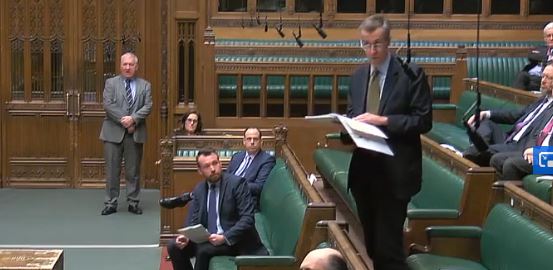
Church Commissioner questions: church building reopening, weddings, housing, public worship, music, online services, family life, church finances and the Transition Pathway Initiative

On 25th June 20202 the Second Church Estates Commissioner, Andrew Selous MP, answered questions from MPs in the House of Commons, on: church building reopening, weddings, housing, public worship, music, online services, family life, church finances and the Transition Pathway Initiative. A transcript is below:

Continue reading “Church Commissioner questions: church building reopening, weddings, housing, public worship, music, online services, family life, church finances and the Transition Pathway Initiative”

Church Commissioners’ written answers: carbon reduction, cashless donations, South Sudan, Uganda, lead theft, graveyard records

On 18th March 2020 the Second Church Estates Commissioner, Andrew Selous MP, answered seven written questions from Jim Shannon MP, on carbon reduction, cashless donations, South Sudan, Uganda, lead theft and graveyard records:

Jim Shannon (Strangford): 29873 To ask the right hon. Member for South West Bedfordshire, representing the Church Commissioners, what steps the Church of England is taking to use its investments to support business transitioning to a low carbon economy.

Andrew Selous: As responsible investors and members of the UN-convened Net Zero Asset Owner Alliance, the Church Commissioners regard climate change as a vital issue and have pledged to transition their investment to a net-zero greenhouse gas emissions portfolio by 2050. They will set their first interim emissions reduction target as members of the Net Zero Asset Owner Alliance in 2020 and will work with their public equities managers to achieve it. Continue reading “Church Commissioners’ written answers: carbon reduction, cashless donations, South Sudan, Uganda, lead theft, graveyard records”

Church Commissioners’ Written Answers: carbon emissions, religious freedom, strategic development funding, church planting, green investments, the Democratic Republic of Congo and South Sudan, the Primates’ Meeting, new technologies, marriage and family life

On 13th February 2020 the Second Church Estates Commissioner, Andrew Selous MP, answered written questions from Jim Shannon MP, on carbon emissions, religious freedom, strategic development funding, church planting, green investments, the Democratic Republic of Congo and South Sudan, the Primates’ Meeting, new technologies, marriage and family life.

Continue reading “Church Commissioners’ Written Answers: carbon emissions, religious freedom, strategic development funding, church planting, green investments, the Democratic Republic of Congo and South Sudan, the Primates’ Meeting, new technologies, marriage and family life”

Church Commissioner Questions: Tributes, climate change, archbishops, reconciliation, telecommunications, thefts, women in prison, marriage, digital evangelism

On 31st October 2019 Rt Hon Dame Caroline Spelman answered questions from MPs for the last time as Second Church Estates Commissioner. Tributes were paid to her, and questions were answered on climate change, archbishops, reconciliation, telecommunications, thefts, women in prison, marriage, and digital evangelism. This was also the same day that the Speaker and his Chaplain were due to retire. A full transcript follows:

Church Commissioners

The right hon. Member for Meriden, representing the Church Commissioners, was asked—

Climate Change: Investment in Companies

Michael Tomlinson (Mid Dorset and North Poole) (Con): What progress the Church of England has made on holding the companies in which it invests to account on climate change. [900272]

The Second Church Estates Commissioner (Dame Caroline Spelman): Since this is my last set of oral questions, I would like to record my heartfelt thanks to my small team of staff, and especially my constituency secretary, who has faithfully served me for 20 out of 22 years. We often forget that our staff are on the frontline of much of the abuse that we receive, and I want to record my admiration for their fortitude. I also thank the amazing staff I have had to support me in this role, particularly Simon Stanley at Church House.

In tribute, Mr Speaker, I thank you for your kindness and courtesy—unfailingly so, and especially at times of personal duress. I single out your inspired choice of Speaker’s Chaplain, who has enriched the spiritual life of this place—but more of that later.

The Church of England Pensions Board has tabled a shareholder resolution ahead of the annual general meeting of BHP Billiton, the world’s largest mining company, on 7 November this month. It asks BHP to suspend its membership of trade associations that are not lobbying in line with the climate change agreement. This is just the latest example of the Church Commissioners using their shareholder position to change company policy in line with the climate change agreement.

Continue reading “Church Commissioner Questions: Tributes, climate change, archbishops, reconciliation, telecommunications, thefts, women in prison, marriage, digital evangelism”