On 26th November 2015 the House of Lords debated a motion from Baroness Mobarik: “To ask Her Majesty’s Government, in the light of the attacks in Paris on 13 November, what steps they plan to take to foster links between communities, as part of their counterterrorism strategy.” The Bishop of Rochester, Rt Revd James Langstaff, spoke in the debate:
 The Lord Bishop of Rochester: My Lords, I, too, am very grateful to the noble Baroness, Lady Mobarik, for initiating the debate and for the opportunity to speak in it. I am grateful, too, to the noble Baroness, Lady Eaton, for saying some of the things about Near Neighbours that I might have said. That will save me having to do it. It is good to have other advocates of these things.
The point has been made already, not least by the noble Lord, Lord Harris, that the important issues raised in the debate, although perhaps prompted by part of the current world situation, have been there for many generations. Many of us have been working away at them for a good many years. None the less, one of the strands in the Government’s counterterrorism strategy, published last month, has been the building and strengthening of community links within and between communities. It is a very important strand that clearly builds on things that many of us have been involved in before. In many ways it is the most difficult strand, because it requires perseverance and hard work over many years. It requires commitment in local communities and all the things that lead to fruitful engagement. Continue reading “Bishop of Rochester highlights work of faiths in promoting community cohesion”

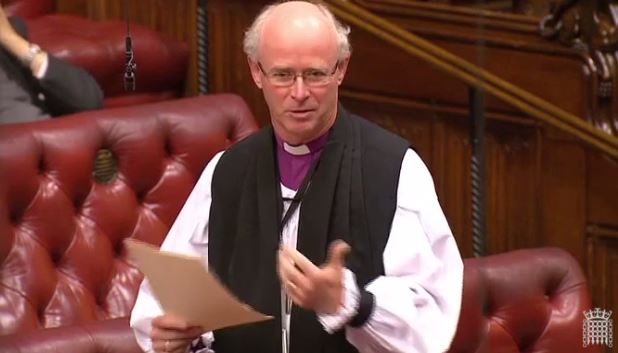 On 27th & 30th June 2016 the Bishop of Rochester, Rt Revd James Langstaff, received written answers to questions on radicalisation in prisons.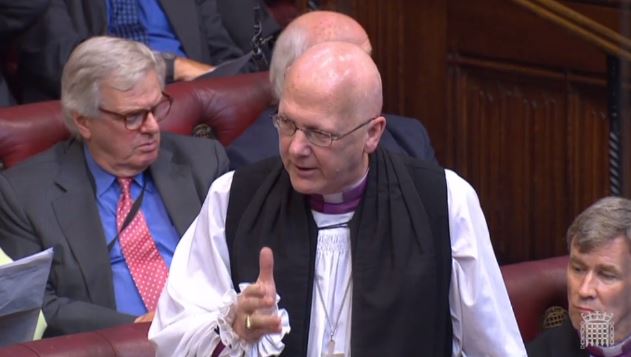
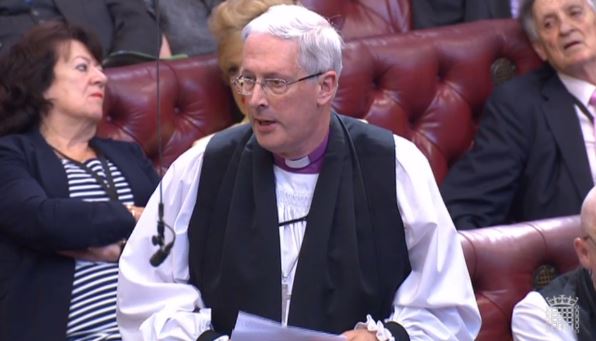
 On 23rd May 2016 the Bishop of Carlisle, Rt Revd James Newcome, spoke in the second day of debate on the Queen’s Speech. He focused his response on the Government’s proposals to tackle tax evasion and extremism, as well as calling for a renewed focus on international development and the military covenant. The Minister of State for the Ministry of Defence, Earl Howe, responded on behalf of the Government.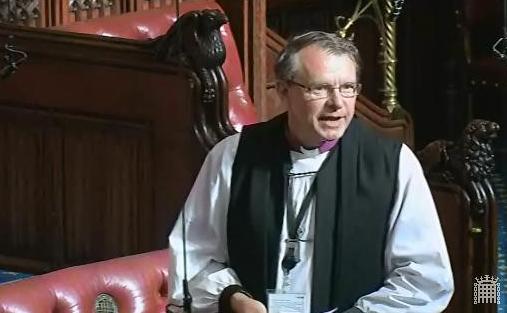
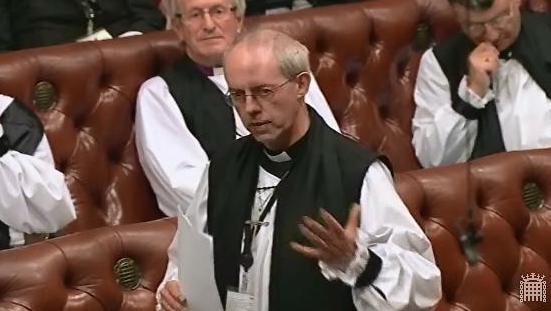
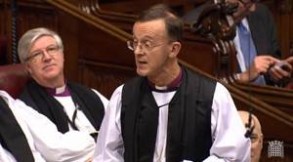 On the 27th January 2016 Lord Pearson of Rannoch asked the Government “what assessment they have made of the risk that Christians could be recorded as having committed an anti-Muslim hate crime from April 2016 by preaching the divinity of Christ or by reading aloud sections of the Bible in public, such as 1 John, Chapter 4, verses 1 to 3.” The Rt Revd John Inge, Bishop of Worcester, asked a follow-up question criticising the phrasing of Lord Pearson’s question and highlighting the contribution of religion to the enrichment of public life. The transcript in full is available below.
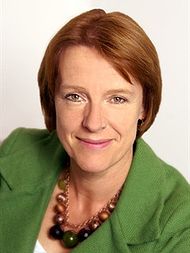 Mrs Caroline Spelman (Meriden) (Con): Like, I am sure, many others present, I have had to go through the process of a Criminal Records Bureau check, which is now a Disclosure and Barring Service check. Does my hon. Friend agree that it is an important butonerous process? Sometimes, one has to be checked more than once, because it does not transfer to another activity that one might undertake with children if one is foolish enough to do a full weekend with the Sunday school. It is a very rigorous process, and if it was applied to the people who teach children Islam in all teaching environments, it would be a very good tool to deal with any excess problem that there might be.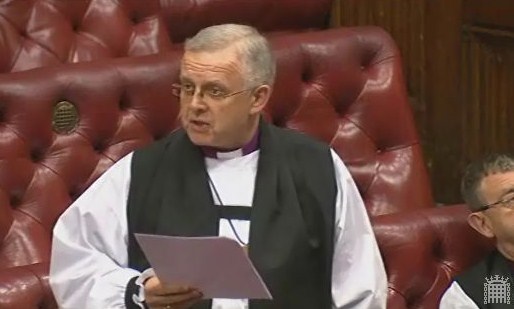
 The Church of England in Parliament
You must be logged in to post a comment.