
The Bishop of Rochester asked a question on support for smaller charities on 6th January 2021, during a discussion on financial support for religious groups during the COVID-19 pandemic:
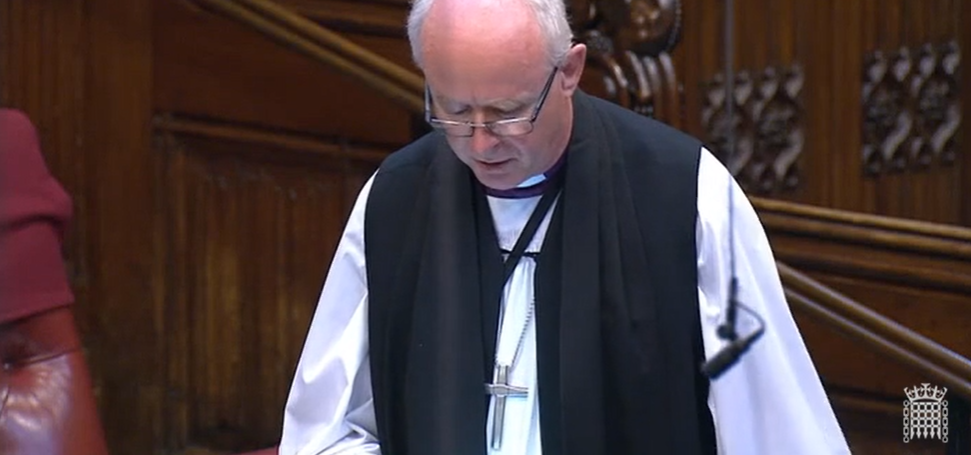
The Lord Bishop of Rochester: I am grateful to the noble Lord, Lord McCrea, as his Question enables me to acknowledge with thanks to the support which has been received by religious groups and charities, not least through the furlough arrangements, which have been a considerable help for many of them. However, in looking to the future, I join others in urging Her Majesty’s Government to keep particularly in mind the needs of smaller charities, which are often religious, community and locally based in character, whose work with young people, the homeless, those in debt, the elderly and other groups has been growing in this time, while their voluntary income has often been diminishing. Perhaps I can tempt the Minister by suggesting that Her Majesty’s Government might consider using their new-found freedoms to exchange the current scheme, whereby VAT is reimbursed on works relating to listed places of worship, for one where it is not charged in the first place.
Continue reading “Bishop of Rochester asks about support for charities working in local communities”
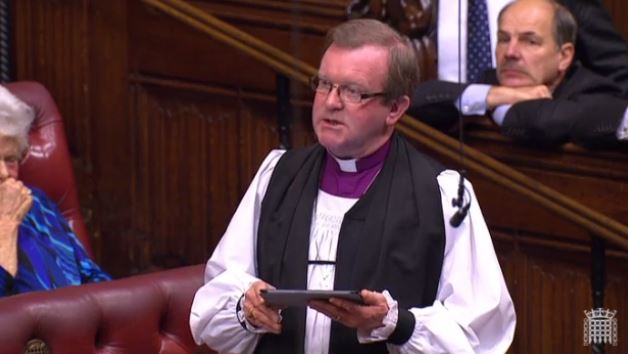 The Lord Bishop of Portsmouth: My Lords, I tabled Amendment 21 to highlight the impact of this measure on different faith communities who share our concerns with this part of the Bill in particular. Noble Lords who attended the special briefing we organised two weeks ago will have heard Chaya Spitz, chief executive of the Interlink Foundation, speak passionately about the implications for the Orthodox Jewish community that she represents and is a member of. For her community, larger families are the norm and the central pivot around which everything else revolves. There is a positive, faith-based imperative to have children, to create the next generation in service of God. There is also a commonly held conscientious objection to the use of artificial contraception, except in prescribed circumstances, and to abortion, except in rare circumstances. By limiting financial support to the first two children, this policy is making a judgment that touches on deeply personal and strongly held religious and cultural beliefs about the family, and that threatens the viability of whole faith communities.


You must be logged in to post a comment.