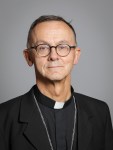
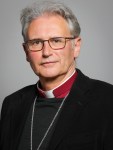
Bishop of Worcester calls for targeted sanctions against those responsible for military coup in Myanmar

On 8th March 2021 the Bishop of Worcester received a written answer to a question on targeted sanctions against the Myanmar regime:

The Lord Bishop of Worcester: To ask Her Majesty’s Government what consideration they have given to imposing targeted sanctions against those responsible for the military coup in Myanmar. [HL13549]

Continue reading “Bishop of Worcester calls for targeted sanctions against those responsible for military coup in Myanmar”

Bishop of Coventry asks about humanitarian aid delivery to Tigray

On 8th March the Bishop of Coventry received a written answer to a question on humanitarian aid delivery in Ethiopia: 
The Lord Bishop of Coventry: To ask Her Majesty’s Government what steps they have taken to ensure that aid workers are permitted (1) to deliver humanitarian aid, and (2) to assess the needs of the population, in Ethiopia. [HL13385]

Continue reading “Bishop of Coventry asks about humanitarian aid delivery to Tigray”

Bishop of St Albans asks about conflict in Ethiopia and Eritrea

The Bishop of St Albans received the following written answers on 22nd February 2021:

The Lord Bishop of St Albans asked Her Majesty’s Government what representations, if any, they have made to the government of Eritrea to encourage its military withdrawal from Ethiopia.

Continue reading “Bishop of St Albans asks about conflict in Ethiopia and Eritrea”

Bishop of Coventry asks about recent coup in Myanmar

The Bishop of Coventry asked a question on resolution to the recent military coup in Myanmar, on 11th February 2021, highlighting the role of civic and religious leaders in the country in calling for peace and dialogue:

The Lord Bishop of Coventry: My Lords, will the Minister join me in paying tribute to the civic and religious leaders in Myanmar, including the respected Buddhist monk, Myawaddy Sayadaw, who is now in prison, and Cardinal Charles Bo, the Archbishop of Yangon, whose published message last week spoke out strongly against the coup, called for the release of everyone who had been detained, and implored demonstrators to remain non-violent? Given the cardinal’s words to the international community that

“Engaging the actors in reconciliation is the only path”,

Continue reading “Bishop of Coventry asks about recent coup in Myanmar”

Bishop of Bristol asks about elections in Uganda

The Bishop of Bristol received the following written answer on 4th February 2021:

The Lord Bishop of Bristol asked Her Majesty’s Government what representations they have made to the government of Uganda about reports (1) of intimidation, (2) that that government restricted access to online services and social media, and (3) of other irregularities, during the general election in that country on 14 January.

Continue reading “Bishop of Bristol asks about elections in Uganda”

Archbishop of York asks about humanitarian situation in Sudan and Tigray

The Lord Archbishop of York received the following written answers on 1st February 2021:

The Lord Archbishop of York asked Her Majesty’s Government what assessment they have made of reports of human rights abuses in Tigray; and what support they are providing (1) to the Ethiopian Human Rights Commission, (2) to the UN High Commissioner for Human Rights, and (3) to the African Union, to (a) investigate, and (b) document, such abuses.

Continue reading “Archbishop of York asks about humanitarian situation in Sudan and Tigray”

Mental health, Armenia, gambling, Ethiopia

On 18th January 2021 in the House of Lords the Bishop of Bristol asked a question about mental health, the Bishop of Coventry asked about Armenian heritage.

Meanwhile the Bishop of St Albans and the Archbishop of York received written answers to questions on gambling-related harm and Ethiopia.

Full text below.

Continue reading “Mental health, Armenia, gambling, Ethiopia”

Vaccines for developing world, poverty in the pandemic, devolution and Ethiopia  

In the House of Lords on 14th January 2021 the Bishop of St Albans received written answers to questions on vaccines for developing countries and the situation in the Tigray region of Ethiopia while the Bishop of Durham received answers to questions on the recent updated report by the Child Poverty Action Group and the Church of England on Poverty in the pandemic.
Meanwhile in the Chamber, the Bishop of Birmingham raised the issue of devolution in England with the Government during Lord Young’s Oral question about the formation of a Constitution, Democracy and Human Rights Commission. Text below:

Continue reading “Vaccines for developing world, poverty in the pandemic, devolution and Ethiopia  “

Bishop of Durham asks about development, environment and prosperity in Burundi, Lesotho and Rwanda

On 30th December the Bishop of Durham received written answers to questions about Burundi, Lesotho and Rwanda and the Legatum Institute’s Prosperity Index 2020:

 The Lord Bishop of Durham: To ask Her Majesty’s Government what assessment they have made of the report by the Legatum Institute The Legatum Prosperity Index 2020, published on 16 November; and in particular that report’s findings that Burundi is (1) 157th out of 167 countries ranked in terms of overall prosperity, and (2) among the top 10 worst countries in the world in the categories of (a) economic quality, (b) living conditions, and (c) health. [HL11204] Continue reading “Bishop of Durham asks about development, environment and prosperity in Burundi, Lesotho and Rwanda”
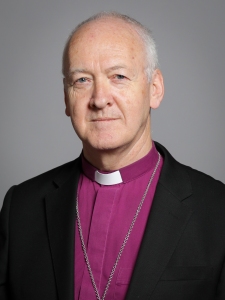
Bishops asks about cluster munition use, protection of refugees, cultural and religious sites in Nagorno Karabakh

On 7th December written answers were published to questions from the Bishops of Coventry, Leeds and Southwark on the conflict in Nagorno Karabakh:

Nagorno Karabakh: Cluster Munitions
The Lord Bishop of Leeds:  To ask Her Majesty’s Government what assessment they have made of the use, if any, of cluster munitions during the recent conflict in the Nagorno-Karabakh region. [HL10621]

Continue reading “Bishops asks about cluster munition use, protection of refugees, cultural and religious sites in Nagorno Karabakh”