On 6th November 2018 the Earl of Sandwich asked the Government “what steps they are taking to help end the famine caused by the war in Yemen.” The Bishop of St Albans, Rt Revd Alan Smith, asked a follow-up question:
I have long been concerned by the terrible situation in Yemen so asked the Government today what they were doing about it pic.twitter.com/QhuUfYiKuG
On the 3 August 2018 the Bishop of St Albans, the Rt Revd Dr Alan Smith received a written answer from Lord Ahmad about Bengali-Muslim’s in Assam State
On 19th July 2018 Baroness Berridge asked the Government “what plans, if any, they have to appoint an Ambassador on Freedom of Religion or Belief.” The Bishop of Southwark, Rt Revd Christopher Chessun, asked a follow-up question:
The Lord Bishop of Southwark: My Lords, I too extend my congratulations and those of the Lords spiritual to the noble Lord, Lord Ahmad, on this appointment. Does he agree that in several countries of the Middle East, where the Christian faith has existed since the time of the apostles—Iraq, Syria and Egypt among them—the scale of persecution renders the condition of the remaining Christian communities one of great humanitarian priority? Continue reading “Bishop of Southwark says persecuted Christians in Middle East a humanitarian priority”
On 17th July 2018 Baroness Cox asked Her Majesty’s Government “what assessment they have made of recent developments in Nigeria, including violence by the Fulani herdsmen and Boko Haram.” The Archbishop of Canterbury, Most Revd Justin Welby, asked a follow up question:
The Archbishop of Canterbury: My Lords, I am sure that the Minister shares my deep concern about the violent attacks on Christians. For instance, the compound of my colleague the Archbishop of Jos was attacked a couple of weeks back, and one of his friends was killed. The Minister has rightly said how complex the situation is, but can she answer more specifically on what assistance the UK Government can give in the short term to strengthen the Government of Nigeria in their role of enforcing security and local mediation; in the medium term, to ensure reconciliation, which will enable the lives and economies of farmers and herders to be protected; and, in the long term, actively and tangibly to support regional efforts to combat the effects of climate change—the development of desertification, which is exacerbating ancient rivalries? Continue reading “Archbishop raises attacks on Christians in Nigeria, asks Government to intervene”
On 4th July 2018 Lord Curry of Kirkharle led a debate in the House of Lords, “To ask Her Majesty’s Government what steps they are taking to address the current humanitarian crisis in South Sudan and to support the delivery of a lasting peace settlement and longer term economic and social development.” The Bishop of Rochester, Rt Revd James Langstaff, spoke in the debate:
The Lord Bishop of Rochester: My Lords, I too am grateful to the noble Lord, Lord Curry, for bringing forward this debate, I apologise to your Lordships for scurrying in slightly late at the beginning, having been taken short, as it were, by the rapidity of the previous business.
A year or more ago, I was passing through Nairobi airport, dressed not quite like this but recognisably as a bishop. A gentleman also clad in a purple shirt was approaching down a corridor. Both of us having time to spare before our flights, we fell into conversation. My new friend was a bishop from South Sudan and was on his way home after a meeting of Church leaders from across Africa—from places of conflict and from places that were recipients of refugees from those conflict areas. Our conversation was one that will stick in my mind for the rest of my life, I suspect, as he shared with me the reality of existence in his diocese. He and his colleagues had been discussing the Church’s role in peacemaking and reconciliation in those settings.
On 28th June 2018 Lord Alton of Liverpool led a debate in the House of Lords, “To ask Her Majesty’s Government what assessment they have made of the continuing violence between communities and armed groups in Nigeria”. The Bishop of Coventry, Rt Revd Christopher Cocksworth, spoke in the debate:
The Lord Bishop of Coventry: My Lords, I join with others in thanking the noble Lord, Lord Alton, for securing a debate on the serious situation that threatens the very stability of Nigeria. With the noble Lord I deplore the violence and, with other noble Lords and indeed the victims themselves, some of whom have been in contact with many of us this week, I call on Her Majesty’s Government to use their influence on the Nigerian Government to ensure the security of their people and to bring the violence to an end. Continue reading “Bishop of Coventry on importance of education and public information to help quell violence in Nigeria”
On 20th June 2018 the Bishop of St Albans received a written answer to a question about attacks by the Myanmar military on the Christian Kachin people:
On 7th June Lord Steel of Aikwood led a debate in the House of Lords ‘That this House takes note of the situation in the Palestinian Territories’. The Bishop of Chester, Rt Revd Peter Forster, spoke in the debate:
The Lord Bishop of Chester: My Lords, in this immensely complex situation, I want to comment on three historic issues which affect contemporary circumstances. The first was what I will call a reaction of the indigenous Palestinian people 70 years ago not to accept the decision of the United Nations to support the establishment of a mainly Jewish state and a separate Palestinian state—we must remember that that was part of the 1947 resolution. It may be that it will not work, as the noble Lord, Lord Hain, said; it may not have been endorsed later, as the noble Lord, Lord Hylton, said, but that was the original plan, and not a later plan, to sort things out. Continue reading “Bishop of Chester speaks in debate on situation in Palestinian territories”

 On 15th October 2018 the Bishop of Durham, Rt Revd Paul Butler, received a written answer to a question on Burundi:
 On 4th July 2018 Lord Curry of Kirkharle led a debate in the House of Lords, “To ask Her Majesty’s Government what steps they are taking to address the current humanitarian crisis in South Sudan and to support the delivery of a lasting peace settlement and longer term economic and social development.” The Bishop of Rochester, Rt Revd James Langstaff, spoke in the debate:
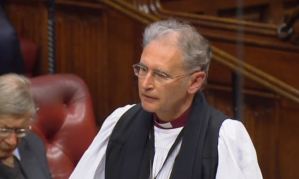 On 28th June 2018 Lord Alton of Liverpool led a debate in the House of Lords, “To ask Her Majesty’s Government what assessment they have made of the continuing violence between communities and armed groups in Nigeria”. The Bishop of Coventry, Rt Revd Christopher Cocksworth, spoke in the debate:
 On 20th June 2018 the Bishop of St Albans received a written answer to a question about attacks by the Myanmar military on the Christian Kachin people:
 The Lord Bishop of Chester: My Lords, in this immensely complex situation, I want to comment on three historic issues which affect contemporary circumstances. The first was what I will call a reaction of the indigenous Palestinian people 70 years ago not to accept the decision of the United Nations to support the establishment of a mainly Jewish state and a separate Palestinian state—we must remember that that was part of the 1947 resolution. It may be that it will not work, as the noble Lord, Lord Hain, said; it may not have been endorsed later, as the noble Lord, Lord Hylton, said, but that was the original plan, and not a later plan, to sort things out.
  The Church of England in Parliament
You must be logged in to post a comment.