Bishop of Durham raises cases of imprisoned Sudanese pastors

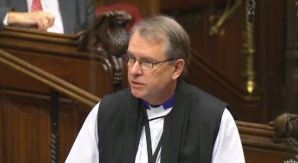
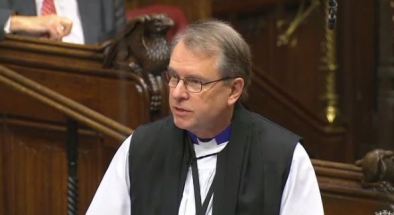
durham-230117On 23rd January 2017, Baroness Cox asked the Government “what assessment they have made of recent developments in Sudan.” The Bishop of Durham, the Rt Revd Paul Butler, asked a follow up question:


Bishop of Durham: My Lords, while recognising that improvements between the Anglican Church of Sudan and the Sudanese Government have occurred, it remains the case that, after over a year, there are two Sudanese pastors, one Czech aid worker and a Sudanese civil rights activist still in al-Huda prison in Omdurman under the death penalty. Human rights activists say that there is no case at all. What contact have Ministers with the Government of Sudan regarding these prisoners and the treatment of Christians more generally? Continue reading “Bishop of Durham raises cases of imprisoned Sudanese pastors”

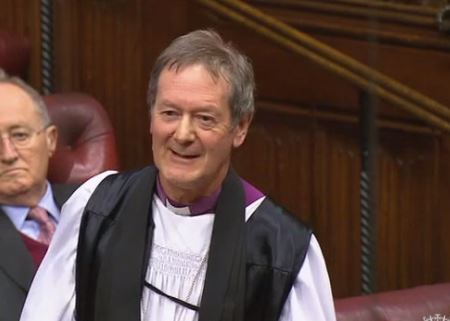
Bishop of Leeds – liberal international order not a natural given or inevitable right

On 19th January 2017 Liberal Democrat Peer Lord Bruce of Bennachie led a debate “that this House takes note of challenges to the liberal international order posed by the development of populism and nationalism around the world.” The Bishop of Leeds, Rt Revd Nick Baines, spoke in the debate:

leeds-20117-bThe Lord Bishop of Leeds: My Lords, I am grateful for the opportunity to have a debate like this, which allows us to identify some of the more philosophical dynamics at play in contemporary political developments. The excellent Library note for this debate makes it clear that language matters, and that definition of terms is not incidental. Populism is clearly more than a movement of people who listen only to the facts that support the prejudices that they have already nurtured, but it can exploit assertive language in such a way as to obscure truth. This is what I wish to focus on here. Whereas others will discuss the importance of a rules-based international order, I want to say something about language in a post-truth or post-factual world, and pose a couple of questions about the assumptions we make regarding history. Continue reading “Bishop of Leeds – liberal international order not a natural given or inevitable right”

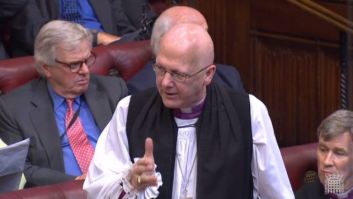
Bishop of Derby – populist politics is best understood as a mood, not a movement

On 19th January 2017 Liberal Democrat Peer Lord Bruce of Bennachie led a debate “that this House takes note of challenges to the liberal international order posed by the development of populism and nationalism around the world.” The Bishop of Derby, Rt Revd Alastair Redfern, spoke in the debate:

derby-19117The Lord Bishop of Derby: My Lords, I too thank the noble Lord, Lord Bruce, for introducing this very important debate. I am not a professional politician, but I invite the House to look at the challenge and at the issues behind the case framed, very articulately, by the noble Lord.

First, I want to argue that populism is not a movement but a moment. One of the writers in the briefing for today talked about a thin ideology. It is not a detailed movement, as the noble Lord, Lord Bruce, said; it is a moment. Nietzsche, in the aptly named The Birth of Tragedy, talked about psychological bonding creating a headless movement—it is an expression of feeling, concern or anger, but it is headless. It is like a mood in the background and is really difficult to deal with. Just like President-elect Trump’s tweeting, it is technological chatter, but very difficult to deal with. It is a mood and not a movement. Those of us charged with a political task therefore have quite a challenge to know what we are getting hold of and how to react. Continue reading “Bishop of Derby – populist politics is best understood as a mood, not a movement”

Church Commissioner questions: Israel/Palestine, human trafficking, prisons, social media, low carbon economy, tourism, lead theft

On 19th January 2017 the Second Church Estates Commissioner, Rt Hon Dame Caroline Spelman MP, answered questions in the House of Commons from MPs on Israel/Palestine, human trafficking, prisons, social media, low carbon economy, tourism and lead theft. The transcript is below:

spelman-190117b Continue reading “Church Commissioner questions: Israel/Palestine, human trafficking, prisons, social media, low carbon economy, tourism, lead theft”

Bishop of St Albans presses Government on Burma and Rohingya citizenship

St Albans 2On the 12th January 2017 Baroness Kinnock of Holyhead held a debate about the treatment of the Rohingya Muslim people in Burma. The Bishop of St Albans, Rt Revd Alan Smith,  pressed the Government to encourage the Burmese authorities to move towards full citizenship and rights for the Rohingya community, and to allow access for independent monitors to northern Rakhine.
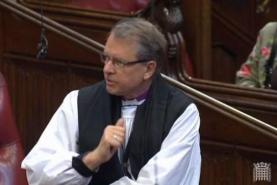
The Lord Bishop of St Albans: My Lords, the plight of the Rohingya Muslims is indeed desperate and the emergence in 2016 of an organised militant insurgency has only deepened the severity of that crisis. But such an escalation is hardly surprising. As the excellent report into the situation in Rakhine state by Crisis Group puts it:
“People pushed to desperation and anger, with no hope for the future, are more likely to embrace extremist responses, however counterproductive”.

The systematic persecution of the Rohingya people by the Burmese Government, most obviously manifested in the denial of citizenship to Rohingya Muslims, has created a fertile recruiting ground for militants. It is a simple human truth that people who have no say in their future and no means to participate in the democratic life of their country are liable to resort to extremism in order to achieve those means. Continue reading “Bishop of St Albans presses Government on Burma and Rohingya citizenship”

Bishop of Durham asks Government how they assess safety of those deported to Democratic Republic of Congo

Bp Durham June 2015 bOn 9th January 2017, the Bishop of Durham, Rt Revd Paul Butler, received an answer to a written question about the safety of those deported to the Democratic Republic of Congo.


Bishop of Durham: To ask Her Majesty’s Government, further to the Written Answer by Baroness Williams of Trafford on 15 December (HL3748), what steps they are taking to assess the safety of those removed from the UK to the Democratic Republic of Congo, once they are in the Democratic Republic of Congo. Continue reading “Bishop of Durham asks Government how they assess safety of those deported to Democratic Republic of Congo”

Bishop of Coventry asks Government about refusal of visas to Archbishops from Syria and Iraq

13.10 Bishop of CoventryOn the 21st December 2016, the Bishop of Coventry, the Rt Revd Christopher Cocksworth, received answers to written questions concerning visa applications from Syria and Iraq and the refusal of visas to Archbishops.


The Lord Bishop of Coventry: To ask Her Majesty’s Government whether they have any plans to review why the Archbishop of Mosul, the Archbishop of St Matthews and the Archbishop of Homs and Hama were refused visas to travel to the UK from Iraq and Syria to attend the consecration of the Syriac Orthodox Cathedral in London. Continue reading “Bishop of Coventry asks Government about refusal of visas to Archbishops from Syria and Iraq”

Bishop of Durham asks about tensions between Rwanda and Burundi

Bp Durham June 2015 bOn 15th December 2016 the Bishop of Durham, Rt Revd Paul Butler, received a written answer to a question on relations between Rwanda and Burundi:
The Lord Bishop of Durham: To ask Her Majesty’s Government, further to the Written Answer by Baroness Anelay of St Johns on 22 September (HL1691), what additional assistance is being given to alleviate heightened tensions between the governments of Rwanda and Burundi. Continue reading “Bishop of Durham asks about tensions between Rwanda and Burundi”

Bishop of Durham asks about safety of those removed from UK to Democratic Republic of Congo

Bp Durham June 2015 bOn 15th December 2016 the Bishop of Durham, Rt Revd Paul Butler, received a written answer to a question about those removed from the UK to the Democratic Republic of Congo:
The Lord Bishop of Durham: To ask Her Majesty’s Government what steps are being taken to assess the safety of those who have been removed from the UK to the Democratic Republic of Congo.

Bishop of Durham asks about UK engagement with President of Burundi

14.06.10 Bishop of Durham 5On 13th December, the Bishop of Durham, the Rt Revd Paul Butler, received two written answers from the Foreign and Commonwealth Office to questions about the President of Burundi.

The Lord Bishop of Durham To ask Her Majesty’s Government what assessment they have made of the security situation in Burundi in the light of the recent attack on presidential aide, Willy Nyamitwe. Continue reading “Bishop of Durham asks about UK engagement with President of Burundi”