Bishop of Wakefield asks question on Syria peace talks

On 28th November 2013, Lord Dykes asked Her Majesty’s Government what is their assessment of the outcome of the talks held earlier this month regarding the proposed Geneva II peace conference on the conflict in Syria.

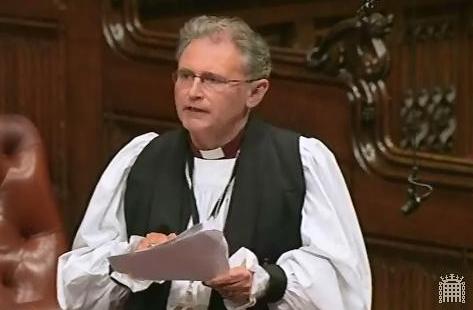
The Bishop of Wakefield asked a supplementary question:

Bishop Stephen Platten

The Lord Bishop of Wakefield: My Lords, much as I am encouraged by the recent UN announcement that the Geneva talks are to take place on 22 January, I would welcome the Minister’s reassurance that this was born not out of an understandable desperation and frustration, but that there is a real and clear diplomatic plan for progress. Am I right in assuming that the Free Syrian Army, which is one of the largest rebel groups taking part in the war in the moment, will be represented at those talks?

Lord Ahmad of Wimbledon: Our view is that it is important that the date for Geneva II was set, and I am the sure that the whole House welcomes that it has been determined. Her Majesty’s Government’s view is that the national coalition and the current Syrian national coalition, led by President Ahmad Assi Jarba, will be central to the delegation representing the opposition at the talks.

(via Parliament.uk)

Bishop of Wakefield seeks government response to DRC peace initiative (Written Question)

On 27th November 2013, the Bishop of Wakefield, the Rt Revd Stephen Platten, received an answer to a written question on the Democratic Republic of Congo.

Bishop Stephen Platten

The Lord Bishop of Wakefield: To ask Her Majesty’s Government whether they intend to allocate additional resources to support the implementation of commitments outlined in the Peace, Security and Cooperation Framework for the Democratic Republic of the Congo; and, if so, what will be the main focus of those resources.

Baroness Northover: The UK is currently considering how best to support the Peace Security and Cooperation Framework (PSCF). DFID is engaging with the Democratic Republic of Congo’s National Oversight Mechanism for the PSCF to ensure those that represent local populations, such as civil society organisations, are consulted during implementation. This will include ensuring that there are on-going opportunities for these organisations to provide feedback from the Congolese people affected.

(via Parliament.uk)

Bishop of Wakefield raises concerns about human rights abuses in Tanzanian mine

On 26th of November 2013, the Bishop of Wakefield, the Rt Revd Stephen Platten, asked Her Majesty’s Government what representations they have made to the government of Tanzania regarding allegations of human rights violations at the North Mara Mine.

Bishop of Wakefield Platten

The Lord Bishop of Wakefield: My Lords, I beg leave to ask the Question standing in my name on the Order Paper. In doing so, I declare an interest as the joint leader of the Wakefield-Tanzania Diocesan Link.

Lord Ahmad of Wimbledon (Con): My Lords, the UK’s high commissioner to Tanzania visited the North Mara mine in March 2013 to raise concerns directly about the alleged human rights violations with African Barrick Gold, the mine owner, and also discussed a range of issues with the local authorities. We are, of course, working closely with the Tanzanian Government on improving respect for human rights and also encouraging them to sign up to the voluntary principles on security and human rights in the extractive sector. Continue reading “Bishop of Wakefield raises concerns about human rights abuses in Tanzanian mine”

Bishop of Wakefield calls for Government to implement UN conclusions on ending violence against women

On 25th November 2013, the Labour Peer Baroness Gould of Potternewton asked Her Majesty’s Government what steps they are taking to prevent rape and violence against women and girls. The Bishop of Wakefield, the Rt Revd Stephen Platten, asked a supplementary question.

Bishop of Wakefield PlattenThe Lord Bishop of Wakefield: My Lords, following a debate that I was able to secure on a related issue back in March, more than 60 bishops around the country are today supporting the campaign to end gender-based violence, and are visiting on this day a large number of projects up and down the country to support the cause. I apologise that, in the rush to get here, I have no white ribbon. Could the Minister inform the House what additional action the Government are taking to implement the agreed conclusion from this year’s UN Commission on the Status of Women, which focused on the ending of violence against women?

Lord Taylor of Holbeach: I congratulate my right honourable friend the Foreign Secretary on his role in ensuring that 135 countries have signed up to the agreement on the use of rape as a weapon of war. This is a significant development, and shows that these arguments are not just confined to this country. Discussions that we are having here have raised awareness throughout the world.

(via Parliament.uk)

Bishops of Derby and Wakefield take part in debate about Human Rights

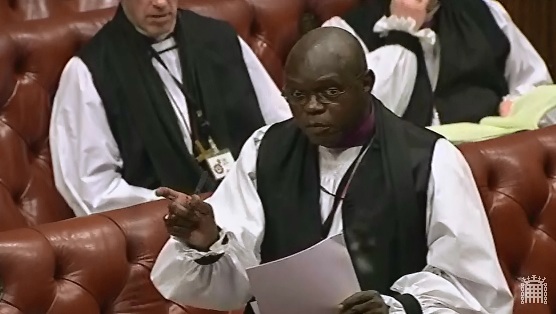
On 21st November 2013, the Bishop of Derby, the Rt Revd Alastair Redfern, and the Bishop of Wakefield, the Rt Revd Stephen Platten, took part in a debate on human rights, led by Lord Alton of Liverpool. The Bishop of Derby spoke about the role of women within society and religious institutions. He particularly focused on the objectification of women in magazines and the treatment of women in India. The Bishop of Wakefield spoke of the need for a greater engagement on the subject of the right to the freedom of religion, calling on the Government to develop a more positive approach towards religious freedom.

DerbyThe Lord Bishop of Derby: My Lords, I, too, congratulate the noble Lord, Lord Alton, on securing this debate, and I also associate myself with the remarks of the noble Lord, Lord Selkirk.

Many of the pictures painted are dramatic and challenging, and I invite the House to think a little about the context that we are in and how we might approach some of these huge issues. The Government have identified six key priority areas, including women and freedom of religion, and those are the two things that I will look at in particular. We are in a world where we have ideals and fall short of them, and need to negotiate between the two. Continue reading “Bishops of Derby and Wakefield take part in debate about Human Rights”

Bishop of London highlights the need for relief for civilians in the Syrian conflict

On 19th November 2013, Crossbench Peer Baroness Boothroyd asked Her Majesty’s Government what representations they have received relating to the creation of a humanitarian aid corridor in Syria. The Bishop of London, the Rt Revd and the Rt Hon. Richard Chartres, asked a supplementary question.

LondonThe Lord Bishop of London: My Lords, I think that everybody recognises the complexity of the situation, but just over a month ago, the UN Security Council itself called unanimously for humanitarian pauses. What contribution have Her Majesty’s Government been able to make diplomatically pursuing the possibility of more humanitarian pauses to bring relief to some of the civilians caught up in the fight?

Baroness Northover: Again, that is a case in point. The right reverend Prelate makes a good point in referring to those humanitarian pauses which were politically agreed but not delivered. That is the challenge. This is a very complex situation with many groups fighting each other, and enormous efforts are being put in—not least by UN special envoy Brahimi at the moment—to try to push forward some kind of agreement, but it is immensely difficult.

(via Parliament.uk)

Bishop of Wakefield urges proactive response to crisis in Central African Republic

“It is not surprising that the violence and insecurity that now plagues this country has hampered the delivery of humanitarian aid. As a result, local faith groups and a few national and international NGOs are the primary responders” – Bishop of Wakefield, 18.11.13

On 18th November 2013, Conservative Peer Baroness Berridge led a short debate to ask Her Majesty’s Government what assessment they have made of the security and humanitarian situation in the Central African Republic and the Great Lakes region of Africa. The Bishop of Wakefield, the Rt Revd Stephen Platten, took part in the debate, focusing his remarks on the need to sanction the perpetrators of violence in the Central African Republic and the urgent need to tackle sexual violence in conflict.

Bishop of Wakefield PlattenThe Lord Bishop of Wakefield: My Lords, I warmly congratulate the noble Baroness, Lady Berridge, for securing this debate and for introducing it with such clarity of purpose. Those of us of a certain age will remember graphically the tragedy of the Congo, going all the way back to independence itself. This was followed by the Katanga breakaway movement and the instability there, and the subsequent tragedies made the entire Great Lakes region a terrible, open wound on our common humanity. As we know, that conflict, which began all those years ago, continues in a number of countries. Continue reading “Bishop of Wakefield urges proactive response to crisis in Central African Republic”

Bishop of Birmingham calls for long-term focus in development assistance in emergency situations

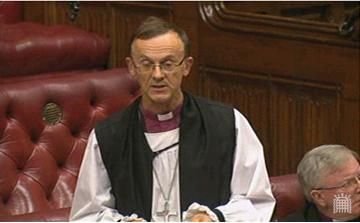
On 18th November 2013, the Bishop of Birmingham, the Rt Revd David Urquhart, asked a question in response to a Government statement on the Commonwealth Heads of Government Meeting and the Philippines typhoon. The question was answered by the Leader of the House of Lords, Lord Hill of Oareford.

01.04.14 Bishop of BirminghamThe Lord Bishop of Birmingham: My Lords, I thank the Government for this remarkable reminder of the generosity of the British people and DEC, and for the commitment of “HMS Daring” and other support. “HMS Daring” of course is connected with Birmingham, the most landlocked city in Britain. Perhaps I may ask the Leader of the House about not just the emergency phase, which is so important, as regards food, water and shelter, but the recovery phase in disasters such as this where we are looking for housing, infrastructure and livelihood. In looking further ahead than just the natural response to the ghastly situation, will he take into account two matters? One was raised by the Philippines climate change commissioner, Yeb Sano, at the UN Climate Change Conference in Warsaw. He said, “Typhoons such as Haiyan”— or Yolanda as it is called in the Philippines—

“and its impacts represent a sobering reminder to the international community that we cannot afford to procrastinate on climate action”,

and that the emergency response should look into the much more serious long-term effects of these kinds of climate changes. Continue reading “Bishop of Birmingham calls for long-term focus in development assistance in emergency situations”

Bishop of Guildford warns of further destabilisation if situations in Sudan and South Sudan are not resolved

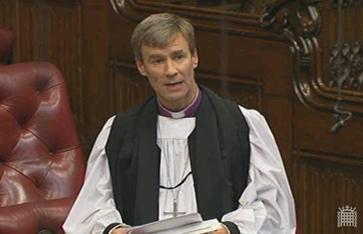
On 7th November 2013, Baroness Cox led a short debate on what assessment Her Majesty’s Government have made of the situation in Sudan, and the implications for citizens of the Republic of South Sudan. The Bishop of Guildford, the Rt Revd Christopher Hill, took part in the debate.

guildfordThe Lord Bishop of Guildford: My Lords, I completely endorse what has been said so far in this discussion. I want to raise a rather different point, but equally I want to express my distress—and, indeed, my shared anger—about the humanitarian, agrarian and political disaster about which we have been speaking.

My rather different point is a question about the implications of further destabilisation of Sudan for the country’s international neighbours. I think that that is an important point. I visit Nigeria regularly, and I am due to fly out to Abuja on Sunday. Four years ago, I was able to go to the province of Maiduguri up in the north-east. I cannot go there now, at the moment anyway, because of the political situation. Maiduguri is a long, long way from Sudan—many miles away. Nevertheless, I believe that there is a connection. Continue reading “Bishop of Guildford warns of further destabilisation if situations in Sudan and South Sudan are not resolved”

Bishop of Guildford highlights long history of Christianity in China

“There are huge numbers of practising Christians in China, amounting to many tens of millions, although I agree that the exact figure is very hard to determine…. The Chinese Government have a close interest in how religion helps in building a harmonious society, now that communism is not the only player in China’s major global role.”

On 7th November 2013 the Bishop of Guildford, the Rt Revd Christopher Hill, took part in Lord Dobbs take-note debate on the recent developments in the relationship between the United Kingdom and China. He focused on the long-standing relationship between the West and China, particularly in terms of  the long history of Christianity in China. He noted contemporary initiatives to strengthen the relationship between the Church of England and the church in China, particularly the role of the Bishop of Birmingham as the Archbishop’s envoy to China.

The Lord Bishop of Guildford: My Lords, the right reverend Prelate the Bishop of Birmingham deeply regrets that he cannot be in his place today. He is the envoy of the most reverend Primate the Archbishop of Canterbury in relation to China. I am sorry that he is not here speaking, and not only because I am speaking in his place.

We are hearing, and shall continue to hear, many fascinating things in this debate about China, not least from the two maiden speeches, to which we look forward. The importance of student academic exchanges, stressed by some noble Lords, particularly resonates with me. I declare an interest in the University of Surrey with its developing—indeed burgeoning—links with China. That is wonderful. Continue reading “Bishop of Guildford highlights long history of Christianity in China”