Reformation 500 – Church Commissioners Answer

On 9th October 2017 the Second Church Estates Commissioner, Rt Hon Dame Caroline Spelman MP, answered a question from Mark Hendrick MP about the 500th anniversary of the start of the Reformation in Europe.

Mr Mark Hendrick(Preston): To ask the right hon. Member for Meriden, representing the Church Commissioners, what events and activities the Diocese of Blackburn is undertaking to mark the Quincentenary of the nailing of Ninety-five Theses by Martin Luther on the door of All Saints’ Church, Wittenberg, on 31 October 1517.

Dame Caroline Spelman: Church of England dioceses are marking the 500th Anniversary of the beginning of the Reformation in Europe and parishes are being encourage to commemorate the anniversary in a variety of ways. For example in my own parish of Knowle, a sermon series will be held.

Information on some of the main events being run across the Church can be seen here: https://www.churchofengland.org/about-us/work-other-churches/reformation-anniversary.aspx

Continue reading “Reformation 500 – Church Commissioners Answer”

Bishop of Leicester’s Sermon at the Service of Reinterment of King Richard III

The text of the sermon delivered by the Bishop of Leicester, Rt Revd Tim Stevens on 26th March 2015 at the service of reinterment of King Richard III in Leicester Cathedral.

LEMA20150326A-020_C-1024Search, Find, Honour….

The triple mandate given to the Looking for Richard Project four years ago has broken open not just a car park but a nation’s story.

King Richard has stepped from the pages of history into the fullest glare of the world’s attention.  The search has laid to rest half a millennium of mystery surrounding his burial place and revealed that Richard belongs not just to the archaeologists, the chroniclers and the curators, but to all of us. Continue reading “Bishop of Leicester’s Sermon at the Service of Reinterment of King Richard III”

A State Opening tradition – the Select Vestries Bill

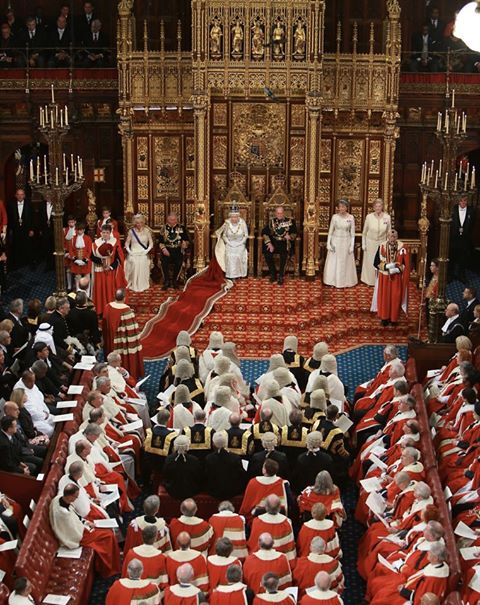
After the General Election of May 1997, once the Queen had delivered her Speech to the new Parliament and departed it fell to Lord Richard, as Labour’s freshly appointed Leader of the House of Lords, to move the first item of business.

He announced to the assembled Lords Spiritual and Temporal:

“My Lords, I beg to move that the Bill for better regulating Select Vestries be now read a first time. I am not sure why I am doing this, but I am.”

[HL Deb 14 May 1997 vol 580 c9]
2013 State opeing
The State Opening of Parliament

Continue reading “A State Opening tradition – the Select Vestries Bill”

Can Lords Spiritual vote in general elections?

Archbishop of Canterbury Robert Runcie and Prime Minister Margaret Thatcher

When Robert Runcie, Archbishop of Canterbury, revealed in 1983 that he had voted in the recent general election (though not who for), he was unlikely to have imagined that it would give rise to newspaper headlines and questions in parliament. He had not broken the law, though the subsequent debate shone a light on an otherwise little-known feature of the House of Lords.  Continue reading “Can Lords Spiritual vote in general elections?”

Lords Spiritual No Longer, Part Three: The Bishops of Bradford

On Easter Day, 20th April 2014, the Church of England Dioceses of Bradford, Ripon & Leeds and Wakefield, will be merged to form a new Diocese of West Yorkshire and the Dales. The bishops of those former dioceses will no longer sit in Parliament as Lords Spiritual. Here – in the last of three parts – is a (very) brief history of the Bishops of Bradford as parliamentarians. Parts one (Ripon) & two (Wakefield) can be viewed here & here.

Part Three: The Bishops of Bradford

Since the formation of the Diocese of Bradford in 1920, there have been ten diocesan bishops of Bradford.

Perowne and Blunt

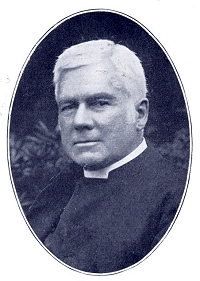
Bishop Alfred Perowne
Bishop Arthur Perowne

Its first bishop was Rt Rev Arthur Perowne, who served until his translation to Worcester in 1931. Bishop Perowne was born into a distinguished ecclesiastical family (his father John James Stewart Perowne, was also a Bishop of Worcester). Bishop Perowne was introduced to the House of Lords in November 1923, and whilst there is no record of him making any speeches in his eight years as a member, after his translation to Worcester he spoke in support of better regulation of clubs serving alcohol. Continue reading “Lords Spiritual No Longer, Part Three: The Bishops of Bradford”

Lords Spiritual No Longer, Part Two: The Bishops of Wakefield

On Easter Day, 20th April 2014, the Church of England Dioceses of Bradford, Ripon & Leeds and Wakefield, will be merged to form a new Diocese of West Yorkshire and the Dales. Here – in three parts – is a (very) brief history of the bishops of those dioceses as parliamentarians. Part One (Ripon) can be viewed here.

Part Two: The Bishops of Wakefield

All but one of the 12 who held office as Bishop of Wakefield during the 126 year history of the diocese served in the House of Lords.

Walsham How

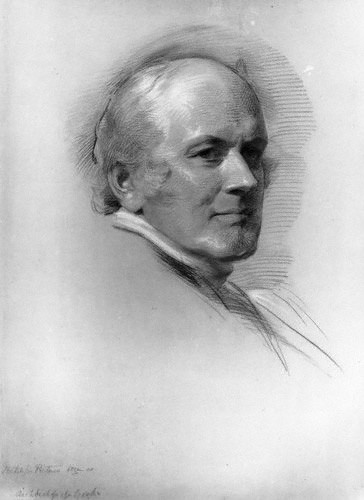
Bishop of Wakefield William_Walsham_How
Bishop William Walsham How

The first Bishop of Wakefield, William Walsham How, came into the Lords in March 1891, three years after his appointment to the new diocese and remained a member until his death in 1897. Continue reading “Lords Spiritual No Longer, Part Two: The Bishops of Wakefield”

Lords Spiritual No Longer, Part One: The Bishops of Ripon

On Easter Day, 20th April 2014, the Church of England Dioceses of Bradford, Ripon & Leeds and Wakefield, will be merged to form a new Diocese of West Yorkshire and the Dales. Although the bishop of that new diocese will in due course join other bishops in the House of Lords, the dissolution of the three former dioceses marks an end to the era of the Bishops of Bradford, Ripon & Leeds and Wakefield as Lords Spiritual. Much has been written and recorded about the wider contributions of successive occupants of these Sees, but here – in three parts –  is a (very) brief history of those bishops as parliamentarians.

Part One: The Bishops of Ripon

Since its formation in 1836 there have been 12 bishops of the diocese of Ripon (and latterly, Ripon & Leeds).

Longley and Bickersteth

Its first bishop was Rt Rev Charles Longley, who served until his translation to Durham in 1856, before becoming Archbishop of Canterbury in 1862.

NPG 1056,Charles Thomas Longley,by George Richmond
Bishop Charles Longley

Longley had married the daughter of the Postmaster General in Prime Minister Lord Melbourne’s Government. However, as the Oxford Dictionary of National Biography records, “Melbourne agreed that Longley need not be constrained to vote with the government on matters of Irish church policy. Longley actually voted against the government on other issues besides the Irish church, to Melbourne’s pain and displeasureLongley opposed the Oxford University Bill of 1854 which, among other things, reduced the proportion of clerical fellows in each college and reconstituted the central government of the university. In 1854 Longley was named as one of two churchmen who would join the executive commissioners empowered to revise the statutes of the university and colleges of Oxford.” Continue reading “Lords Spiritual No Longer, Part One: The Bishops of Ripon”

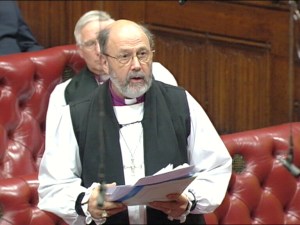
Archive speeches: Bishop Tom Wright – ‘The constitution is far more important than party politics.’

017 - Bishop of Durham“Voting matters, but doing the job matters even more. The belief that only elected Members can have any sort of legitimacy, or that once someone has won a vote it gives them carte blanche to do whatever they like for the next five years, rings extremely hollow when it is precisely some of the elected Members in another place who have brought the system into disrepute. Our whole political system has encouraged career politicians who have never run a farm or a shop or a school or a ship, and who lurch from utopianism, which gets most of them into politics in the first place, to pragmatic power-seeking, which is what they turn to when Utopia fails to arrive on schedule.” – Bishop of Durham, 11/6/09  Continue reading “Archive speeches: Bishop Tom Wright – ‘The constitution is far more important than party politics.’”

History: Archbishop of Canterbury’s Tribute to the Queen Mother, 2002

Her Majesty Queen Elizabeth The Queen Mother, died on 30th March 2002. On 3rd April 2002 the House of Lords met to offer tributes. The Lord Privy Seal rose to move, ‘That an humble Address be presented to Her Majesty’, which began as follows:

“Most Gracious Sovereign—We, Your Majesty’s most dutiful and loyal subjects, the Lords Spiritual and Temporal in Parliament assembled, beg leave to express our heartfelt sympathy in the great sorrow which Your Majesty has suffered by the death of Her Majesty Queen Elizabeth The Queen Mother; and to offer to Your Majesty our most sincere condolences.

The Archbishop of Canterbury said:

My Lords, it is with great sadness that I convey from these Benches the support of the Lords Spiritual for the Motion. I hope, too, that my few words may reflect some of the feelings of the wider Church. Continue reading “History: Archbishop of Canterbury’s Tribute to the Queen Mother, 2002”

William Temple, Lord Spiritual

William Temple was Archbishop of Canterbury from 1942 until his untimely death on 26th October 1944. He also served as Archbishop of York (1929–42) and Bishop of Manchester (1921–29).

© National Portrait Gallery, London

He was introduced to the House of Lords as Bishop of Manchester on 8th July 1925 and made his maiden speech two weeks later, during a debate on improving housing for the working classes. Continue reading “William Temple, Lord Spiritual”