
 On 2nd July 2019 Lord Evans of Watford asked the Government “what steps they are taking to increase the number of homes for social rent”. The Most Revd and Rt Hon Justin Welby, Archbishop of Canterbury, asked a follow-up question:
Lord Bourne of Aberystwyth: My Lords, I thank my noble friend for his point about social housing delivery. He is right that it has been a challenge for successive Governments. We have delivered 79,000 social homes since 2010, which, it has to be said, is better than the numbers achieved in the previous nine years. In relation to his point about garden villages, we had previously announced 29 and last week we announced another 19. That is significant. It includes providing a special community village for dementia-friendly housing, which again is very good news, and I hope that that will also feed into the discussions that we are having about modern methods of construction.
The Lord Archbishop of Canterbury: My Lords, I welcome very much that last answer. In that connection I declare an interest, in that I have set up a commission to look into the housing crisis and the contribution that can be made by civil society and particularly the Churches. It comprises a former Permanent Secretary and a huge number of significant experts. One of the commission’s earliest priorities is to look at how we create communities rather than simply build houses. That means that there is a need for multipurpose community facilities and for looking at the sociological aspects as well as the mere physical construction. Will the Minister undertake to listen to the representations from that and similar inquiries over the next 18 months to two years?
 On 13th June 2019 the Second Church Estates Commissioner, Rt Hon Dame Caroline Spelman MP, answered a written question from Frank Field MP on affordable housing:
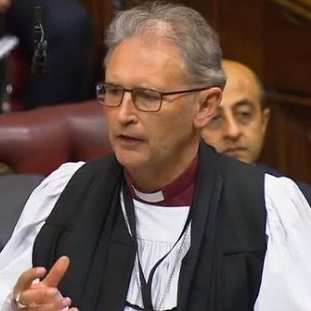 The Lord Bishop of Coventry: My Lords, I echo the praise that has already been given to the emergency services following both Barking and the Grenfell disaster. I welcome the Statement’s recognition of the power of community and its commitment to a new and stronger partnership between residents and those who serve them, for trust to rebuilt and, in particular, for the council to listen and the community to be heard.
 The Lord Bishop of Chester: My Lords, it is a privilege and a challenge to follow such a brilliant speech from someone who knows his way around the subject. If you want to find good things to tax, I always say that you should start with sin: find a new sin and tax it. I rather agree that HS2 is a sin, not for adding capacity, which I am all in favour of, but in doing so in such an unnecessarily expensive way. For me, trains go quite fast enough already and it could have been done far more cheaply without factoring in the speeds in a small country. As I follow the noble Lord’s speech, I think of St Paul, who once began by saying, “I speak as a fool”. I do so too, a little, after that wonderful description of the financial landscape.
 The Lord Bishop of Salisbury:
 The Lord Bishop of Chelmsford: As Bishop of Chelmsford, I am also proud to be the Bishop of Becontree, Harlow and Basildon, three of the nation’s boldest attempts by policymakers in the last century to address the housing needs of London and the south-east. When Becontree was built in the 1920s, it was Europe’s largest public housing development.
 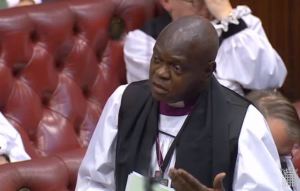 On 15th January 2019 the Government’s Tenant Fees Bill passed at Third Reading in the House of Lords. The Archbishop of York, Most Revd John Sentamu, spoke briefly:
 The Church of England in Parliament
You must be logged in to post a comment.